

Iran on Monday stated that it was ready to reopen the Strait of Hormuz within two days if Washington agreed to conditions, as US President Donald Trump issued his latest war threat at a rally for midterm elections.
A senior Iranian official said the offer to open the vital energy corridor, which came after intense efforts by mediators to prevent a return to war, demonstrated “good faith.”
Tehran has blockaded Hormuz since the war began in February, driving energy prices sharply higher and creating an electoral challenge for Trump. This narrow gateway to the energy-rich Gulf typically carries one-fifth of global oil consumption.
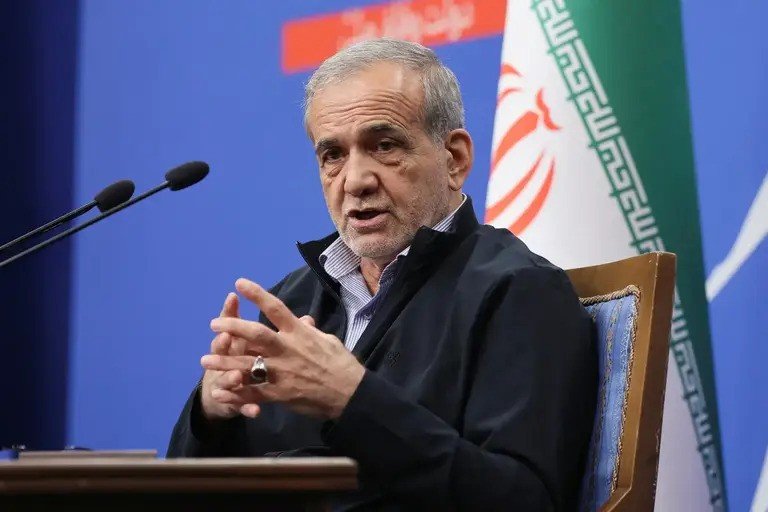
“The possibility of implementing this plan in two days is another indication of Iran’s good-faith approach,” foreign ministry spokesman Esmaeil Baqaei told reporters at a briefing.
“We have stated that, if Iran’s demands are met, it would be possible to restore security to the Strait of Hormuz and resume the negotiating process within a short period.”
In September, Iran put forward a seven-day plan to reopen Hormuz, contingent on the US agreeing to demands that included ending the war on all fronts, unfreezing Iranian assets, lifting oil sanctions, and ending its counter-blockade of Iranian ports.
Baqaei stated that messages were being exchanged with the United States through mediators and added that “everything depends” on whether the US side accepts the Iranian demands.
“Only then can we discuss the subsequent stages.”
As the US midterms wrap up with final rallies on Tuesday, with diesel prices and consumer inflation looming as major issues, Trump adopted a combative tone, cautioning Iran to brace for “the hammer.”
“The only reason why I’m not finished with Iran is I want to be nice. I want to try and save all those lives if I can… But at some point we’re going to have to give them the hammer,” he told voters in Iowa.
In recent days, officials from Pakistan, Qatar, Saudi Arabia, and Turkey have held talks with Iran, and US Vice President JD Vance sent a letter to Tehran.
According to a statement from Oman’s foreign ministry, the country’s ruler, Sultan Haitham bin Tariq, discussed the war with Chinese President Xi Jinping during a visit to Beijing on Monday.
“The two sides called for resolving disputes through political and diplomatic means, urging the United States and Iran to pursue a peaceful path, achieve a ceasefire (and) prevent war entirely,” it said, calling for “dialogue and negotiations as soon as possible.”
China’s top diplomat also informed a senior Iranian official that Beijing supports Tehran in “safeguarding its own sovereignty and security.”
Chinese Foreign Minister Wang Yi made the remarks to Ali Bagheri Kani, deputy secretary of Iran’s Supreme National Security Council, according to a statement from Beijing.
“All parties should… in a spirit of reason and pragmatism, focus on a political solution rather than once again resorting to armed conflict,” Wang was cited as saying.
Bagheri told Wang that “Tehran’s stance on defending its national security, sovereignty, and territorial integrity remains unchanged, and that Iran will make no compromises in this regard,” according to state TV.
In an interview with Al Jazeera that aired on Sunday, Foreign Minister Abbas Araghchi stated that Washington needs to accept a new route agreed upon between Iran and Oman for transiting the strait.
He added that the US must also lift sanctions imposed in recent months and cut back on the number of American troops in the region.
Since August, Washington has introduced a fresh set of sanctions, part of what it described as the “economic asphyxiation” of Iran.
Trump’s “hammer” remark is merely the latest threat directed at Tehran from the US and Israel, whose joint attack marked the beginning of the war on February 28.
On Saturday, Trump said he still needed to “take care” of one or two targets, among them Pickaxe Mountain in central Iran, a suspected nuclear site that Tehran insists is not one.
“Any act of aggression against Iran, any military attack against Iran, by whatever means, will be met with a powerful, immediate, and comprehensive response from us,” Baqaei said.
For the midterms, Democrats expect to gain at least partial control of Congress and, for the first time in two years, place political limits on Trump.
Iran warned on Sunday that any renewed war with the United States could last longer than the previous round of fighting, after President Donald Trump said he still had more targets to “take care” of.
Diplomatic efforts to end the Middle East war have been repeatedly interrupted by threats from the US and Israel to resume bombardments as both countries hold crucial elections.