


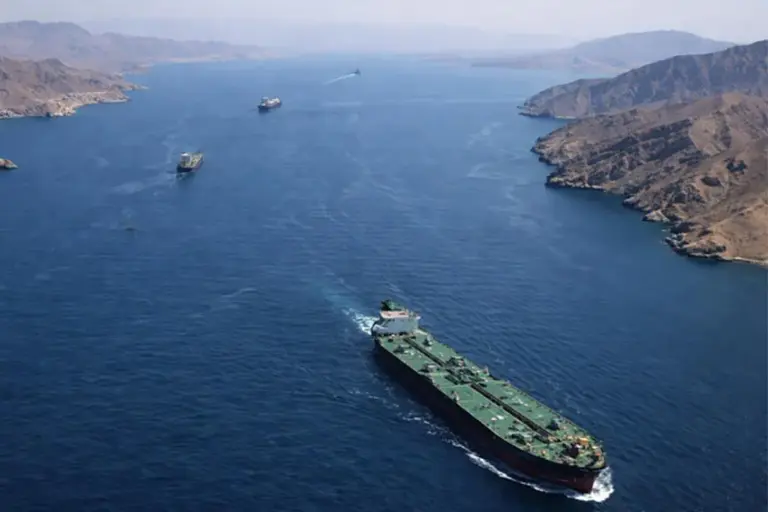
Tensions in the Gulf have surged after Iran’s elite military force, the Islamic Revolutionary Guard Corps (IRGC), seized two container ships attempting to pass through the Strait of Hormuz.
The incident comes despite Donald Trump announcing an extension of a fragile ceasefire to allow more time for diplomatic talks with Tehran.
According to the IRGC, its naval forces intercepted the vessels for “violations” and escorted them to Iranian waters. The ships were identified as the Panama-flagged MSC Francesca and the Liberia-flagged Epaminodas.
Maritime security monitors reported multiple confrontations in the strait — a vital global energy corridor that handles about a fifth of the world’s oil and gas shipments.
The UK Maritime Trade Operations (UKMTO) confirmed that at least three commercial vessels encountered armed boats in the area. One ship reported being fired upon, sustaining damage but no casualties, while another was forced to stop near Iranian waters.
A third vessel, identified by security firm Vanguard Tech as the Panama-flagged Euphoria, was also targeted while exiting the strait.
The developments underline growing risks in the region, where US and Iranian forces are increasingly asserting control over shipping routes.
The US military has stepped up efforts to intercept vessels linked to Iran, with the Pentagon confirming it recently boarded a “stateless sanctioned” ship suspected of ties to Tehran.
Despite the escalation, signs of diplomacy remain. Reports suggest a second round of talks between Washington and Tehran could take place within days, potentially mediated by Pakistan.
Trump hinted at the possibility, saying a follow-up meeting could happen soon, though US Vice President JD Vance is no longer expected to attend unless Iran submits a proposal.
The ceasefire, initially meant to ease weeks of conflict following US and Israeli strikes on Iran, has done little to stabilise the region. Both sides continue to accuse each other of violations.
Meanwhile, Iran has tightened its grip on the strait, effectively restricting movement in one of the world’s most critical maritime routes.
Uncertainty over the talks and the ongoing confrontations at sea continues to rattle global markets and raises fears of further disruption to energy supplies.