




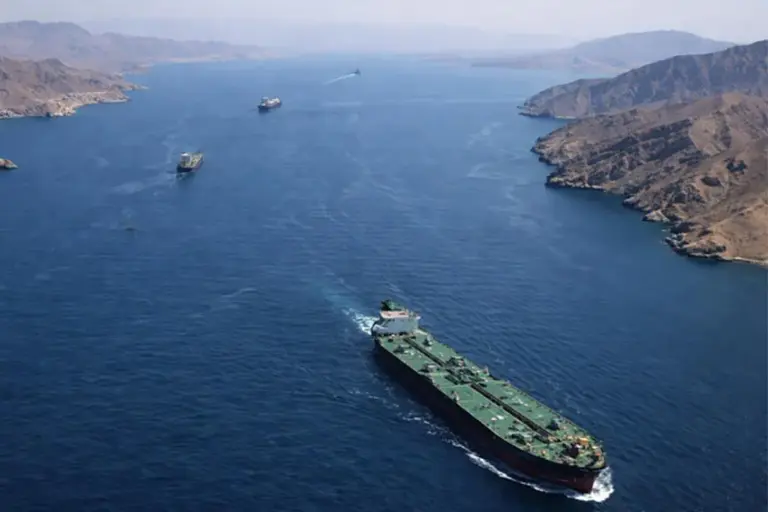
The United States has launched a fresh wave of military strikes on Iran after Tehran allegedly targeted a container ship, deepening a rapidly escalating conflict that has spread across the Gulf.
The US forces struck hundreds of Iranian military targets over the weekend, saying the operations were aimed at weakening Iran’s ability to attack commercial shipping and civilian vessels in the Strait of Hormuz.
Iran responded by announcing that it had again closed the strategic waterway, warning it would remain shut until what it described as the “end of US interference” in the region. However, the US Central Command said commercial ships were still transiting the strait despite the Iranian declaration.
The latest exchange came days after President Donald Trump declared a ceasefire between the United States and Iran over, following renewed hostilities that began after attacks on shipping in the Gulf.
Iran’s Revolutionary Guards claimed responsibility for a series of strikes on US military assets and allied facilities across the Gulf. They said they targeted a command and control centre and drone hangars in Jordan, a US radar installation in Kuwait, aircraft carrier support facilities in Oman, and military infrastructure in Qatar. The Guards also claimed to have disabled another vessel in the Strait of Hormuz.
Meanwhile, the United Arab Emirates said it intercepted Iranian missiles and drones, while air raid sirens sounded in Bahrain and explosions were reported in Doha.
The widening conflict has heightened concerns over global energy supplies, with the Strait of Hormuz handling around one-fifth of the world’s oil and liquefied natural gas shipments before the fighting intensified. The disruption has pushed energy prices higher, fuelling fears of rising inflation and a broader economic slowdown.
Iran accused the United States of violating the ceasefire agreement. Foreign Minister Abbas Araqchi insisted that any truce could only survive through “mutual compliance”, while Iran’s top negotiator, Mohammad Baqer Qalibaf, warned on X that “the era of one-sided deals is OVER” and urged Washington to “keep your word or pay the price.”
Reuters also reported that Iranian and Omani officials have held talks in Muscat on ensuring the safe passage of ships through the Strait of Hormuz, with negotiations expected to continue.
Separately, a statement attributed to Iran’s new Supreme Leader, Ayatollah Mojtaba Khamenei, vowed revenge for the killing of his father and predecessor, Ayatollah Ali Khamenei, during the early stages of the conflict.
The crisis continues to raise concerns over regional stability and the global economy as both sides show little sign of backing down.