


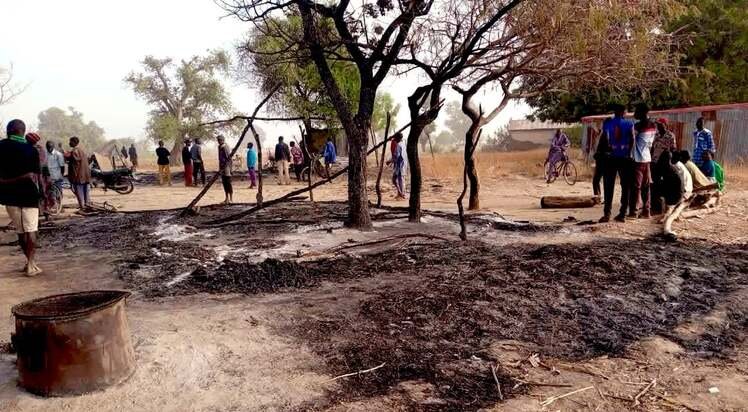
Fresh killings in Plateau State have renewed concerns about Nigeria’s security partnership with the United States, one year after Washington designated the country a Country of Particular Concern (CPC) over religious freedom violations.
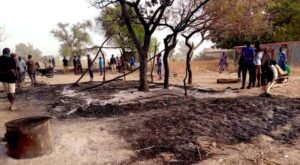
At least 14 people were reportedly killed in fresh attacks across Mangu, Riyom, Barkin Ladi and Bokkos local government areas between November 15 and 16, raising questions about the effectiveness of American security assistance and the Federal Government’s efforts to protect vulnerable communities.
The renewed concerns followed a warning by former US Secretary of State Mike Pompeo, who urged Washington to fulfil its commitment to protecting Christians in Nigeria.
In a post on X, Pompeo said attacks had continued since Nigeria’s designation and called on the US government to use every available measure to address the situation.
“One year after the State Department designated Nigeria as a country of particular concern for the violent persecution of Christians, the attacks continue. America must use all the tools at our disposal to deliver on our promise to stand up for the Christians of Nigeria,” he wrote.
The designation followed President Donald Trump’s announcement on October 31, 2025, amid international concerns over attacks on Christian communities, particularly in Benue and Plateau states.
However, the Federal Government’s diplomatic engagements with Washington have yet to secure Nigeria’s removal from the designation.
US defends security partnership with Nigeria
At a November 12 hearing of the US House Foreign Affairs Subcommittee on Africa, American officials outlined measures taken under the bilateral security partnership.
The Assistant Secretary of State for African Affairs, Frank Garcia, said the Joint Working Group established by both countries had met in Abuja in January 2026 and Washington in August to monitor Nigeria’s security commitments.
According to him, the United States has provided training and equipment to police units protecting vulnerable communities, expanded biometric information sharing to help identify attackers and worked with Nigerian banks to disrupt terrorist financing.
Garcia also disclosed that US forces conducted strikes against Islamic State targets in north-west Nigeria in December 2025 as part of a joint counterterrorism initiative.
An X account, @SecureNigeriaHQ, defended the partnership, describing the relationship between Trump and President Bola Tinubu as a major contributor to security progress and the protection of Nigerian Christians.
However, the account’s disclosure states that its materials are distributed by DCI Group AZ, LLC, on behalf of the Republic of Nigeria through Aster Legal, with additional information filed with the US Department of Justice.
Despite the measures highlighted by American officials, recurring attacks in Plateau and other parts of the country continue to raise questions about the partnership’s impact on civilian protection.
Fresh Plateau attacks challenge security assurances
The latest violence has reportedly claimed at least 14 lives across Mangu, Riyom, Barkin Ladi and Bokkos local government areas.
According to a report by persecution.org, armed attackers targeted rural settlements and ambushed residents travelling between communities between November 15 and 16.
The attacks came barely days after Tinubu visited Jos on November 14 for an All Progressives Congress political rally.
During the visit, the President apologised to Plateau residents for failing to visit communities affected by violence during an earlier trip to the state.
He also promised to rebuild destroyed communities and facilitate the return of internally displaced persons to their ancestral homes.
“Forgive me if you didn’t see me in the hinterland, but I saw the devastation. I got the report from the governor. I saw horror in the faces of our people,” Tinubu said.
The President further disclosed that 1,000 forest guards were undergoing training, while surveillance cameras previously promised to the state had been procured to strengthen security monitoring and early-warning operations.
One of the reported attacks occurred in Zwagal community, Jipal District, Mangu Local Government Area, where nine people were reportedly killed when armed men invaded the community at about 9pm on Sunday.
Other killings were reported in Sho village in Barkin Ladi, Sambak and Jol communities in Riyom, and Bokkos Local Government Area.
In Bokkos, a unit commander of the state-owned security outfit, Operation Rainbow, and another person were reportedly killed in an ambush.
The Berom Youth Moulders Association condemned the recurring attacks, calling on the Federal Government, Plateau State Governor Caleb Mutfwang and security agencies to strengthen security deployments in vulnerable communities and prosecute those responsible.
Community sources cited in the report alleged that Fulani ethnic militias were behind the attacks and linked the violence to attempts to displace indigenous populations. However, the allegations and motives behind the attacks have not been independently established.
Experts warn against dependence on US military intervention
Security and international relations experts have cautioned that American military involvement must strengthen Nigeria’s domestic security institutions rather than create long-term dependence on foreign assistance.
Speaking at a roundtable organised by the Centre for Peace and Development (CEPAD), Veritas University, Abuja, in collaboration with the Rosa Luxemburg Foundation, West Africa, participants examined the implications of US military engagement in Nigeria.
The discussion focused on the theme, Counter-Terrorism in Nigeria and United States Military Intervention: Rethinking the Responsibility to Protect.
CEPAD Director, Rev. Fr. Dr Innocent Jooji, identified human rights violations, weak intelligence, corruption and governance deficits as major factors undermining Nigeria’s counterterrorism operations.
While acknowledging the contributions of the United States Africa Command (AFRICOM) to intelligence gathering, training, surveillance and logistics, he said the assistance had yet to decisively defeat insurgent groups.
Jooji warned that inadequate oversight, external dependency and human rights violations could undermine Nigeria’s long-term security interests.
He called for stronger domestic security capacity, respect for human rights, improved parliamentary oversight and expanded deradicalisation and development programmes.
Dr Chukwudi Victor Odoeme of the Department of Public and International Law, Veritas University, examined Article 2(4) of the United Nations Charter, which prohibits the threat or use of force against the territorial integrity of states.
He argued that Nigeria’s consent to joint military operations could provide a legal basis for American involvement but noted that the absence of publicly available details on the terms of such consent left aspects of the intervention’s legality unresolved.
Similarly, Dr Roberts Anya Nkata, of the university’s Departments of Political Science and Diplomacy, and Peace and Conflict Studies, argued that military assistance alone could not guarantee civilian protection.
He identified poor intelligence coordination, corruption, operational failures and declining public trust as factors limiting the effectiveness of counterterrorism operations.
Nkata recommended stronger monitoring of American assistance, improved target verification, credible investigations into civilian casualties and greater community engagement.
Miss Emmanuella Onota also argued that the partnership should be assessed by its contribution to civilian protection and sustainable peace rather than military achievements alone.
Experts question impact of Nigeria’s CPC designation
Beyond concerns about foreign military involvement, Nigerian security and governance experts have questioned the effectiveness of the CPC designation and Washington’s commitment to addressing insecurity.
An administration and security sector governance expert at the University of Abuja, Prof Philip Dahida, described America’s position as largely propaganda, arguing that the designation had yet to produce meaningful improvements on the ground.
While acknowledging US support through training, partnership and technical collaboration, he said the measures were inadequate to address the scale of insecurity confronting Nigeria.
“If they want to solve insecurity in this country, they have so much equipment to fish out any terrorist in any forest. So, sometimes it is just propaganda. That designation has no impact. The West just want to wield influence over Africa,” he said.
Dahida also suggested that Washington’s growing interest in Nigeria was partly connected to geopolitical competition in the Sahel, where Russia has increased its influence following the declining presence of France.
He, however, blamed Nigeria’s political class for failing to demonstrate the political will required to tackle insecurity.
A retired Commissioner of Police, Lawrence Eko Alobi, said the security situation had become increasingly disturbing despite America’s expressed concerns and Nigeria’s security partnership with Washington.
He observed that Nigerians were finding it difficult to travel freely by road, while schools and places of worship remained vulnerable to attacks.
The National Publicity Secretary of the Arewa Consultative Forum, Prof Tukur Baba, also described the CPC designation as a false red flag, arguing that Nigeria’s security crisis affected people across religious lines.
He cited killings in Muslim-majority communities in Zamfara, Sokoto and Katsina, as well as parts of Niger and Kwara states, arguing that framing the violence primarily as religious persecution could distract attention from its criminal dimensions.
“The substance is criminality, and our government has a constitutional responsibility to deal with it,” he said.
Baba also questioned America’s intentions, alleging that Washington was pursuing strategic interests, including access to Nigeria’s mineral resources.
He expressed concern over armed criminal groups in parts of northern Nigeria, which he said had established quasi-government structures and collected taxes from residents.
The National Chairman of the Peoples Redemption Party, Dr Hakeem Baba-Ahmed, similarly argued that searching for religious motives behind killings often distorted the context of Nigeria’s security crisis.
He acknowledged that some attacks were driven by religious or communal motives but maintained that people of different faiths and communities had suffered killings and other crimes.
Baba-Ahmed described the Tinubu administration’s handling of insecurity as a failure and argued that US involvement had helped deepen hostilities between communities.
“There is no evidence that Nigerian Christians are more secure today owing to U.S. intervention. Despite reported increases in spending and successes of our security forces, Nigerians continue to be targets of killings and other crimes under the Tinubu’s government,” he said.
FG intensifies diplomatic efforts to reverse CPC designation
Meanwhile, the Federal Government has continued diplomatic engagements with Washington in an effort to secure Nigeria’s removal from the CPC list.
Foreign Affairs Minister Bianca Odumegwu-Ojukwu disclosed in May that reversing the designation featured in discussions with US Chargé d’Affaires David Heffern.
She said the discussions covered security and defence, border and migration challenges, counterterrorism initiatives, intelligence sharing and visa matters.
According to the minister, both countries were working through the Joint Working Group to address underlying concerns and promote regional stability.
She assured that the Federal Government would continue engaging Washington on the measures and cooperation needed to reverse the designation.
Tinubu, Peter Obi engage US lawmakers
The diplomatic push has coincided with increased engagements by Nigerian political leaders with American lawmakers, media personalities and other influential figures.
Tinubu is seeking to strengthen his administration’s relationship with Washington amid the security partnership and efforts to secure Nigeria’s removal from the CPC list.
The President is scheduled for an exclusive interview with American media personality Diana London. The interview has been recorded and is expected to be released soon.
London, chief executive of London Global Strategies and a television contributor, has publicly endorsed the Trump-Tinubu security partnership, describing it as instrumental to counterterrorism cooperation and improved bilateral relations.
Meanwhile, Peter Obi, the presidential candidate of the Nigeria Democratic Congress (NDC), arrived in Washington DC on November 16 for engagements with congressional leaders from both chambers of the US legislature and other influential American figures.
Obi said his discussions focused on Nigeria’s development, accountable leadership, responsible management of the country’s human and natural resources, and the future of its democracy.
He disclosed that he began his engagements with an interview with American television commentator Glenn Beck before meeting Congressman Marlin Stutzman, Congresswoman Beth Van Duyne, Congressman Todd Tiahrt, Suzanne Bock Grisham and retired US Army Colonel Albert V. Short, among other stakeholders.
Obi also addressed Capitol Hill, calling for international cooperation and support for Nigeria’s advancement, particularly in national unity, security, economic prosperity and citizens’ welfare.
He emphasised the need to protect Nigeria’s democracy and strengthen institutions to guarantee free, fair, transparent and credible elections.
During a separate interview with CNN’s Zain Asher, Obi argued that ethnic and religious divisions were being exploited by the political elite to keep Nigeria underdeveloped.
“All you hear about ethnicity, religion, connection, my turn, is elite conspiracy to keep Nigeria underdeveloped,” he said.
With fresh killings continuing in Plateau and other parts of Nigeria, the effectiveness of the US-Nigeria security partnership faces renewed scrutiny, particularly over whether military cooperation and diplomatic assurances can translate into lasting protection for vulnerable communities.