


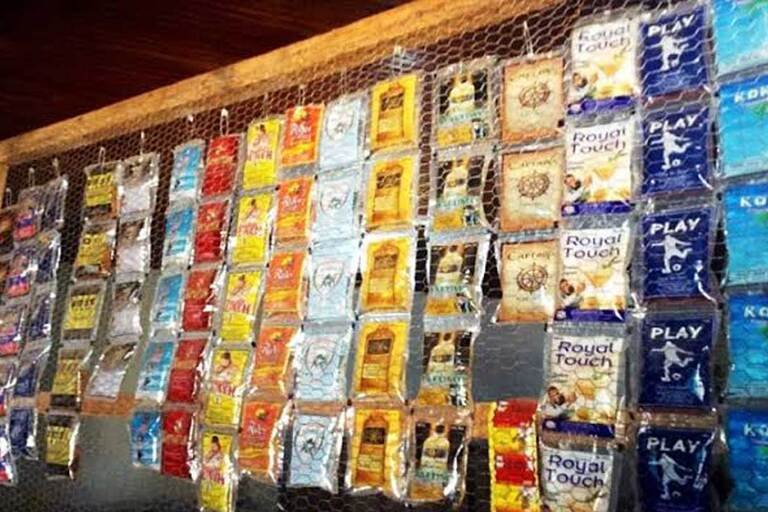
The Federal Government has directed the National Agency for Food and Drug Administration and Control (NAFDAC) to suspend all enforcement actions relating to the proposed ban on sachet alcohol and 200 ml PET bottle alcoholic products.
The government additionally cautioned the agency to promptly cease sealing factories and warehouses regarding the matter.
The instruction was included in a statement released on Wednesday in Abuja by the Special Adviser on Public Affairs to the Secretary to the Government of the Federation, Terrence Kuanum.
Kuanum stated that the directive came after a collaborative action by the Office of the Secretary to the Government of the Federation and the Office of the National Security Adviser, which expressed worries about the security risks associated with ongoing enforcement without a fully executed National Alcohol Policy.
“Accordingly, all actions, decisions, or enforcement measures relating to the ongoing ban on sachet alcohol are to be suspended pending the final consultations and implementation of the National Alcohol Policy and the issuance of a final directive,” the statement read.
He stated that even though the Federal Ministry of Health signed the National Alcohol Policy as per President Bola Tinubu’s directive, both entities insisted that NAFDAC must avoid any enforcement actions until the policy is completely enacted and additional instructions are provided.
The administration stated that these actions consist of halting factory operations, sealing warehouses, and publicly stressing the ban on sachet alcohol.
The declaration indicated that the ongoing closure of warehouses and what it termed a “de facto ban” on sachet alcohol products, lacking a unified policy framework, was already leading to economic disturbances and creating security threats, especially because of its effects on employment, supply chains, and informal distribution networks across the country.
Kuanum stated that the role reinforced a prior directive from the SGF’s office in December 2025, which halted all activities concerning the suggested ban while awaiting consultations and a final verdict.
He noted that the SGF’s office had also obtained a letter from the House of Representatives Committee on Food and Drugs Administration and Control dated November 13, 2025, expressing concerns regarding NAFDAC’s suggested enforcement measures and citing existing National Assembly resolutions related to the matter.
The correspondence, labeled NASS/10/HR/CT.53/77 and endorsed by the committee’s Deputy Chairman, Hon. Uchenna Okonkwo, expressed worries regarding NAFDAC’s suggested enforcement measures and highlighted previous resolutions made by the National Assembly on the matter.
The Federal Government stated it was assessing legislative resolutions, public health factors, economic consequences, and national interest elements regarding the issue.
The government stated that the participation of the National Security Adviser indicated that the matter had exceeded mere regulatory issues, cautioning that hasty enforcement without synchronized policy implementation could disrupt communities, exacerbate unemployment, and create security problems.
It reassured Nigerians and industry stakeholders that a conclusive decision would be announced following discussions and collaboration among agencies, prioritizing public health, economic stability, and national security.