


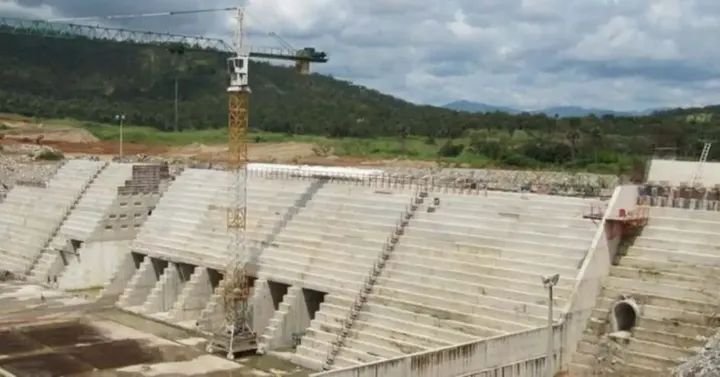
The Federal Government is exploring a phased approach to delivering the long-delayed Mambilla Hydropower Project in Taraba State.
Minister of Power Joseph Tegbe disclosed this during a media parley in Abuja to mark his first 100 days in office.
Tegbe said the ministry had engaged China Energy Engineering Corporation (CEEC), also known as Energy China, to examine the most practical options for delivering the project.
The development comes after Nigeria secured a major victory in the arbitration dispute over the Mambilla project.
The minister said large hydropower projects such as Mambilla, alongside smaller schemes serving agricultural corridors, were central to Nigeria’s medium- and long-term electricity strategy.
Nigeria Deepens Power Cooperation With China
Tegbe said Nigeria’s recent mission to China also secured commitments from major Chinese engineering firms and financiers to accelerate priority power projects.
He said China Machinery Engineering Corporation (CMEC) had reaffirmed its role in the 1.9-gigawatt Presidential Power Initiative (PPI), with the first transmission lines expected to be delivered in the first quarter of 2027.
China National Electric Engineering Company (CNEEC), he added, had advanced financing arrangements for the $116 million Zungeru evacuation project.
Tegbe also said Tebian Electric Apparatus Stock (TBEA) had committed to a proposed $500 million industrial park for power-equipment manufacturing.
The government is also pursuing accelerated work on the PPI and a three-year delivery pathway for the east-west super grid.
HengFei Cables, according to the minister, has committed to supplying cables for PPI Phase Two and proposed establishing a cable assembly plant and training centre in Nigeria.
Tegbe said the initiatives were designed to combine infrastructure development with local manufacturing and technical capacity to improve electricity supply nationwide.
Grid Stabilisation Plans
The minister said the next phase of the power strategy would focus on strengthening the grid along the Lagos, Enugu-Port Harcourt and Abuja-Kaduna-Kano corridors.
Technical audits have also commenced along the Lagos and Abuja corridors to identify weak points and guide future investments.
“These first 100 days have laid the groundwork for sustained repair and stabilisation,” Tegbe said.
Background to the Mambilla Dispute
The Mambilla Hydropower Project dispute dates back to a 2003 agreement between Sunrise Power and the Federal Government for the construction of a 3,050-megawatt plant in Taraba State under a build, operate and transfer arrangement.
On October 10, 2017, Sunrise commenced arbitration against Nigeria, seeking $2.35 billion over an alleged breach of contract.
In 2019, representatives of the Federal Government and Sunrise negotiated a $200 million settlement to end the dispute.
An agreement signed in January 2020 provided for the $200 million payment. A March 2020 addendum divided the payment into two $100 million instalments and exposed Nigeria to an additional $200 million default penalty, alongside interest.
The settlement was never paid. Former President Muhammadu Buhari declined to approve the payment, saying the Federal Government did not have the $200 million.
Sunrise subsequently pursued further arbitration over the settlement.
On September 17, the International Chamber of Commerce (ICC) in Paris ruled in favour of Nigeria in the $2.35 billion claim brought by Sunrise Power over the Mambilla hydropower project.