

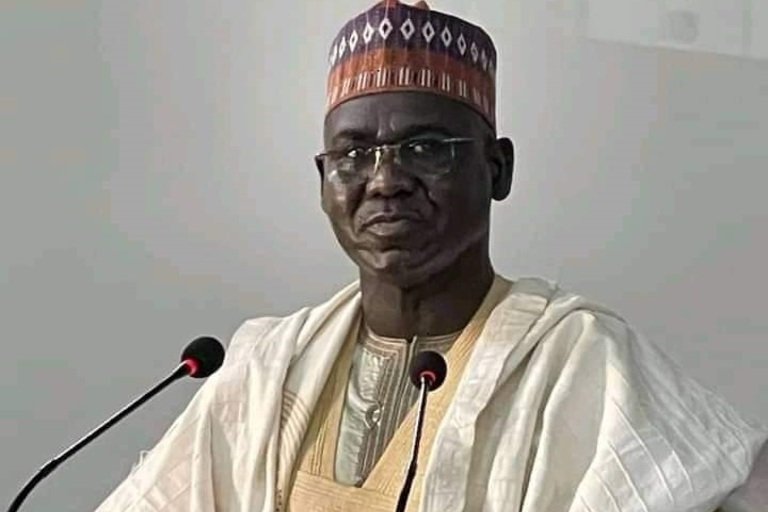
Tukur Buratai, a former Chief of Army Staff, has stated that he should not be held responsible for the failure to reveal the identities of persons accused of supporting terrorism in the country.
He did, however, say that the financiers are well-known and active in society.
Speaking on Channels Television’s Politics Today, on Friday, the retired lieutenant general indicated that relevant authorities are aware of individuals behind the funding but have reasons not to reveal their identities.
“You cannot say I should be responsible for naming the financiers of terror.
“It’s not just about mentioning names; those agencies know why the names are not released. Action should be taken; these individuals are still within society today, and they are known. I take responsibility for certain things that are strictly the Nigerian army’s responsibility,” he said.
Buratai also clarified that the decision to rehabilitate repentant members of Boko Haram was made by the federal government, not the military.
“The initial concept that we had was that we gave them a timeline to surrender in 2016, and if they surrendered, we gave them a free passage and handed them over to appropriate agencies to rehabilitate them,” he added.
The former ambassador also expressed concern about the country’s security concerns, urging more information collection to combat terrorism and other dangers.
He also encouraged the government to increase security personnel as part of measures to promote national safety.
Calls for the revelation of terrorist financiers have persisted for years, especially after the federal government promised that individuals supporting the insurgency would be revealed and prosecuted.
In 2021, the federal government claimed that it had identified many individuals and businesses suspected of sponsoring terrorist groups, generating public hopes that their names will be released.
The Nigerian Financial Intelligence Unit had earlier stated that it was tracking questionable cash transfers linked to terrorism, while security services stepped up investigations into funding networks backing insurgency activities.
Despite these disclosures, the identity of the alleged financiers has mostly remained unknown, raising condemnation from civil society organizations and security specialists who believe that transparency is critical to reducing impunity.
Nigeria has been fighting an insurgency in the North-East for more than a decade, with Boko Haram and its splinter organizations responsible for thousands of fatalities and widespread displacement.