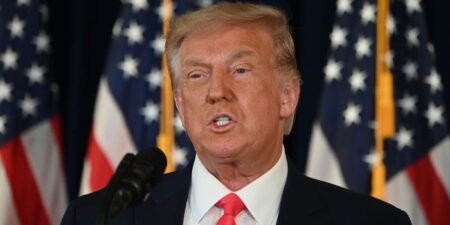




Democrats have taken control of both chambers of the United States Congress following sweeping victories in the 2026 midterm elections, delivering a major political setback to President Donald Trump and his Republican Party.
The opposition party secured control of the Senate and House of Representatives on Tuesday, November 3, after making significant gains in traditionally Republican strongholds.
The results reflected widespread voter dissatisfaction with the high cost of living, Trump’s handling of the economy and the unpopular US-Israeli war against Iran.
According to Reuters, Democrats recorded historic victories in several states, including Texas, Kansas and South Carolina, where Republican candidates had previously enjoyed considerable electoral support.
In Texas, Democrats ended a decades-long losing streak by winning a Senate seat and defeating three-term Republican Governor Greg Abbott.
Kansas also elected its first Democratic senator since the Great Depression, while Democrats defeated Trump’s preferred Senate candidate in South Carolina.
The victories will usher in a new era of divided government in Washington, ending two years of Republican control of Congress during which Trump’s administration faced limited legislative opposition.
Democrats prepare to challenge Trump’s agenda
With the new Congress expected to take office in January, Democrats are preparing to use their legislative majority to scrutinise Trump’s administration, investigate members of his family and political allies, and demand concessions on major legislation.
The Democratic-controlled Senate will also have the power to block Trump’s nominees, including appointments to the Supreme Court should a vacancy arise.
Senate Democratic leader Chuck Schumer described the election outcome as a significant political shift.
“There is now a generational remake of the Senate map that is going to change America,” Schumer said.
“Americans voted for change, and now Democrats must deliver.”
Trump’s preferred candidates suffer defeats
The election results also exposed the difficulties faced by Republican candidates who received Trump’s backing.
In Texas, Trump supported Attorney General Ken Paxton against incumbent Senator John Cornyn. Paxton lost the contest.
In South Carolina, Trump’s preferred candidate, Darline Graham, also suffered defeat.
Republican Senator Susan Collins of Maine lost her re-election bid, bringing an end to her 30-year Senate career despite efforts to distance herself from the president during the campaign.
Democrats also flipped more than two dozen Republican-held House seats, securing control of the chamber.
Progressive Democrat Abdul El-Sayed won Michigan’s open Senate seat, becoming the first Muslim elected to the US Senate. He defeated former congressman and FBI agent Mike Rogers.
“You chose hate, and Michigan chose hope,” El-Sayed told supporters after his victory.
Voters cite economic concerns and Iran war
Democrats focused much of their campaign on affordability and corruption, blaming Trump’s tariff policies and the war with Iran for increasing financial pressure on American households.
Republicans, meanwhile, attacked Democratic candidates over cultural issues, including transgender rights, describing their opponents as radical and extreme.
However, the election results indicated that economic concerns featured prominently in voters’ decisions.
Exit polls conducted by SSRS for a consortium of US media organisations found that half of voters viewed the midterm elections as an opportunity to rebuke Trump.
About three-quarters said they were angry or dissatisfied with the direction of the country, while 70 per cent wanted Congress to provide stronger checks and balances on the president.
Democratic Senator Jon Ossoff of Georgia also criticised the president while addressing supporters at a victory gathering.
“In sweeping and decisive victories, the American people have rebuked the depravity, corruption and incompetence of the man named President Donald J. Trump,” Ossoff said.
Trump accepts election outcome
Despite the Republican losses, Trump accepted the election results and congratulated the Democrats in an interview with Fox News.
He also indicated his willingness to work with the opposition party on issues such as immigration, although he threatened to veto legislation he considered unreasonable.
The president had repeatedly urged supporters during the campaign to “pretend I’m on the ballot”, while holding dozens of rallies in support of Republican candidates.
As the scale of the losses became apparent, Trump wrote on social media: “I wasn’t on the Ballot and if I was, we would have won IN A LANDSLIDE!”
The president also acknowledged that the conflict with Iran had contributed to his party’s poor performance, although he maintained his position on the war.
Historic victories across the United States
The midterm elections also produced several historic milestones.
In Georgia, Democrat Keisha Lance Bottoms became the first Black woman elected governor of a US state.
Republican Byron Donalds won Florida’s gubernatorial election, becoming the first Black Republican governor in the United States.
Democrat Gina Hinojosa will become Texas’ first Latina governor, while Xavier Becerra will become California’s first Latino governor.
The Democratic victories are expected to reshape political power in Washington and place greater legislative scrutiny on Trump’s administration during the final two years of his presidency.