


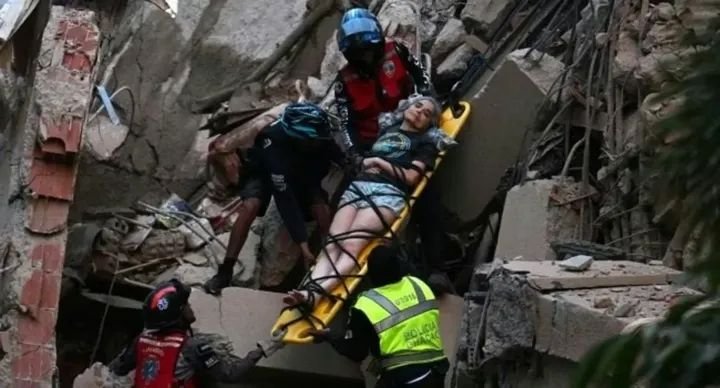
More than 920 people have been killed and 3,360 others injured in the Venezuela earthquakes, according to the government, as rescuers keep searching for survivors and families wait desperately for news.
The injured are being treated in makeshift medical facilities after the two quakes demolished scores of structures in the country’s north, including Caracas, the capital.
A top government official said hundreds of international rescue personnel had arrived in the country, with more on their way.
Two massive earthquakes struck Venezuela within seconds of each other on Wednesday. The second quake had a magnitude of 7.5, making it one of the biggest shocks to hit the country in a century.
According to officials, the most devastated location is La Guaira, located north of the city. The state is home to one of the country’s two main ports and Simón Bolívar International Airport in Maiquetía, the main airport.
Many individuals remain missing, and the death toll is sure to climb as rescue attempts continue.
Natacha Diaz of La Guaira told the BBC that her two daughters, ages 22 and 23, were trapped beneath the wreckage of a collapsed retail center where they worked as manicurists.
“They were with their friends,” she said. “I just want them to be found. I have faith and hope that they are there.”
“I just want them back with me. They are all I have, please.”
National Assembly Speaker Jorge Rodriguez stated in a national TV broadcast on Friday that the death toll had risen to 920, with at least 172 people still feared to be trapped.
In La Guaira alone, at least 243 people have been saved, according to the leading congressman, who is the acting president’s brother.
Dozens of people have been rescued alive, which “brings us joy that they can embrace their families and loved ones,” Acting President Delcy Rodríguez said at a televised briefing on Friday.
There have been 214 aftershocks since the original quakes, she said.
According to Jorge Rodríguez, hundreds of buildings have been damaged or destroyed, including hospitals and shopping centers. Additionally, at least 1,000 other infrastructure sites have been impacted.
Surviving medical facilities are claimed to be overburdened, with physicians telling the BBC that treating patients was already challenging before the earthquake.
“All our hospitals lack supplies and lack medicines; we are not able to provide medical attention to our people on a normal day,” Doctor Pedro Javier Fernandez said.
“Now with this tragedy, the emergency is even bigger, and it’s more difficult to face than in other countries,” he added.
Rescuers were seen dragging people out of collapsed buildings with their bare hands, while broken communications, damaged roads, and a shortage of supplies hampered the first emergency response.
On Friday, a UK military flight containing British search and rescue crews, dogs, and drones flew from RAF Brize Norton in Oxfordshire to Venezuela.
The flight carries specialists from 14 UK fire agencies, commanded by Merseyside Fire & Rescue.
Other countries, such as the United States, the Netherlands, Mexico, and Switzerland, have sent teams. The United States has also announced the deployment of warships and transport aircraft, as well as $150 million (£113 million) in help.
The secretary general of the Norwegian Refugee Council stated that international rescue workers who are currently on the ground have witnessed “horrific damage.”
Jan Egeland told the BBC that Venezuela was unprepared and susceptible in an emergency situation due to its existing “crumbling infrastructure” caused by decades of underinvestment.
Venezuela has been experiencing an acute economic crisis for more than a decade, resulting in deteriorating living standards in the oil-rich country.