


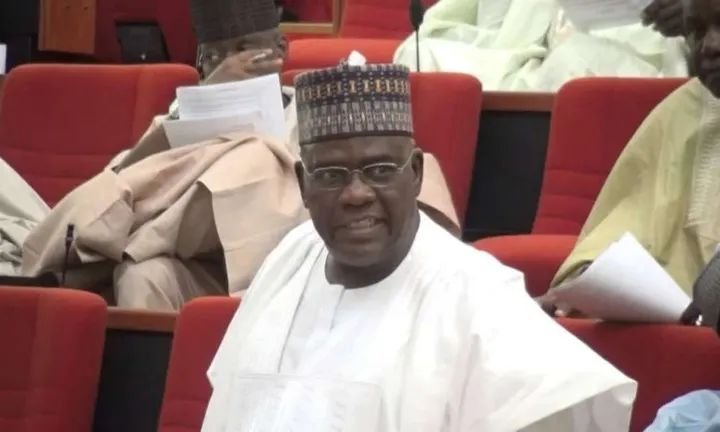
Former Minister of Power and Steel, Danjuma Goje, has proposed that Nigeria hand over the management of its electricity sector to China or another advanced country for 20 years to achieve stable power supply.
Goje, senator representing Gombe central made the suggestion recently during the senate screening of minister-designate for power, Joseph Tegbe.
The senator said Nigeria should abandon fragmented reforms and instead adopt a comprehensive agreement covering electricity generation, transmission and distribution.
According to him, the country should “swallow our pride” and invite a successful nation, preferably China, to take full control of the sector for two decades.
“The best thing to do, in my opinion and in the opinion of some others, is to swallow our pride, call on one of the major successful advanced countries, preferably China, because their cost of labour is generally low,” Goje said.
“Give them this project of power in Nigeria: ‘Run it for 20 years, give us stable power. Get your money back and move out’.”
The lawmaker argued that reliable electricity would transform Nigeria’s economy and improve development across industries.
“And within these 20 years, we’ll have stable power. And you know the meaning of stable power is it means real development. All other areas will work perfectly,” he added.
Goje criticised ongoing sector reforms, saying projects targeting only one aspect of the electricity chain were ineffective. He referenced the Siemens power initiative, arguing that solving transmission problems alone would only expose failures in generation or distribution.
He also faulted electricity distribution companies for failing to provide basic infrastructure such as transformers.
“These days, even transformers are not provided by the distribution companies,” he said.
The senator urged Tegbe to consider negotiating a wholesale agreement with China or another country to overhaul the sector.
Goje insisted the arrangement would not amount to debt because the foreign partner would recover its investment through operations before exiting the country.
“We are already used to taking debts. This is not debt. They will run the business, make their money, and leave us with a stable light,” he said.