




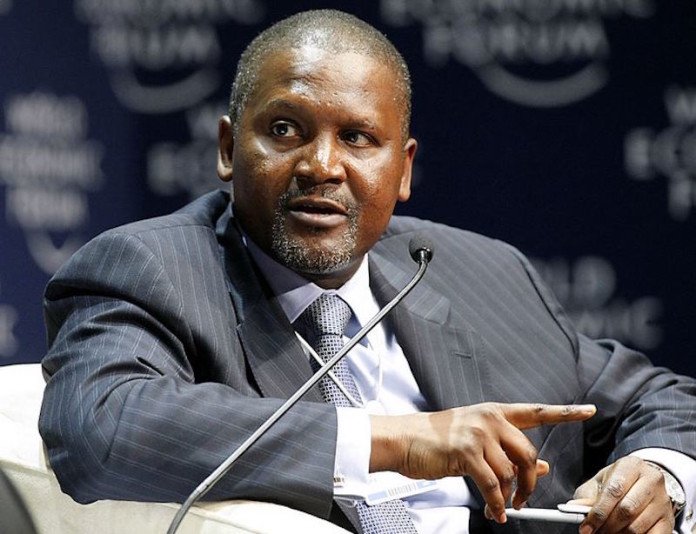
President of the Dangote Group, Aliko Dangote, has commended Uganda’s decision to halt the export of unprocessed minerals, as African governments intensify efforts to promote value addition and industrialisation.
Uganda’s policy, driven by President Yoweri Museveni, is part of a broader continental shift toward processing raw materials locally to increase economic returns, create jobs, and strengthen domestic industries.
Dangote said the move aligns with efforts to ensure Africa benefits more from its natural resources, rather than exporting raw materials with limited value.
“I applaud President Museveni for his bold decision to ban the export of unprocessed minerals,” he said, adding that his group is ready to invest in refining infrastructure in East Africa.
“I also want to commit to the two presidents here that, with their support for the refinery, we will build a similar one in East Africa like the one we have in Nigeria.”
His remarks come as East African countries, including Kenya, Uganda, Tanzania, and South Sudan, continue discussions on establishing a regional oil refinery to process crude within the region and reduce dependence on imported petroleum products.
The push for refining capacity is linked to ongoing oil development projects in East Africa, including the East African Crude Oil Pipeline, which is expected to transport crude from Uganda’s oilfields to Tanzania’s coast for export.
Nigeria’s refining landscape has also evolved in recent years, with the development of large-scale private refining capacity. The Dangote refinery, with a capacity of 650,000 barrels per day, is among the largest in the world and has begun supplying refined products to domestic and regional markets.
The expansion of refining capacity across Africa is seen as a critical step toward improving energy security, stabilising fuel supply, and reducing exposure to global price shocks.
Dangote said collaboration with governments would be essential to delivering similar projects in East Africa, particularly in terms of policy support, infrastructure, and investment frameworks.