

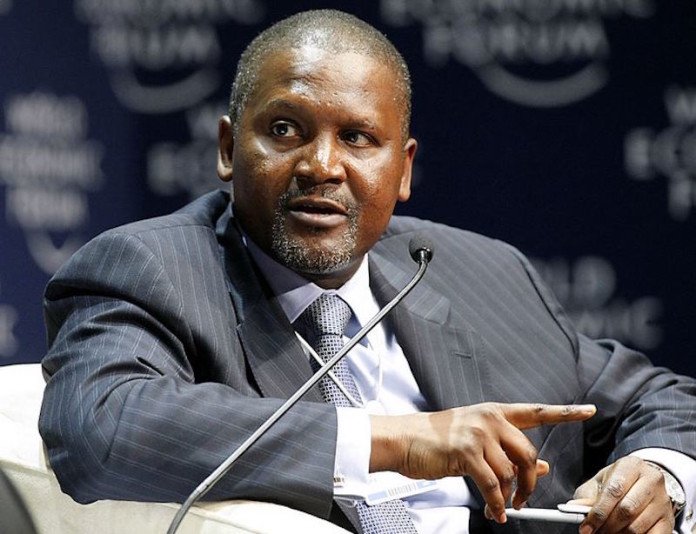
Aliko Dangote has unveiled plans to generate 20,000 megawatts of electricity in Nigeria, marking a major expansion of his industrial empire into the country’s troubled power sector.
The billionaire businessman disclosed the ambition during a conversation with Makhtar Diop, saying energy remains one of Africa’s most urgent development needs.
“We are now going into power… 20,000 megawatts,” Dangote said, while also highlighting fertilisers and industrial inputs as critical sectors for the continent’s growth.
The move comes as Nigeria continues to grapple with a severe electricity crisis that has undermined economic growth, disrupted businesses and left millions reliant on costly diesel generators.
Dangote’s latest expansion follows the commissioning of his 650,000 barrels-per-day refinery and the rapid growth of his fertiliser operations. He said the group’s businesses are now generating strong cash flow and becoming increasingly asset-light, positioning the conglomerate to fund another capital-intensive venture.
The announcement also places renewed scrutiny on the federal government’s repeated failure to stabilise electricity supply.
Dangote calls for shift to Africa’s domestic refining
Adebayo Adelabu had previously promised improvements in generation capacity, but multiple deadlines passed without achieving sustained supply growth. Although Nigeria briefly reached a record 6,003 megawatts in March 2025, output later declined due to vandalised infrastructure and persistent gas supply challenges.
Current average supply levels remain far below demand in a country of more than 200 million people, with generation often hovering around 3,331 megawatts.
According to World Bank estimates, unreliable electricity costs Nigeria about $29 billion annually, equivalent to roughly 10 percent of the country’s gross domestic product.
Despite Dangote’s reputation for delivering large-scale industrial projects, analysts say the proposed 20,000-megawatt expansion faces major structural obstacles.
Nigeria’s transmission network remains too weak to reliably wheel even 8,000 megawatts without risking grid instability, raising concerns that generation gains may not translate into improved electricity access for homes and industries.
The sector also continues to struggle with deep financial problems, as distribution companies battle poor revenue collection and mounting debts owed to generation firms and gas suppliers.
Industry figures estimate that nearly 70 percent of Nigeria’s thermal plants operate below capacity because of inadequate gas supply linked to unpaid invoices.
Dangote may seek to leverage his own gas resources and LNG infrastructure to reduce exposure to supply disruptions, though regulatory uncertainty and tariff disputes remain significant risks for investors in the sector.