


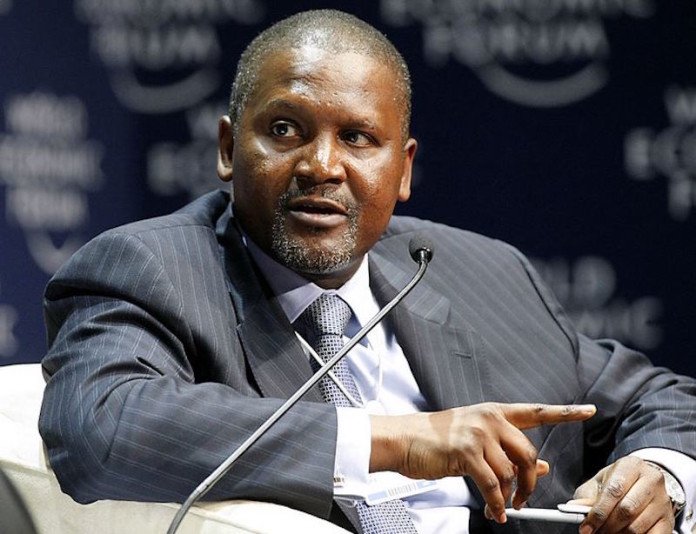
Aliko Dangote, President of Dangote Industries Limited, has said petrol remains relatively cheaper in Nigeria than in neighbouring countries, with the price gap encouraging cross-border smuggling.
Dangote made the remarks during an interview with Arise TV on Tuesday, amid fresh increases in petrol prices across the country.
He said the cost of petrol in Nigeria should be compared with prices in neighbouring countries before determining whether the product is expensive.
“Expensive is relative,” Dangote said, adding that petrol in some neighbouring countries is between 30 and 50 per cent more expensive than in Nigeria.
He said the price difference creates an incentive for traders to move petrol across Nigeria’s borders and sell it at higher prices.
Using Niger as an example, Dangote said petrol selling for N1,350 per litre in Nigeria costs about 20 to 25 per cent more in the neighbouring country.
He questioned why traders would ignore an opportunity to make a 25 per cent return by moving petrol across the border.
According to him, some traders disguise fuel shipments as being destined for locations such as Sokoto before diverting them across the border to Ilela for sale.
Dangote assures Nigerians of petrol supply
Dangote also warned that the ongoing crisis in the Middle East could create concerns over petroleum availability, beyond the issue of rising prices.
He, however, assured Nigerians that the Dangote refinery would continue supplying the domestic market.
“We will make sure that Nigeria will be fully, you know, I mean, delivered. We will deliver to Nigeria. Nigerians don’t need to worry,” he said.
“There will not be any shortage from our own part. There won’t be any shortage. There will not be any queues.
“And we’ll make sure that we keep satisfying the market.”
The assurance comes as petrol prices rise across several filling stations. Reports on Monday showed prices reaching N1,400 per litre in Lagos and N1,450 in Abuja.
Inconsistent policies, power supply worry Dangote
Dangote identified inconsistent government policies and inadequate electricity supply as two major challenges confronting businesses in Nigeria.
“The greatest problem, there are two, which are still existing. One is inconsistencies in government policies. The second one is to do with lack of electricity,” he said.
He said the high cost of alternative energy, particularly diesel, was making it increasingly difficult for manufacturers to remain profitable.
“You cannot manufacture goods with diesel. You can see where diesel is today. You can’t even produce bread and make money today. So, we have to look at that today,” Dangote said.
He also highlighted Africa’s electricity deficit, saying about 600 million people across the continent lack access to electricity.
“We must make sure, even for us, really, as Africans, we cannot sit down and see that everybody is complaining. 600 million of our people, they actually don’t have power,” he said.