




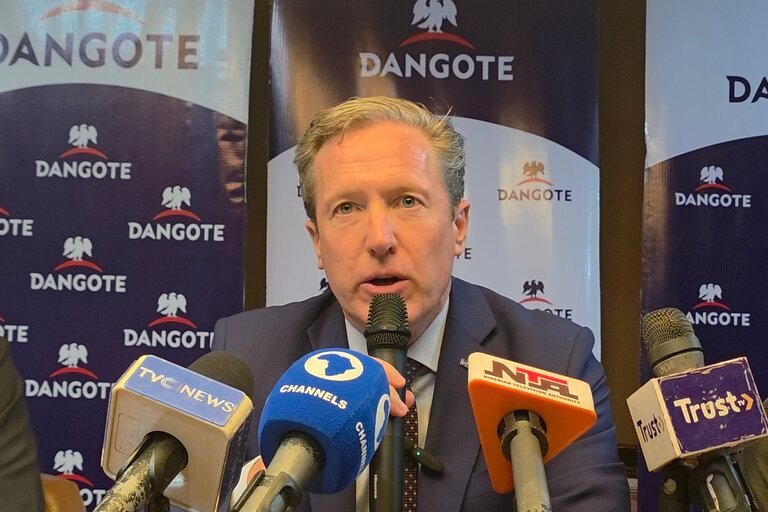
Dangote Petroleum Refinery has dismissed allegations that its refined petroleum products are exported to Lomé, Togo, before being re-imported into Nigeria, describing the claims as false and commercially illogical.
The refinery made the clarification in a statement issued on Tuesday, following reports alleging that Nigerian marketers were importing Dangote-refined products through the offshore trading hub in Lomé and bringing them back into the country.
The company said the allegations contradict its business objectives and its commitment to reducing Nigeria’s dependence on imported petroleum products.
“As a matter of policy, we do not respond to baseless and unsubstantiated claims, given our current determination and focus in ensuring energy security in Nigeria and Africa as a whole,” the statement said.
The refinery added that it was responding to the claims to set the record straight.
“The allegation that products produced by Dangote Refinery are exported to Lomé and subsequently re-imported into Nigeria is not supported by either available trade flows or commercial logic.”
According to the company, facilitating imports that compete with its own products would run contrary to its commercial interests as one of Nigeria’s largest suppliers of refined petroleum products.
Dangote Refinery also said its sales contracts and tender agreements expressly prohibit buyers from reselling or re-importing its products into Nigeria.
The company argued that the economics of such transactions do not support the allegations, estimating that transporting products from its refinery to Lomé and back into Nigeria would cost between $82 and $90 per metric tonne.
It stated that it does not offer export discounts large enough to offset those logistics costs or create profitable arbitrage opportunities.
“Simply put, there is no evident commercial incentive for a producer to incur additional shipping, storage, financing and handling costs only for the product to return and compete in its largest and closest market.”
The refinery said it maintains detailed records of all product sales, including lifting locations, nominated vessels, counterparties and declared destinations where applicable.
It added that suggestions it knowingly facilitates re-importation are inconsistent with the contractual restrictions imposed on buyers and the company’s compliance procedures.
Reaffirming its commitment to strengthening Nigeria’s domestic refining capacity, the refinery said its objective remains reducing fuel imports into the country.
“It would therefore be inconsistent with both the refinery’s commercial interests and its publicly stated position to support or encourage practices that increase imports into Nigeria.”
The company concluded that there is neither a strategic reason nor a commercial incentive to export petroleum products to neighbouring countries for subsequent re-importation into Nigeria.