




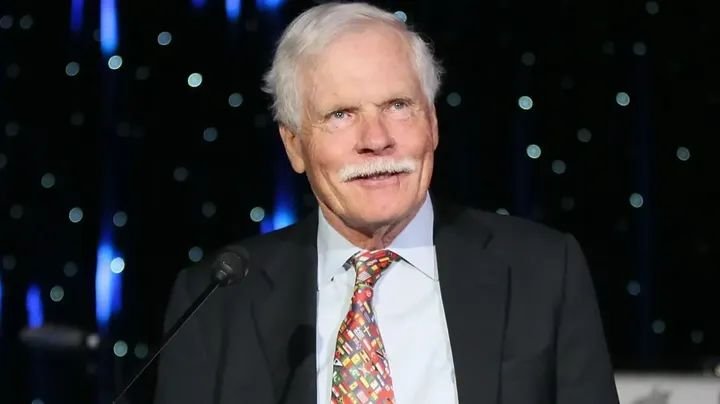
Media mogul Ted Turner, who revolutionised global broadcasting by launching the world’s first 24-hour news channel, has died at the age of 87.
Turner founded CNN in 1980, transforming how news is delivered and consumed. The network began amid scepticism but quickly proved its value through continuous, real-time coverage of major global events.
US President Donald Trump described Turner as “one of the greats of broadcast history,” while current CNN chairman Mark Thompson called him “the giant on whose shoulders we stand”.
Veteran journalist Christiane Amanpour praised Turner for creating “an unstoppable media revolution”, highlighting his enduring influence on journalism worldwide.
CNN initially faced ridicule, with critics dubbing it the “Chicken Noodle Network”. However, it gained credibility through fast-moving coverage of events such as the 1981 assassination attempt on Ronald Reagan and the 1986 Space Shuttle Challenger disaster.
Its global breakthrough came during the Gulf War, when live reporting from Iraq redefined war coverage and cemented CNN’s place in media history.
Building a Media Empire
Beyond CNN, Turner built a vast broadcasting portfolio, including Turner Broadcasting System, TNT, Cartoon Network and Turner Classic Movies. He later merged his company with Time Warner.
His success inspired competitors, including Fox News, launched by rival Rupert Murdoch in 1996.
A Larger-Than-Life Figure
Known for his bold personality, Turner earned nicknames such as “Captain Outrageous”. He was also a sports owner, holding teams like the Atlanta Braves and Atlanta Hawks.
Away from media, he won the America’s Cup in 1977 and later became a major philanthropist, donating $1 billion to the United Nations and supporting environmental causes.
Turner was married to actress Jane Fonda from 1991 to 2001.
In 2018, Turner disclosed he had Lewy body dementia, a progressive neurological condition.
Legacy of a Media Pioneer
Turner’s creation of CNN reshaped journalism, ushering in the era of continuous news coverage that now dominates global media.
His influence extended beyond broadcasting into sports, philanthropy and environmental advocacy, leaving a legacy that continues to shape how the world consumes information.