




By Kolawole Olaniyan
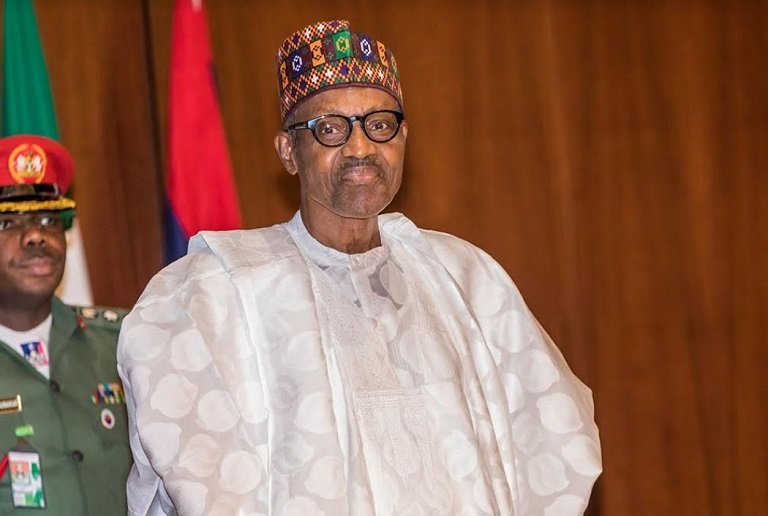
President Muhammadu Buhari was elected in 2015 after emphasising his track record of tackling corruption, and his pledge to stop public officials from looting the country’s treasury, after he rightly declared: “if we don’t kill corruption, this corruption will kill us.”
Mr. Buhari has backed his commitment by putting in place some important measures such as the Treasury Single Account (TSA), the Whistle-Blowing Policy and the establishment of the Presidential Advisory Committee Against Corruption, to combat the systemic theft of public resources and by extension, its pernicious effects on human rights and development.
The TSA, in particular, aims to pave the way for the timely payment and capturing of all revenues going into the government treasury, without the intermediation of multiple banking arrangements.
However, real progress is yet to be made with respect to the prosecution of cases of grand corruption. High-ranking corrupt officials rarely end up in jail, as suspects continue to exploit the flaws in the justice system and the anti-corruption programme’s legal and institutional mechanisms, to the point where individuals are profiting from their crimes.
Part of the problem is the authority’s disdain for the rule of law, as illustrated by the tendency to pick and choose which court orders it complies with. This selective application of the rule of law implies an agenda to delegitimise the judiciary, and perhaps, inadvertently, render it incapable of contributing to the anti-corruption fight.
Mr. Buhari has put the rather slow pace of his government’s fight against corruption down to the ‘lack of cooperation by the judiciary.’ As he put it: “In fighting corruption, however, the government would adhere strictly by the rule of law. Not for the first time I am appealing to the judiciary to join the fight against corruption”.
READ: Nigerian Army kills 23 Boko Haram fighters
But while the judiciary may not as yet be up to speed in terms of accelerating the hearing of high-level corruption cases – consistent with the Administration of Criminal Justice Act 2015 – and adopting an activist-cum-public-interest approach to such cases, judges can do very little if the investigation and prosecution of grand corruption cases continue to be poorly handled.
Mr. Buhari cannot on the one hand blame the judiciary for ‘failing to work’ with his government in the fight against corruption, while on the other be disobeying judgments by the same judiciary.
Yet, obeying court orders is the bare minimum required of Mr. Buhari by his constitutional oath of office to: “preserve, protect and defend the Constitution of the Federal Republic of Nigeria [1999]”, and by extension, defend the independence of the judiciary. But the attitude of the government to court orders has fallen far short of this constitutional commitment.
Court orders that are yet to be complied with include those obtained by human rights lawyer and Senior Advocate of Nigeria, Femi Falana, particularly the judgments by Nigerian courts ordering: The establishment of education banks to assist poor students to obtain loans to pursue tertiary education; the restoration of the People’s Bank of Nigeria to give loans without collateral to underprivileged citizens, and more recently, the release of Islamic Movement of Nigeria leader, Sheikh Ibrahim El-Zakzaky and his wife, Zeenah, from unlawful detention.
Other high-profile judgments the authorities are refusing to obey include at least three judgments obtained by the anti-corruption group, Socio-Economic Rights and Accountability Project (SERAP). The first is the judgment by Justice Hadiza Rabiu Shagari ordering the government to tell Nigerians about the stolen asset it allegedly recovered, with details of the amounts recovered.
The second judgment, by Justice Mohammed Idris, ordered the government to publish details on the spending of stolen funds recovered by successive governments since the return of democracy in 1999, while the third judgment, by the ECOWAS Court of Justice in Abuja, ordered the Nigerian authorities to provide free and quality education to all Nigerian children without discrimination.
Disobedience of court orders is inconsistent and incompatible with any definition of the rule of law. It’s very difficult for any country to successfully combat corruption if its government doesn’t obey court orders. If government doesn’t obey court orders, citizens are unlikely to do so.
Disobedience of court orders implies the executive can do what it likes.
The government has also claimed that obeying judges’ decisions would require an assessment of ‘national security’ implications and potential to spark crisis. However, this position is the exact opposite of the rule of law.
The rule of law implies the supremacy of the law as opposed to arbitrariness by government, or the whims and fancies of its officials. This means that it is the responsibility of every law-abiding government to obey decisions of lawfully constituted courts, including those the authorities may dislike.
The government can disagree with court orders, but if it has issues with any of these orders, it ought to use all available means of appealing them rather than refusing to obey them. Deliberate disobedience of judges’ decisions would, ultimately, shatter citizens’ confidence in judges’ ability to champion the rule of law.
In any case, the surest way for any government to promote and improve national security is to uphold the rule of law, by among others complying with court orders.
Supporters of the government may point to Mr. Buhari’s political will to fight corruption. To his credit, Mr. Buhari has shown some level of political will to fight corruption, at least when compared with the record of his predecessor, former President Goodluck Jonathan, who once infamously said: “stealing is not corruption.”
However, political will is not enough to tackle corruption if the government routinely disobeys court orders. In fact, the fight against corruption can only succeed if all citizens, including those who serve in the government, are adequately constrained by the law.
Make no mistake: If Mr. Buhari fails to demonstrate commitment to obeying judges’ decisions, some of which are highlighted above, he will be striking at the foundation of Nigerian constitutional order, suggesting that his government is above the law.
Mr. Buhari should embrace the rule of law as a logical extension of his commitment to ‘kill corruption’. The rule of law can check corruption and abuses of power. If the fight against corruption is to succeed (and by extension, the rule of law is to be upheld), it is vital that court orders are rigorously and predictably enforced.
It is to be hoped that Mr. Buhari and his government would learn from John Locke’s dictum that “Where-ever law ends, tyranny begins” and Thomas Paine’s declaration that “in free countries, the law ought to be King; and there ought to be no other.”
As the African Commission on Human and Peoples’ Rights put it (in Zimbabwe Lawyers for Human Rights v Zimbabwe, para 118): “The alternative to the rule of law is the rule of power, which is typically arbitrary, self-interested and subject to influences which may have nothing to do with the applicable law or the factual merits of the dispute.”
Learning from these wise words may seem a tall order, but it is the one that the rule of law and Nigerian constitutional order commands.
Kolawole Olaniyan is the author of Corruption and Human Rights Law in Africa and legal advisor to Amnesty International’s International Secretariat.