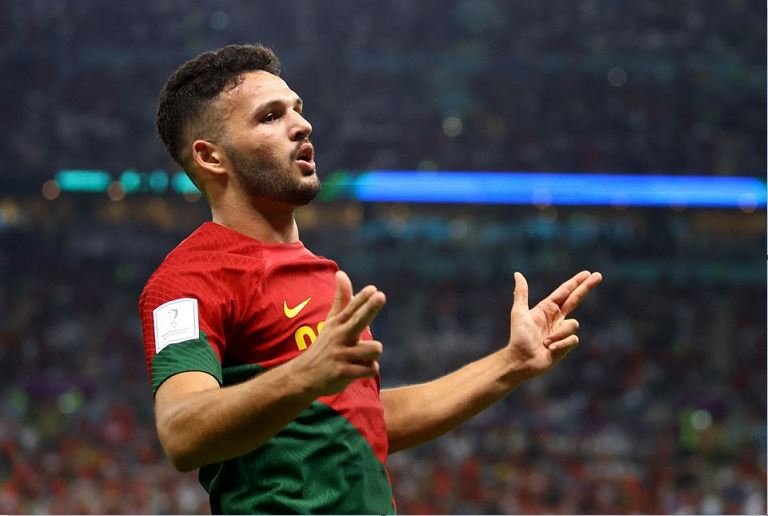




France Football has spoken out on the long-held idea that Ballon d’Or winners must play for European clubs, as debates during the 2026 FIFA World Cup knockout stage intensifies.
The Ballon d’Or, football’s most prestigious individual award, has typically been won by players from Europe’s top leagues, including PSG’s Ousmane Dembélé in 2025 and Manchester City’s Rodri in 2024.
This has strengthened the idea that playing in Europe is required to win the award.
However, in a statement made on its official X handle on Sunday, the organizer stated that the Ballon d’Or has had no restrictions on a player’s club membership since 2007, emphasizing that the award is given to “the best player in the world, full stop.”
The clarification comes as speculation about this year’s Ballon d’Or frontrunner heats up alongside the World Cup’s final stages.
According to France Football, the award was first established in 1956 to recognize the finest European player competing in a European league.
In 1995, eligibility was expanded to include players of all nationalities who played in Europe before the final restriction was lifted in 2007.
“Since 2007, there’s been no restriction: the Ballon d’ Or rewards the best player in the world, full stop,” the organizers said.
According to the journal, while most winners have previously represented European clubs, it is still possible to win the honor while playing elsewhere.
It stated that only one men’s Ballon d’Or winner had officially represented a non-European team at the time of receiving the award.
“Only one player was based outside Europe when he lifted the Ballon d’Or: Lionel Messi in 2023. At the time of the 67th ceremony, on October 30, 2023, the Argentine was already playing for Inter Miami,” the statement said.
The organizers did, however, point out that Messi’s triumph was based on his exploits for Paris Saint-Germain before joining the Major League Soccer club in 2022/23.
They also noted that since 2022, the Ballon d’Or has been assessed on a season basis—from August 1 to July 31—rather than a calendar year.
According to France Football, just one female player has won the award while representing a team outside of Europe.
“Yes, it’s entirely possible to win the Ballon d’Or without playing for a European club. It just looks harder in light of history, but the growing strength of certain leagues outside Europe is shaking things up,” the organizers said.
“Nothing is impossible when it comes to the Ballon d’Or. Anyone, regardless of their league, can technically claim it.” They added.