


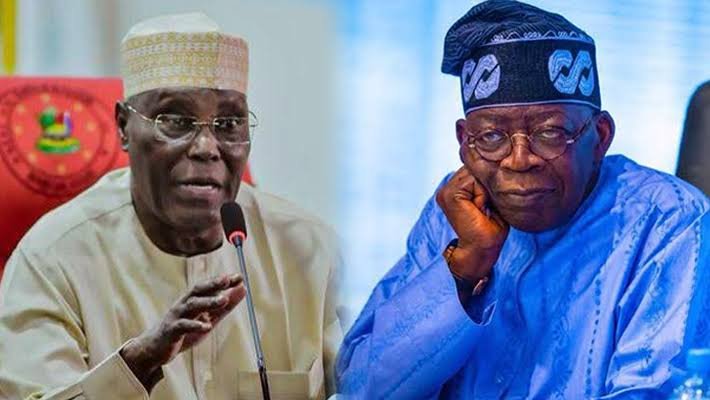
Former Vice President Atiku Abubakar and the campaign organisation backing Oyo State Governor Seyi Makinde have criticised the Federal Government’s proposed 30-day petrol discount, describing it as inadequate and politically motivated.
Atiku, the African Democratic Congress (ADC) presidential candidate, called the initiative a temporary political response to Nigeria’s worsening cost-of-living crisis, while the Makinde/Daura Presidential Campaign Organization (MDPCO) dismissed it as a “deceitful and failed media stunt”.
The Federal Government announced the discount on Thursday as part of fresh measures to cushion the impact of high fuel prices and stabilise pump prices.
Minister of Finance and Coordinating Minister of the Economy, Taiwo Oyedele, said the arrangement would initially last 30 days and cover petrol dispensed by the Nigerian National Petroleum Company Limited (NNPCL), with priority given to public transport operators.
Oyedele maintained that the initiative was not a subsidy but an arrangement to sell petrol at cost.
Atiku Accuses Tinubu of Offering Temporary Relief
In a statement issued by Phrank Shaibu, Director of Strategic Communication of the ADC Presidential Campaign Council, Atiku accused President Bola Tinubu’s administration of offering short-term relief after years of rising fuel prices and economic hardship.
He argued that the intervention was politically motivated, particularly with the 2027 elections approaching.
“Atiku totally rejects this calendar-scheduled, election-laced subsidy package. Nigerians are not fools to be offered a month of discounted fuel after years of punishing prices and then expected to forget the hardship when the discount expires. This is shameless and heartless,” he said.
Atiku described the initiative as “not an economic plan but a political bandage on a wound the government had helped create”.
He questioned what would happen after the 30-day period, arguing that Nigerians would still face high transport fares, expensive food and elevated living costs when the discount expired.
“What happens on Day 31? Nigerians wake up to the same brutal prices, the same punishing transport fares and the same rising cost of food. The government cannot manufacture relief for one month and expect Nigerians to applaud while the hardship remains,” he said.
Atiku Questions Scope of Fuel Discount
The former vice-president also questioned the intervention’s limited coverage, noting that it applied to NNPCL filling stations.
He said the government had not explained how much motorists would save per litre or guaranteed that transport operators would pass on the savings to passengers through lower fares.
Atiku further argued that the government’s decision to introduce temporary relief contradicted its earlier position on measures to cushion the impact of rising fuel prices.
“This volte-face proves that the production-support proposal I have advanced is workable, achievable and not complicated,” he said.
Atiku maintained that his proposal for capped and budgeted production support tied to fuel refined in Nigeria would provide a more sustainable solution.
He called for safeguards to ensure consumers benefit from the arrangement while supporting domestic refining.
“Nigerians need lasting relief, not a countdown to the return of hardship. Tinubu’s government cannot spend years telling Nigerians to endure, then offer 30 days of relief and call it a solution,” he said.
Makinde Campaign Calls Discount a ‘Failed Media Stunt’
The Makinde/Daura Presidential Campaign Organization (MDPCO), which backs the Allied Peoples Movement (APM) presidential candidate, Governor Seyi Makinde, also rejected the proposed discount.
In a statement signed by its Director of Strategic Communications, Richard Ihediwa, the organisation described the initiative as an “offensive and provocative attempt to beguile Nigerians”.
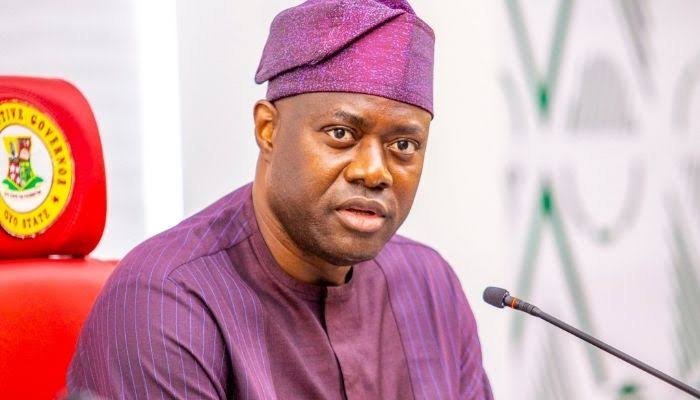
The campaign group argued that Nigerians expected a more substantial reduction in petrol prices, rather than a temporary discount it considered inadequate.
It questioned why the administration had presided over significant petrol price increases but was now proposing what it described as a “teeny N60” reduction.
“The fact that the minuscule reduction will only be on scantly located NNPC owned retail filling stations and for a period of one month clearly shows that the Tinubu administration has come to its wits end and become bereft of solutions,” the statement said.
The organisation also criticised the Federal Government’s proposal to sell crude oil to domestic refineries at a dollar-denominated rate, describing the arrangement as “distasteful and offensive to our status as an oil producing nation”.
Government Targets ₦1,350 Petrol Cost Ceiling
Beyond the 30-day discount, Oyedele announced that the government was working towards a ₦1,350-per-litre ceiling on the ex-gantry or landing cost of petrol.
He clarified that the proposed ceiling would not establish a fixed pump price of ₦1,350 per litre. Instead, it would seek to prevent sudden changes in global crude oil prices and exchange rates from immediately translating into higher petrol costs.
“Pump prices should not have to follow every swing in global crude or the exchange rate. The government is negotiation a ceiling of N1,350 a litre on the ex gantry or landing cost of petrol to keep pump prices stable,” Oyedele said.
According to the minister, refiners and importers would initially bear any shortfall when costs exceeded the proposed ceiling and recover it later when market conditions improved.
He said the mechanism was neither a subsidy nor price control but was intended to moderate price fluctuations over time.
“The reasoning is simple, N1,400 a litre today and N1,400 a litre tomorrow is better than N1,500 a litre today and N1,300 a litre tomorrow. Why? Because volatility itself adds to uncertainty and cost and when fuel goes up sharply, they rarely come down as fast,” he said.
Makinde Campaign Demands More Substantial Relief
Despite the additional measures, the Makinde campaign maintained that Nigerians deserved a more significant and lasting reduction in petrol prices.
The organisation argued that a discount limited to one month would not adequately address the pressure of high fuel costs on households and businesses.
It reiterated its support for Makinde, whom it described as capable of providing honest and responsive governance.
The criticism from Atiku and the Makinde campaign adds to the political debate over the Federal Government’s response to high petrol prices, household spending pressures and the wider cost-of-living crisis.