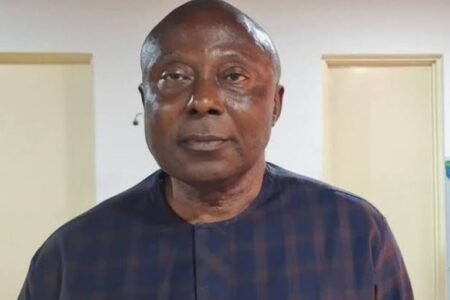





Prof. Nentawe Yilwatda, National Chairman of the All Progressives Congress (APC), has stated that the opposition African Democratic Congress (ADC) does not provide a significant threat to the ruling party.
Yilwatda made the statement on Tuesday while discussing politics on Channels Television. He minimized the political power of the individuals leading the opposition coalition under the ADC today.
“ADC is not a match at all for the APC. For every one person they have, we have five or six of them,” he said.
He also belittled the political weight of some opposition leaders, including the ADC national chairman and former Senate President, David Mark.
“If they have David Mark as former Senate President, we have Ahmad Lawan; we have two former Senate Presidents from the Southeast,” Yilwatda added.
The APC chairman dismissed claims that the ruling party was under pressure or threatened by the growing opposition coalition, insisting that the party was not forcing civil servants to join its ranks.
“We have never asked anybody; we have never appealed to any civil servant. Nobody has forced any civil servant in a letter, verbal—you can bring one video to that effect, and I will apologize,” he said.
He also suggested that allegations of forced recruitment were politically motivated.
“Maybe the opposition is forcing civil servants so they will have numbers,” he added.
He claims that the consistent flow of governors from opposition parties to the APC is proof that the ruling party is still the dominant political force.
Yilwatda had criticized opposition parties for depending more on media appearances than on grassroots mobilization in a different recent interview on Trust TV.
“Opposition parties spend more time on TV talking,” he said.
“It’s not our duty to help our enemies to grow. We can’t feed our enemies. It’s not our duty. They should labor; they should go to the streets,” he added.
Yilwatda claimed that rather than public comments on television, the APC’s political power was primarily developed through behind-the-scenes mobilization throughout states.