


Nigeria’s economic recovery is gathering pace, but improved government revenues and stronger macroeconomic indicators have yet to translate into better living conditions for citizens, the Federal Government and the World Bank have said.
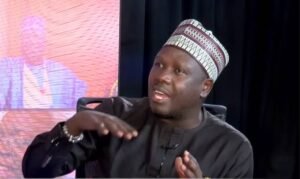
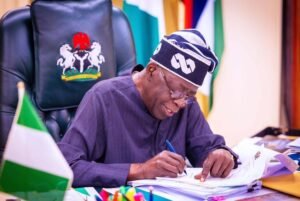
Meanwhile, the Arewa Consultative Forum (ACF) has sarcastically congratulated Daniel Bwala, Special Adviser to President Bola Tinubu on Policy Communication, for acknowledging that the administration’s economic reforms have increased poverty and hardship among Nigerians.
Bwala admitted that more Nigerians had fallen into poverty following the introduction of the reforms but maintained that the government had made significant progress since implementing the measures.
Economic Growth Must Improve Living Standards, Oyedele Says
The Minister of Finance and Coordinating Minister of the Economy, Taiwo Oyedele, said macroeconomic stability was only the foundation for sustainable economic growth, not its ultimate goal.
He spoke on Thursday at the launch of the latest World Bank Nigeria Development Update (NDU) in Abuja.
“The fact that the economy is growing does not mean that we have arrived. We must avoid complacency,” Oyedele said.
He explained that the government wanted economic growth that would create jobs, increase incomes and improve living standards, rather than simply deliver higher economic figures.
“We want growth, but not growth for the sake of it. We want growth that creates jobs,” he added.
The World Bank report, titled *Beyond the Federal Purse: How Higher Revenues Reshaped State Priorities*, showed that Nigeria’s real Gross Domestic Product (GDP) grew by 4.2 per cent in the first half of 2026.
This compared with 3.9 per cent in the corresponding period of 2025 and 3.5 per cent in 2024.
The bank projected average economic growth of 4.4 per cent between 2026 and 2028.
Inflation and Food Prices Continue to Pressure Households
Despite the improvement in economic indicators, inflation remains a major concern for households.
Headline inflation fell from 27.6 per cent in January 2025 to 15.2 per cent in December 2025. However, the decline stalled in 2026 amid rising fuel and food prices, with food inflation reaching 19.6 per cent in August.
The World Bank attributed the renewed pressure partly to higher oil prices following the Middle East conflict and seasonal increases in food prices.
Oyedele said the government’s ultimate target remained single-digit inflation, while the World Bank projected that inflation could decline to about 12 per cent by 2028.
Nigeria’s external position also improved, with its current account surplus rising from $8.6 billion, equivalent to 6.7 per cent of GDP, in the first half of 2025 to about $12 billion, or 7.1 per cent of GDP, in the first half of 2026.
Bwala Defends Tinubu’s Economic Reforms
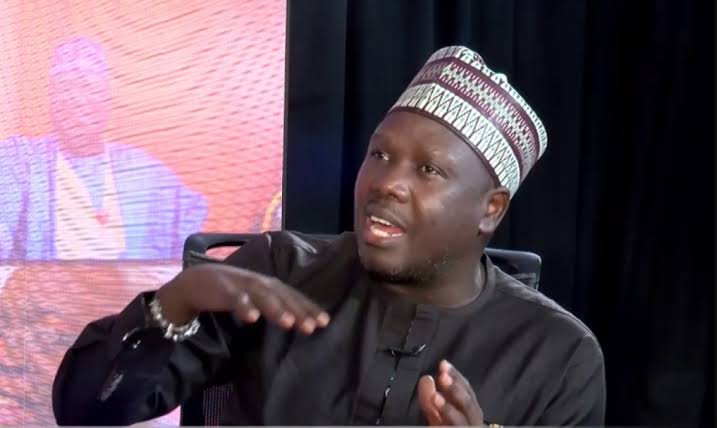
Bwala made the remarks during an appearance on Channels Television’s *Politics Today* on Wednesday, where he defended the economic reforms introduced by the Tinubu administration since it assumed office in May 2023.
The measures include the removal of the petrol subsidy and the unification of the foreign exchange market.
However, the policies contributed to a sharp rise in the cost of living, leaving households and businesses grappling with higher transportation, logistics and production costs.
Bwala acknowledged that the immediate impact of the reforms had been painful and that more Nigerians had fallen into poverty. He nevertheless argued that the hardship was an unavoidable consequence of restructuring the economy.
“Please let it be clear, even to the opposition, the reason you have this number of poor people and some of these doomsday analytics that people are giving is that we undertook a reform.
“There is no part of the world where, if you start a reform like that, there will not be discomfort. More people went down to poverty, acknowledged, but since the reform started till today, we have made marked progress, which is what we have spent the last three years talking to Nigerians about,” he said.
The presidential aide added that despite the number of Nigerians living in poverty, the administration had made progress that should not be overlooked.
ACF Congratulates Bwala Over Poverty Admission
Reacting to Bwala’s comments, the ACF sarcastically congratulated him for acknowledging the hardship associated with the administration’s economic policies.
The forum’s Publicity Secretary, Professor Tukur Mohammed-Baba, spoke during an interview on Arise Television’s *News Day* on Thursday.
“Let’s first of all be very happy and congratulate Bwala. Until now, one would expect that whenever he comes on TV or appears on social media, it is to deny.
“But I think we are making progress since his admitting fundamentally that the reforms have brought untold hardships on Nigerians. Most especially, he has not denied that poverty has been rising,” Mohammed-Baba said.
The ACF spokesman said multidimensional poverty remained widespread across Nigeria. He also criticised the administration’s attempts to justify the hardship as a temporary consequence of economic reforms.
The competing assessments highlight the challenge facing the Tinubu administration: translating improved economic indicators into tangible relief for households struggling with the cost of living.