



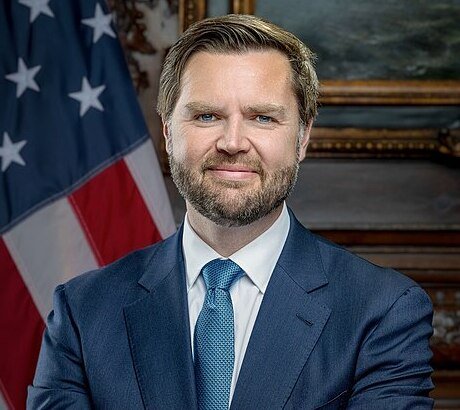
US Vice President JD Vance rattled Washington on Wednesday when he attributed his party’s midterm defeat directly to the Iran war, a move widely seen as an attempt to put distance between himself and President Donald Trump before a possible 2028 White House bid.
In a carefully worded 600-word statement posted on X, the vice president conceded that Trump’s 2024 voters had abandoned the Republicans in the midterm election.
“The reason we lost is the war,” he wrote. “The president himself said so last night.”
In interviews late Tuesday night and on Wednesday, Trump defended the war but conceded that it had contributed to Democrats seizing control of the US House of Representatives and the Senate.
Vance’s position on the war in Iran is an open secret in Washington. Although he has consistently supported the conflict since the US and Israel struck Tehran in February, he has reportedly voiced opposition in private meetings with administration officials.
But those disagreements had stayed out of public view until now.
Just hours after Trump and the party suffered a heavy election defeat, Vance made it clear that he regarded the decision to go to war as a clear political error.
“If you’d like to argue it was worth it, that losing the Senate for the next 6 years was worth it, then do so. Argue it was a worthwhile cost to pay. Agree or disagree, that’s at least honest,” Vance said.
It was a striking statement and one without recent precedent: it is difficult to remember a comparable moment in recent US political history when a sitting vice president has broken so sharply with the president on a signature foreign policy issue.
Trump rejects blame for Republican losses, blames candidates
Trump admits Iran war contributed to Republican midterm losses
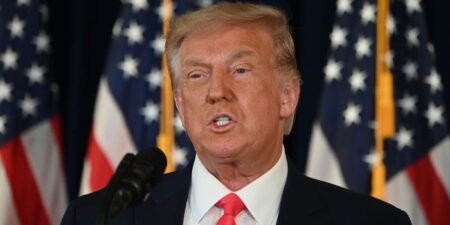
Then came what was arguably an even bigger surprise: Trump who usually expects unwavering loyalty from his senior advisers agreed with Vance that the midterms were “largely” decided by the war. He added that he would “do it again” if faced with the same choices.
It was an early indication that Trump who has valued loyalty from his advisers may give Vance considerable leeway should he decide to launch a presidential campaign.
“I know how he feels about it. I think it was I think it was fine,” Trump told reporters when asked about Vance’s post blaming the war. “I knew that when I went in, and we stopped them from having a nuclear weapon, and they will never have a nuclear weapon.”
Vance’s remark came across as “a way of separating himself from Trump,” according to Daniel Byman, a foreign policy expert at the Center for Strategic and International Studies.
Byman added that drawing contrasts with Trump will be a delicate balancing act should Vance pursue the presidency.
Vance’s post made that balance visible. The vice president did not name Trump and credited unnamed pollsters for much of his analysis of the election results.
Ashley Davis, a Republican strategist, told the BBC that Vance “put his toe in the water to see what he’s going to do.”
Apart from criticizing the Iran war, Vance also laid out a political roadmap that could hint at a future presidential run.
He boiled the party’s strategy for winning back voters down to a tidy four-point plan: “1) End the war. (2) Focus on cost of living/inflation. (3) Put America First. (4) Change our relationship to Israel.”
The list captured much of Vance’s worldview since he burst onto the national political stage, and it read like the central argument of a future stump speech.