


The Lagos State chapter of the All Progressives Congress (APC) has condemned opposition parties for condemning the Federal Government’s proposed 30-day petrol discount, calling their response disappointing and driven by politics.
The party claimed the opposition was putting “political point-scoring over the welfare of Nigerians struggling with rising transportation and living costs.”
The Lagos APC spokesman, Seye Oladejo, made this known in a statement released on Friday, while addressing the Federal Government’s plan to roll out the temporary discount through Nigerian National Petroleum Company Limited retail outlets, with priority given to public transport operators.
Oladejo said the opposition ought to embrace efforts aimed at easing the burden on Nigerians while also putting forward constructive suggestions to strengthen the initiative.
He said, “At a time when Nigerians are grappling with the impact of rising petrol prices on transportation, food prices, household budgets, and business operations, one would ordinarily expect a responsible opposition to welcome any credible intervention aimed at easing the burden on citizens while offering constructive suggestions for improvement.
“Instead, we are confronted with the familiar spectacle of political opportunism masquerading as economic criticism.”
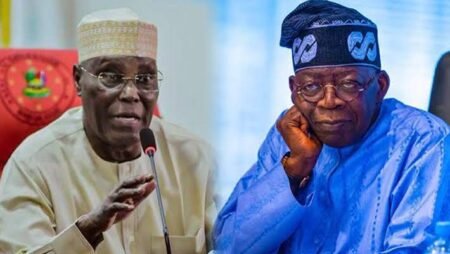
Former Vice-President Atiku Abubakar, the Obidient Movement, the Nigeria Democratic Congress, and the presidential campaign organization of Oyo State Governor Seyi Makinde have all dismissed the proposed discount, calling it insufficient and driven by political motives.
On Thursday, the Federal Government announced that NNPC Limited would give up its retail profit margin on petrol in order to sell the product at a discounted price as part of efforts to shield Nigerians from shocks in global crude oil prices.
The Presidency stated that the arrangement, which has President Bola Tinubu’s backing, did not represent a return to the petrol subsidy regime that came to an end on May 29, 2023.
Responding to claims that the discount was effectively a return of fuel subsidy through the back door, the Lagos APC called on the opposition to study the policy’s structure and financing instead of leaning on political labels.
It argued that critics should provide evidence of fiscal recklessness or legal breaches, noting that allegations raised without a careful review of the policy did not qualify as serious economic analysis.
The party did concede, however, that the 30-day discount by itself could not solve Nigeria’s cost-of-living problems. It called on the federal government to keep up efforts to stabilize prices, boost domestic refining and distribution, cut logistics costs, support public transportation, widen access to affordable credit, and strengthen household purchasing power.
NNPC petrol discount won’t cut federation funds, Oyedele says
Atiku, Makinde camp slam Tinubu’s 30-day fuel discount
Oladejo said the government must guarantee transparency in carrying out the discount, confirm that its benefits actually reached the intended beneficiaries, and spell out the measures to be taken once the initiative ends.
He dared the opposition to come up with workable alternatives if it regarded the intervention as insufficient.
“If the opposition believes the 30-day arrangement is inadequate, let it tell Nigerians precisely what it would do differently, how it would finance its proposal, and how quickly its alternative would produce tangible benefits.
“Nigerians deserve more than slogans, cynical commentary, and the perpetual conversion of economic hardship into campaign material,” he said.
The Lagos APC acknowledged that worries regarding the intervention’s sustainability and what might occur once the 30-day period ended were valid, yet these concerns should not be used to discount the immediate relief it could offer.
Oladejo called on the government to make known its exit strategy, the standards for assessing the intervention, and additional steps to encourage price stability.
“Temporary interventions have a legitimate place in economic management, particularly when households and businesses are under immediate pressure. Their worth should be measured by their design, implementation, affordability, and outcomes—not cast aside merely because they have a set duration,” he said.
The party called on political actors to refrain from using public concerns for partisan gain as the country nears another election cycle, maintaining that economic hardship demanded practical solutions rather than political theatrics.