



President Bola Tinubu has tasked the Nigeria Police Force with ensuring that the 2027 general elections are conducted peacefully and securely, with Nigerians confident in the electoral process.
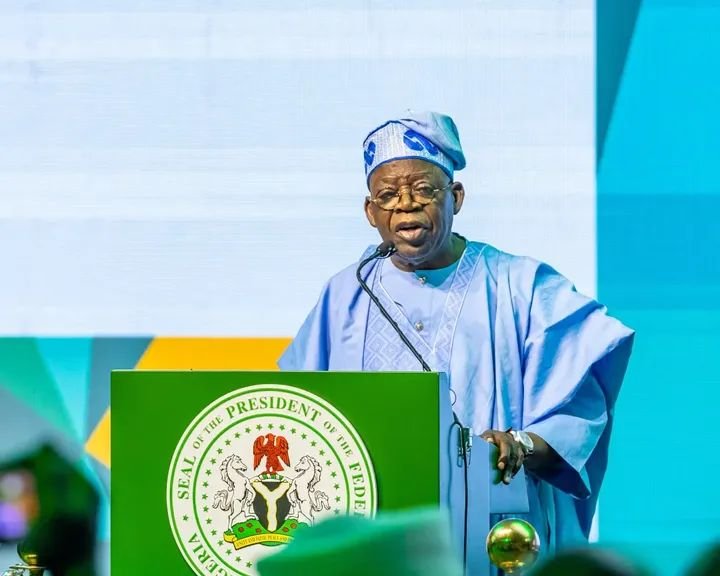
Tinubu gave the charge on Monday at the 2026 Conference and Retreat for Senior Police Officers (CARSPO) in Owerri, Imo State.
Represented by Secretary to the Government of the Federation (SGF), Senator George Akume, the President stressed the need for careful preparation, professionalism, impartiality and intelligence-led policing ahead of the elections.
He said the police had a central responsibility to protect voters, electoral officials and materials while preventing violence, intimidation and other threats to the electoral process.
The three-day conference, themed “Developing a Nigeria Police Roadmap for Effective Management of Security During Elections,” is focused on strategies for managing security before, during and after the 2027 elections.
“Every Nigerian, irrespective of political affiliation, ethnicity, religion, social status or geographical location must feel protected by the police.”
Tinubu urged the Force to strengthen intelligence gathering, improve response times, deepen community engagement, embrace technology and enhance cooperation with other security agencies.
He also stressed that the police must be seen as a national institution serving Nigerians rather than any political interest.
The President commended Inspector-General of Police, IGP Tunji Disu, and the police leadership for efforts to respond to security challenges, including kidnapping, terrorism, banditry, armed robbery, cultism and violent crime.
He said the Federal Government would continue to support police reforms through investment in personnel, training, technology, intelligence infrastructure, operational logistics, welfare and institutional systems.
Disu warns politicians against thugs, vote-buying
At the conference, IGP Disu warned politicians and their supporters against recruiting thugs, vote-buying, moving arms and threatening voters or electoral officials.
He said the police would act against offenders regardless of their status.
“To politicians and their supporters, my message is simple. Compete with ideas, not with thugs.”
Disu also unveiled a six-point security roadmap for the 2027 general elections, covering early intelligence and warning systems, intensive training, joint command and coordination, rapid communication and technology, community partnerships, and police neutrality and accountability.
He said the strategy would cover the entire electoral cycle rather than being limited to Election Day.
“Our duty does not begin on election day. It covers the whole electoral cycle. We must prepare before the crisis, not during it.”
According to Disu, police commanders will be required to identify potential flashpoints and criminal networks early enough to enable timely intervention.
Officers will also receive specialised training in crowd management, protection of electoral personnel and materials, conflict prevention, rapid response and human-rights-compliant policing.
The IGP said special attention would be given to the protection of INEC ad hoc personnel and vulnerable voters, including women, elderly citizens and persons with disabilities.
“A polling unit where these citizens feel unsafe is a polling unit where the election has already failed.”
Police target election disinformation
Disu called for stronger coordination among the police, the Independent National Electoral Commission (INEC) and other security and law-enforcement agencies.
He said technology and reliable communication systems would be deployed to improve real-time reporting, situational awareness and rapid response.
The police would also monitor election-related disinformation capable of triggering violence.
“Falsehood now travels faster than any patrol.”
Disu warned that fake results, forged police statements and inflammatory online videos could trigger violence before security personnel could respond.
He urged traditional and religious leaders, youths, civil society organisations, the media and citizens to report emerging tensions and security threats.
The IGP reiterated that the police would remain neutral and enforce the law without taking sides in political contests.
“We protect citizens and enforce the law, we do not decide political outcomes.”
He directed Commissioners of Police to strengthen supervision, ensure Force Headquarters directives reached personnel and publish official contact numbers for members of the public.
Disu also ordered that election-duty allowances be paid on time and duty rotations structured to provide officers with adequate rest.
He said the use of force must remain lawful, proportionate and a last resort, warning that officers who took sides, harassed voters, colluded with political actors or abused their powers would face investigation and disciplinary action.
Police cite operational gains
Disu said the recent Osun State election had provided lessons for the Force, including the need to review intelligence gaps, response times, training and communication challenges ahead of the 2027 polls.
He also disclosed that since assuming office in February 2026, the Force had arrested 251 terrorists and suspected bandits, 343 murder suspects, 566 armed robbery suspects and 483 suspected cultists.
According to him, the police also rescued 1,066 kidnap victims and recovered 947 firearms and more than 22,000 rounds of ammunition during the period.
Police Trust Fund pledges support
The Executive Secretary of the Nigeria Police Trust Fund (NPTF) said the Fund would support the police in three key areas: training, equipment and mobility.
He said election security required adequate preparation and operational capacity, with training focused on operational readiness, crowd management, rules of engagement, coordination and professional conduct.
He also stressed the need for adequate protective, communication and crowd-management equipment, alongside reliable mobility for rapid deployment and reinforcement.
However, he said resources alone would not guarantee effective election security, adding that planning, accountability, coordination and leadership were equally important.
The CARSPO 2026 is expected to produce a practical framework to guide police training, deployment, command structures and conduct before, during and after the 2027 general elections.