

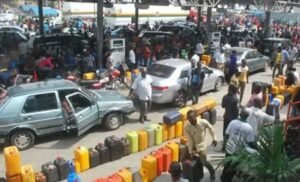


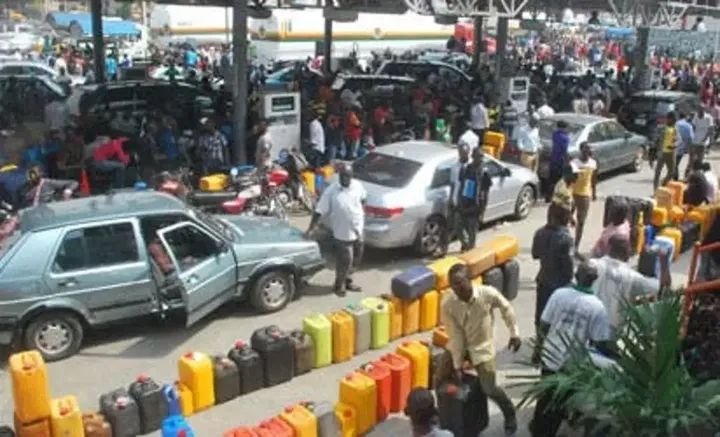
Petrol prices have risen across filling stations in Abuja, Lagos and Ibadan following fresh pump price adjustments linked to higher crude oil prices and supply costs amid escalating tensions in the Middle East.
Checks by Chronicle NG on Sunday showed that several filling stations in the Federal Capital Territory increased their prices, with some outlets selling petrol for as much as N1,450 per litre.
In Abuja, AY Shafa increased its pump price from N1,350 to N1,395 per litre, while Optima raised its price from N1,360 to N1,450.
Empire Filling Station in Gwarinpa also increased its price from N1,370 to N1,450 per litre.
Mobil’s outlet in Kubwa raised its pump price to N1,400 from N1,350 per litre.
The increases were also recorded in Lagos.
Conoil at Ikorodu Garage was selling petrol at N1,400 per litre on Sunday, up from N1,300 the previous week.
An NNPC filling station at Berger increased its price from N1,299 to N1,380 per litre, while Bovas at Berger adjusted its pump price from N1,280 to N1,400.
MRS in Okota also raised its price from N1,310 to N1,395 per litre.
TotalEnergies in Okota increased its pump price from N1,325 to N1,385, while AP at Ogba moved from N1,295 to N1,380 per litre.
In Ibadan, Ocean Breeze Filling Station on Old Ife Road sold petrol at N1,370 per litre on Sunday, compared with N1,300 on Saturday.
Crude oil prices cross $100
The latest pump price increases came after oil marketers reportedly raised ex-depot prices.
Dangote Refinery, according to reports, increased its gantry price from N1,265 to N1,350 per litre.
The development coincided with a surge in international crude oil prices, with Brent crude trading at about $104 per barrel and West Texas Intermediate (WTI) at $99 per barrel as of September 13, 2026.
The increase has been linked to uncertainty surrounding the escalating conflict in the Middle East, particularly disruptions around the Strait of Hormuz.
On September 12, Saudi Arabia issued emergency alerts in two areas after explosions were heard off the coast of Iran’s Qeshm Island, near the strategic waterway.
The developments followed heightened tensions in the Gulf, including reported attacks by Iran on oil tankers and US bases in Gulf countries in retaliation for US military strikes on Iranian targets.
The United States has also targeted vessels attempting to break its counterblockade of Iranian ports.
Strait of Hormuz under pressure
The Strait of Hormuz remains one of the world’s most important oil shipping routes, making any disruption in the waterway a major concern for global energy markets.
Regional tensions have also intensified following attacks on Saudi Arabia by Iran-backed Houthi fighters in Yemen.
On September 8, Saudi Arabia said attacks on energy facilities in its southern region by Yemen’s Iran-aligned Houthis caused fires and temporarily disrupted some operations.
The Houthis also reportedly attacked Abha, Khamis Mushait and Jazan with ballistic missiles and drones, wounding 73 people and prompting Riyadh to intensify airstrikes against Houthi positions in Yemen.
FOX News reported that the US was maintaining its blockade of Iranian ports and had turned back at least 99 vessels in recent weeks.
The latest developments have added pressure to global oil supply and contributed to renewed increases in petrol prices in parts of Nigeria.