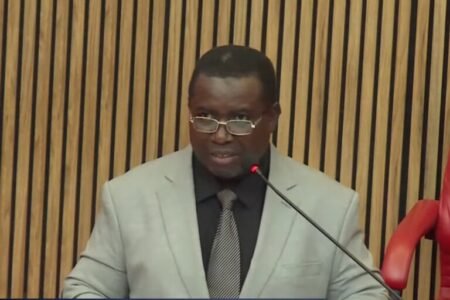



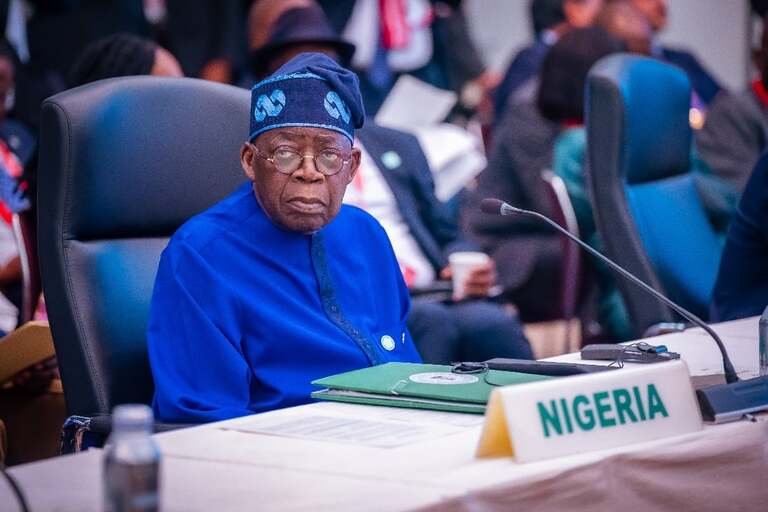
The Nigerian Permanent Representative to the United Nations, Ambassador Jimoh Ibrahim, says President Bola Tinubu and members of his family enjoy unimpeded transit and cannot be arrested in the United States while attending the United Nations General Assembly (UNGA).
Ibrahim, who also chairs the United Nations Committee on Budget and Administration, made the clarification in a statement issued by the Office of Nigeria’s Permanent Representative to the UN in New York.
He said the Nigerian Mission had received no notification from the US government imposing any restriction on Tinubu’s movement during the UNGA.
Citing Section 11 of the 1947 UN-U.S. Agreement, Ibrahim said representatives of UN member states and their families are protected from impediments to transit to and from the UN headquarters district.
He explained that the provision requires US federal, state and local authorities to refrain from restricting the movement of member-state representatives, their families, UN officials, specialised agencies and persons invited to the headquarters district on official business.
The envoy noted that attendance at the UNGA remains a matter of national priority, but said countries could delegate representation when necessary.
According to Ibrahim, more than 60 per cent of the current speaking list comprises vice presidents and foreign ministers representing their countries.
He recalled that a former Nigerian president, whom he did not identify as Tinubu, was once restricted to a 10-kilometre radius from the UN headquarters over a drug-related allegation.
Ibrahim said the allegation was never proved.
He stressed that an allegation does not constitute a crime, adding that criminal accusations must be established through due process and proved beyond reasonable doubt before conviction.
The envoy also dismissed social media efforts to criminalise Tinubu or secure his arrest, saying such efforts would ultimately prove futile.
Ibrahim explained that US law-enforcement authorities could invite individuals to provide information or statements during investigations and collect identifying details, including personal and family history, educational records and fingerprints.
He said such information could help establish links between individuals, groups and networks, while remaining protected and not necessarily made public during investigations involving financial or other criminal offences.
Ibrahim urged Nigerians to continue to hold the national flag in high esteem and support what he described as the economic transformation being pursued under Tinubu.