




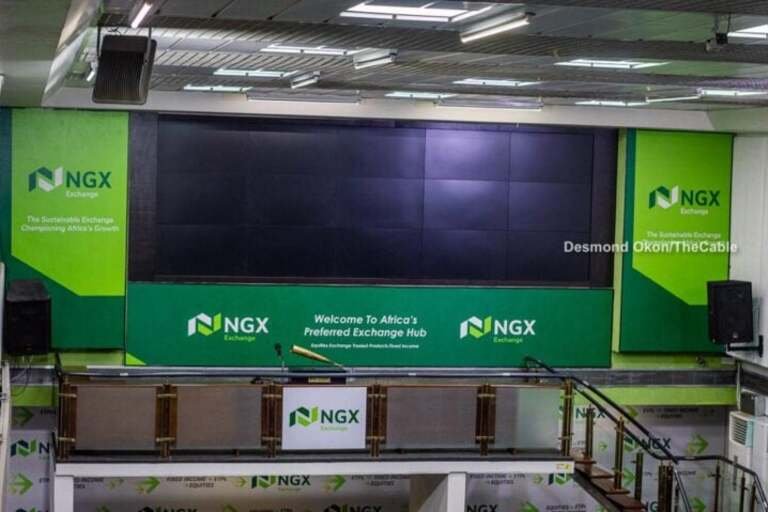
Over the next two weeks, the initial public offering (IPO) is expected to dominate social media conversations and media coverage as the Dangote Petroleum Refinery prepares for its planned listing on the Nigerian Exchange (NGX), the country’s stock market.
Dangote Group, the parent company of the refinery, confirmed on Friday that it has secured Securities and Exchange Commission (SEC) approval for the listing.
The listing is projected to be the biggest IPO on the Nigerian stock market and lift the value of the bourse — which currently has a market capitalisation of N159.55 trillion — to over N200 trillion.
With the IPO launch about nine days away, according to Aliko Dangote, founder and chief executive officer (CEO) of the Dangote Group, TheCable breaks down what an IPO is, why a company conducts one and what Nigerians must know to participate.
HOW EXACTLY DOES AN IPO WORK?
Before an IPO, a company is privately owned by its founders, venture capitalists or private equity investors.
When it launches an IPO, the company may issue new shares, sell existing shares held by its investors, or do both, and make them available to individual and institutional investors.
An IPO is typically used to raise capital for expansion, new projects, debt repayment, working capital or other corporate needs.
In Nigeria, a public offer can involve an offer for subscription, an offer for sale, or both.
An offer for subscription involves a company issuing new shares to the public, with the proceeds going to the firm. However, an offer for sale involves existing shareholders selling shares they already own to members of the public, with the proceeds going to the stakeholders.
The transactions occur in two different markets: the primary market, also known as the new issues market, where newly issued securities are offered to potential investors and the proceeds go to the issuer; and the secondary market, where existing securities are bought and sold among investors, typically through stockbrokers.
After the offer closes and the shares are allotted, the securities can be listed on a stock exchange, allowing investors to trade them in the secondary market.
It is important to note that an IPO is essentially a one-time event in which a private company offers its shares to the public for the first time, paving the way for the shares to be listed and traded on a stock exchange.
Once listed, the company’s share price can rise, fall or trade flat depending on market conditions, investor sentiment, the company’s performance, among other factors.
However, an already publicly listed company can also return to the capital market after the IPO to offer additional shares to investors through a rights issue or private placement.
FOUR IPO METHODS USED BY COMPANIES
There are four IPO methods adopted by companies: traditional fixed-price IPO, book-building IPO, direct public offering, and special purpose acquisition company (SPAC).
A traditional fixed-price IPO is adopted by a company and its underwriters when they do not intend to allow demand and supply to determine their listing price, which they put in the prospectus.
They fix the share price in advance — before making their shares available on the stock market — using company evaluation and fundamental analysis.
Unlike traditional fixed-price listings, companies listing through book-building IPOs set a price range and allow demand and supply to determine the final share price within the range for their offer.
Some companies prefer to list their shares on the bourse without employing the services of investment banks to underwrite the transaction, so they adopt a direct public offering.
Firms that adopt this method are not looking to raise new capital and do not mandate a lock-up period for existing shareholders, as the stakeholders are the ones selling shares on the stock market, with the price determined by demand and supply.
Also, when a company adopts the SPAC method, potential investors negotiate with the SPAC sponsors, whose firm is acting as a shell company to raise capital for the purpose of acquiring or merging with a private business.
This method, which helps the private firm to access the capital market faster, requires the shell company to make the acquisition or merger within two years.
WHAT DOES SEC SAY ABOUT IPO REGISTRATION?
According to the SEC, a company intending to conduct an IPO must register its securities with the commission, which reviews the company’s financial, corporate and offer documents to ensure compliance with capital-market rules.
The SEC checklist, covering IPOs, offers for subscription, offers for sale, rights issues, and private placements, requires a draft prospectus or other applicable offer document as part of the registration process.
A prospectus contains material information about the issuer, the securities being offered, the terms of the offer and the risks involved, helping investors make informed investment decisions.
For the registration of an IPO, the SEC checklist requires audited accounts for the preceding five years, or for the number of years the company has operated if fewer than five, while the latest audited accounts must not be more than nine months old.
The SEC also requires an extract of the shareholders’ resolution authorising the offer and a board resolution authorising the offer, where applicable.
The public-offer process also involves capital-market professionals, including an issuing house, which handles the offer process and documentation.
WHAT ARE THE REQUIREMENTS FOR LISTING ON NGX?
Companies seeking to become publicly listed must also meet specific listing requirements of the NGX.
The stock market operates three equity boards — the growth board, main board and premium board — with requirements varying based on a company’s size, profitability, operating history and ownership structure.
Growth board
The growth board is designed for smaller and growing companies and has two segments: entry and standard.
For the entry segment, a company must have a minimum market capitalisation of N50 million, at least 10 percent free float and a minimum of 21 public shareholders, among other requirements.
The standard segment requires a minimum market capitalisation of N500 million, at least 15 percent free float and a minimum of 51 public shareholders.
Main board
The main board targets more established companies and provides different listing routes based on profitability and market capitalisation.
Under one route, a company must have recorded a cumulative profit before tax (PBT) of at least N300 million over three years, with a minimum of N100 million in two of those years. Another route requires a cumulative pre-tax profit of at least N600 million within one or two years, while the third route requires a minimum market capitalisation of N4 billion.
Companies seeking admission to the main board must have at least three years’ operating history and three years of financial statements, while at least 20 percent of each class of equity securities must be held by the public.
The company must also have at least 300 public shareholders for equity shares, while it must be registered as a public limited liability company under the provisions of the Companies and Allied Matters Act.
According to the exchange, to be listed on the main board, promoters and directors must have a lock-up period by retaining 50 percent of shares pre-IPO for 12 months from the date of listing.
NGX also prescribes a minimum shareholders’ equity requirement of not less than N3 billion.
Premium board
To be listed on the premium board, reserved for larger companies, the NGX requires firms to meet some of the main board requirements, which include a minimum of two to three years of cumulative pre-tax profits and two to three years of audited financial statements.
A company may also qualify by providing evidence of a strong technical partner with substantial equity holdings and involvement in the issuer’s management, with a minimum three-year operating track record.
Promoters and directors are also required to retain 50 percent of their pre-IPO shares for 12 months from the date of listing and a minimum of 300 public shareholders for equity shares.
Also, premium board companies must have a minimum market capitalisation of N200 billion on the date the exchange receives their applications (or at the time of listing) and score at least 70 percent under NGX’s corporate governance rating system.
The company must have at least 20 percent free float or a free-float value of at least N40 billion.
WHERE DANGOTE REFINERY STANDS
In May 2024, Devakumar Edwin, executive director of the Dangote Group, said the refinery will conduct a dual listing on the stock exchanges in the United Kingdom and Nigeria because the NGX lacked sufficient depth to handle the petroleum refinery exclusively.
According to the NGX listing rules, a company conducting a dual listing must have a market capitalisation of at least N28 billion or equivalent at the time of listing, based on the issue price and issued share capital.
Such a company is required to have an operating track record of at least two years and a minimum of two years’ financials, with the date of the last audited accounts not more than nine months old.
Also, the company must make available a minimum of 10 percent of each class of equity securities to the public, and the number of public shareholders shall not be less than 51 (for equity shares).
In addition, NGX has no specific requirements for an IPO lock-up period for existing shareholders of a company conducting a dual listing, and for such firms, the exchange does not require them to continue complying with listing obligations, such as disclosure and transparency rules, if listed on another foreign stock exchange with World Federation of Exchanges (WFE) status.
However, NGX requires companies to have a resident nominated representative for as long as they are listed.
Also, with the refinery already setting its IPO price, which was put at N525 per share, the company is not leaving demand and supply to determine its share price; rather, it is adopting the traditional fixed-price IPO.
Dangote Refinery is also looking to sell about 10 percent of its business in the capital market to raise N2.15 trillion to support its $40 billion expansion objective, which would increase the company’s production capacity from 650,000 barrels per day to 1.4 million barrels per day, indicating that the company is conducting an offer for subscription.
After the IPO, Dangote Refinery is expected to list on the premium or main board, considering the company is targeting a $50 billion or over N60 trillion valuation (based on the September 4 exchange rate).
HOW CAN NIGERIANS INVEST?
Before investing in an IPO, potential investors need to read the company’s prospectus.
Once an IPO is launched, Nigerians can subscribe for the shares through the channels specified in the prospectus, participating through registered stockbrokers, receiving agents named in the offer document or other approved channels.
They would need to provide the required investor details, select the number of shares they wish to buy and make payment within the offer period.
Nigerians seeking to invest in the Dangote Refinery IPO, for instance, will have to subscribe to the offer through approved capital-market operators once the subscription window opens and the offer has received the necessary regulatory approval.
Interested investors will need to follow the terms contained in the SEC-approved prospectus, which will provide details of the offer, application process, eligibility and other relevant information.
The shares are allotted to investors after the offer closes, and the securities are admitted for trading on a stock exchange, allowing investors to subsequently buy and sell the shares in the secondary market.
Investors are encouraged to verify that the offer and the operator handling it have the necessary regulatory approval before committing funds.
The SEC provides a directory for checking registered capital-market operators and has advised the public to rely on its official announcements regarding securities offerings.
Investors can visit the SEC official portal at www.sec.gov.ng or contact its enforcement department at enforcement@sec.gov.ng for investment-related enquiries.