


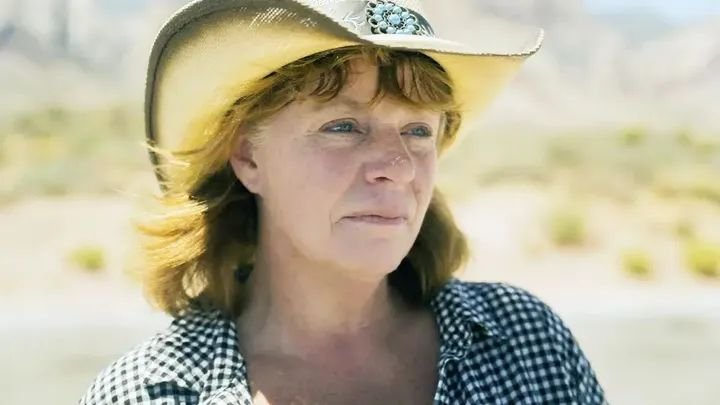
The former property manager of a San Diego apartment complex where two of the 9/11 hijackers lived has spoken publicly for the first time about their relationship with Omar al-Bayoumi, a Saudi national accused of helping the pair settle in the United States.
Holly Ratchford, who managed Parkwood Apartments in San Diego, California, said Bayoumi introduced her to Nawaf al-Hazmi and Khalid al-Mihdhar in February 2000.
The two men later became two of the 19 al-Qaeda members who hijacked four passenger planes during the September 11, 2001 attacks in the United States.
Ratchford told the BBC that Bayoumi had brought the men to her rental office and asked what they needed to qualify for an apartment.
She said the pair did not meet Parkwood’s income or banking requirements but had several thousand dollars in cash.
Bayoumi subsequently helped them open a bank account and co-signed their lease, becoming their guarantor, friend and emergency contact.
Hazmi and Mihdhar moved into an apartment a few doors from Bayoumi’s home and remained there until May 2000.
“I would have cookies and tea with them. It wasn’t like they were just someone that came into the office and rented from us,” Ratchford said.
The former property manager also disputed Bayoumi’s account that his contact with the men was brief.
“I know that’s what he said, and I know that’s bullshit,” she said.
According to Ratchford, Bayoumi had previously asked her several times about finding accommodation for two people and specifically wanted them to live near him.
She also told the BBC that she saw Bayoumi with the two men several times after they moved into the complex.
The FBI later investigated Bayoumi and identified him as a key figure in the network that assisted Hazmi and Mihdhar in San Diego.
Richard Lambert, who led the FBI’s San Diego investigation after 9/11, told the BBC that investigators found a network “headed up by Omar al-Bayoumi”.
The FBI found that Bayoumi’s contacts helped the two men obtain California driving licences, apply to flight schools, receive money transfers from the Middle East and arrange dental treatment.
Bayoumi was arrested in Birmingham, United Kingdom, on 21 September 2001, but was released after seven days. The US Department of Justice decided not to extradite him to face charges.
He has never been prosecuted over the 9/11 attacks.
However, evidence later released in connection with a lawsuit brought by families of 9/11 victims has renewed scrutiny of his activities.
A US federal judge ruled in August 2025 that the evidence created “a reasonable inference” that Bayoumi and a Saudi diplomat in the US had been coordinating with the Saudi government while providing assistance to the hijackers.
The ruling allowed the families’ lawsuit against Saudi Arabia to proceed.
Saudi Arabia has consistently denied involvement in the 9/11 attacks and rejected claims that Bayoumi was a Saudi intelligence agent or had prior knowledge of the attacks.
Bayoumi has also denied the allegations.
The lawsuit, brought by thousands of 9/11 victims’ families and survivors, is now before the US Court of Appeal, with oral arguments expected in October.
Ratchford said the events surrounding 9/11 transformed her life and left her deeply distrustful of people.
“I felt so stupid. I trusted and I cared about people that did bad things. I don’t ever want to be as blindsided as I was by them not being who they said they were,” she said.
She eventually left Parkwood, property management and the city, moving to increasingly isolated parts of the western United States.
“9/11 made me afraid of people,” she said.
Ratchford said she continues to wonder whether she could have done something differently.
“Part of me wonders if there’s something I could have done if I was more strict,” she said.