




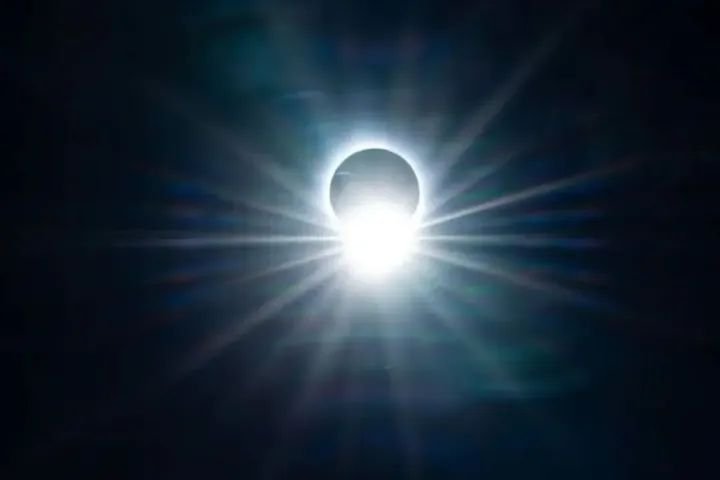
The National Aeronautics and Space Administration (NASA) has urged Americans to prepare for the August 12 total solar eclipse, one of the major astronomical events expected in 2026.
While the path of totality will cross Greenland, Iceland, northern Russia, the Atlantic Ocean, Spain and a small part of Portugal, millions of people across parts of the United States will be able to see a partial eclipse.
According to NASA, the partial eclipse will be visible across parts of northern US states, from Alaska to North Carolina, as well as much of Canada, Europe and north-western Africa.
Partial eclipse visible across parts of US
Residents in states including Alaska, Maine, Massachusetts and Michigan will have the opportunity to see the Moon partially cover the Sun, although the extent of the eclipse will vary by location.
NASA said areas in the north-eastern US will see only a small portion of the Sun covered, while observers closer to the path of totality in Europe and the North Atlantic will experience a much deeper eclipse.
NASA warns against viewing eclipse without protection
The agency has stressed the importance of proper eye protection during the partial phases of the eclipse.
NASA warned that it is never safe to look directly at the Sun during a partial solar eclipse without proper eye protection.
Skywatchers are advised to use certified eclipse glasses or handheld solar viewers that meet the ISO 12312-2 international safety standard.
NASA also cautioned against looking at the Sun through cameras, telescopes or binoculars without approved solar filters, as concentrated sunlight can cause serious eye injuries.
Rare sunset eclipse expected in Europe and Africa
The August 12 event will also create a rare sunset eclipse for observers in parts of mainland Europe and north-western Africa, where the Sun will set before the eclipse ends.
For people within the path of totality, the period when the Moon completely covers the Sun will last less than two and a half minutes, depending on the location.
During totality alone, viewers can look at the eclipse without eye protection. Protective eyewear must be used before and after totality when any part of the Sun’s bright surface is visible.
The eclipse is expected to draw skywatchers across the Northern Hemisphere, with NASA also planning a live stream of the event from 1:15 p.m. EDT on August 12.