




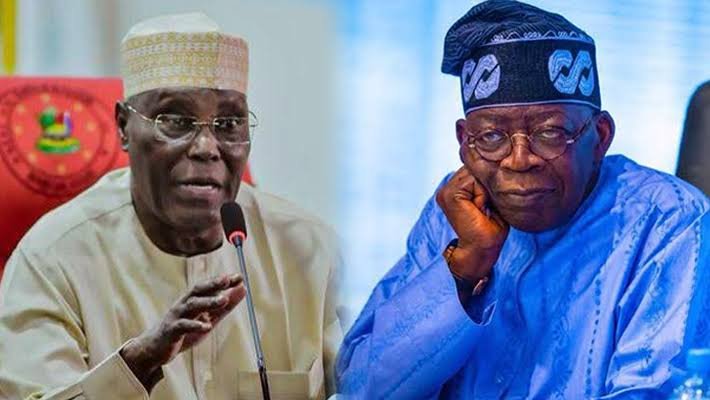
The presidential candidate of the African Democratic Congress (ADC), Atiku Abubakar, has challenged President Bola Tinubu to direct the Independent Corrupt Practices and Other Related Offences Commission (ICPC) to release former Kaduna State governor Nasir el-Rufai.
Atiku’s demand follows President Tinubu’s directive to the Economic and Financial Crimes Commission (EFCC) to return to court and vacate the order freezing the Osun State Government’s bank accounts ahead of the August 15 governorship election.
El-Rufai has remained in ICPC custody since February 19 over allegations of financial impropriety during his tenure as Kaduna governor between 2015 and 2023. On April 13, the anti-graft agency arraigned him before a Kaduna High Court on an amended nine-count charge bordering on alleged fraud and abuse of office.
In a statement issued by his Senior Special Assistant on Public Communication, Phrank Shaibu, Atiku argued that Tinubu’s intervention in the Osun case undermined repeated claims that Nigeria’s anti-corruption agencies operate independently.
According to Atiku, the EFCC’s earlier statement explaining why it froze Osun State’s accounts made no reference to obtaining a court order, even though the President said his directive was based on such an order.
“President Tinubu’s statement has raised more questions than it has answered,” Atiku said.
“While the EFCC’s official statement painstakingly explained why it froze the Osun State Government’s account, it made no mention whatsoever of obtaining a court order.
“Yet the President’s intervention is predicated entirely on the existence of such a court order, which he claims to have directed the EFCC to vacate.”
The former vice-president said Tinubu could not maintain that he does not interfere in the operations of anti-graft agencies while publicly directing the EFCC to reverse its action.
He argued that if the EFCC complies with the President’s directive, it would raise questions about the commission’s operational independence.
Atiku further contended that the same executive authority should apply to the ICPC if the President can intervene in EFCC matters.
“If he can direct the EFCC to discontinue its action today, then he cannot pretend to be powerless over the actions of the ICPC tomorrow,” Atiku said.
He added that executive powers should not be exercised selectively for political convenience while institutional independence is cited in other cases.
Atiku also questioned why the Osun State Government’s accounts were frozen just days before the governorship election, saying the President’s intervention did not address the circumstances that led to the action.
The statement comes amid growing political debate over the independence of Nigeria’s anti-corruption agencies following the Presidency’s decision to intervene in the Osun accounts case.