



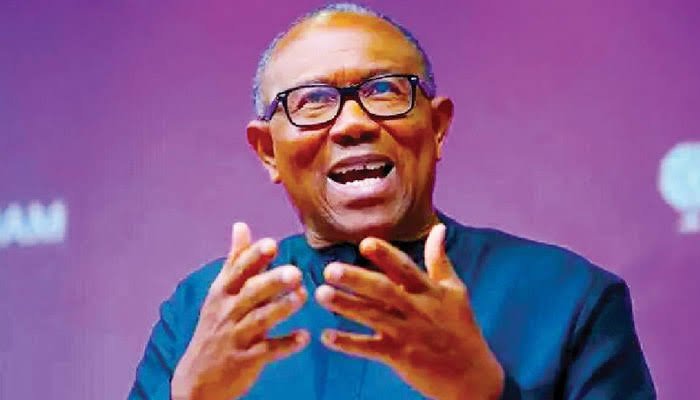
Presidential candidate of the Nigeria Democratic Congress (NDC), Peter Obi, has criticised President Bola Tinubu over his recent remarks that hunger has always existed in Nigeria, arguing that such comments fail to reflect the severity of the economic hardship currently facing millions of citizens.
Reacting in a statement on Friday, Obi acknowledged that hunger has long been a challenge in Nigeria but maintained that the current situation has deteriorated significantly under the present administration.
According to him, while previous governments also grappled with food insecurity and poverty, the responsibility of any administration is to improve living conditions rather than explain away existing problems.
Obi cited figures indicating that before the current administration assumed office in 2023, about 17 million Nigerians were experiencing acute food insecurity due to insecurity, armed conflict, banditry and flooding. He claimed that the number has now risen to about 35 million people, describing the trend as evidence that the crisis has deepened instead of easing.
The former Anambra State governor also expressed concern over rising poverty levels, noting that Nigeria’s population living in extreme poverty has continued to grow. He argued that the worsening economic conditions have left more families struggling to afford food, healthcare and other basic necessities.
While acknowledging that President Tinubu inherited significant economic and security challenges, Obi insisted that the true measure of leadership lies in delivering practical solutions and improving citizens’ welfare. He said governments should be judged by the results they achieve rather than the problems they inherit.
According to him, persistent insecurity, weak economic management, rising public spending and inadequate investment in productive sectors have combined to worsen the living conditions of ordinary Nigerians.
Obi called on the federal government to intensify investments in agriculture, education, healthcare, security and small businesses, stressing that policies aimed at boosting production, creating jobs and reducing poverty should remain at the centre of national development efforts.
He reaffirmed his belief that Nigeria can overcome its current challenges through purposeful leadership and people-focused policies, ending his message with his familiar refrain: “A New Nigeria is Possible.”