




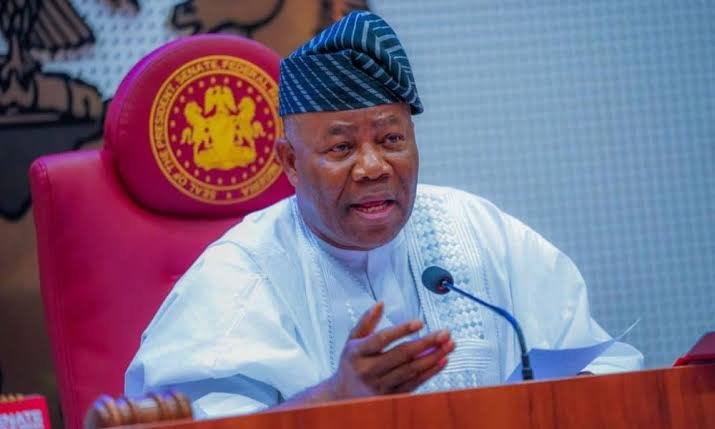
The Senate advanced legislative attempts on Thursday to require global social media companies operating in Nigeria to create physical offices in the nation after stakeholders overwhelmingly supported the proposal during a public hearing in Abuja.
The Senate Committee on Information and Communications Technology and Cybersecurity held a public hearing during which a separate bill to build an artificial intelligence academy in Omuo-Ekiti, Ekiti State, gained widespread support.
The proposed law on social media platforms, sponsored by Ned Nwoko (Delta North), aims to alter the Nigeria Data Protection Act, 2023, to require social media businesses operating in Nigeria to establish physical offices within the country’s borders.
Yemi Adaramodu (Ekiti South), Chairman of the Senate Committee on Media and Publicity, has sponsored the AI Academy bill.
Chairman of the Senate Committee on ICT and Cyber Security, Shuaib Salisu (Ogun Central), declared the session open and stated that the two bills sought to promote Nigeria’s digital economy and technical advancement.
According to him, the planned AI Academy will serve as a center of excellence for artificial intelligence education, research, and innovation, while the social media bill aims to better the regulation and protection of Nigeria’s online space.
Godswill Akpabio, President of the Senate, was represented by Deputy Senate Leader Lola Ashiru (Kwara South), who praised both proposals as forward-looking and nationally significant.
Akpabio stated that the measure mandating social media corporations to create physical offices in Nigeria was not designed to impede their operations, but rather to encourage better accountability and engagement with the country.
Nwoko also defended the law, dismissing worries that it would hinder investment or target IT companies.
He said, “This bill is neither punitive nor hostile to innovation. It is not designed to frustrate investment or discourage technology companies from operating in Nigeria.
“On the contrary, it seeks to deepen their engagement with Nigeria by encouraging them to become true corporate citizens of our country.”
The legislature contended that numerous countries with smaller populations and digital marketplaces than Nigeria have successfully enticed multinational technology companies to establish local operations.
“Around the world, major technology companies have established headquarters, regional offices, engineering centers, and operational hubs in countries such as the United Kingdom, the Netherlands, Spain, Singapore, India, the United Arab Emirates, South Africa, Brazil, Australia, and Japan,” he said.
Nwoko denied fears that the new legislation would target or discourage global technology businesses, claiming that it was designed to strengthen their presence and participation in Nigeria.
He stated that numerous countries, including the United Kingdom, India, the United Arab Emirates, South Africa, and Brazil, have lured global technology companies to set up local offices to assist engineering, artificial intelligence research, regulatory compliance, customer service, and other activities.
“These offices perform diverse functions ranging from engineering and artificial intelligence research to legal and regulatory compliance, public policy, advertising, trust and safety, cloud services, sales, customer support, and product development.
“These countries did not attract such investments by accident. They recognized early that the digital economy is now as important as the traditional economy.
“By encouraging global technology companies to establish local operations, they have created employment, expanded tax revenues, strengthened regulatory engagement, promoted innovation, and encouraged technology transfer to their citizens,” he stated.
Nwoko used Ireland as an example, claiming that the presence of businesses like Meta, Google, LinkedIn, TikTok, and X had converted the country into one of Europe’s major technological hubs through job creation, innovation, and increased foreign investment.
He claimed that Nigeria, Africa’s largest internet market, should receive comparable economic and technological benefits.
“The question therefore is simple: if countries with significantly smaller populations and digital markets than Nigeria have secured these investments and benefits, why should Nigeria continue to stand on the sidelines? Why should Africa’s largest digital market not enjoy the same opportunities?”
The committee is expected to review stakeholder memoranda before presenting its report to the Senate for future legislative action.