



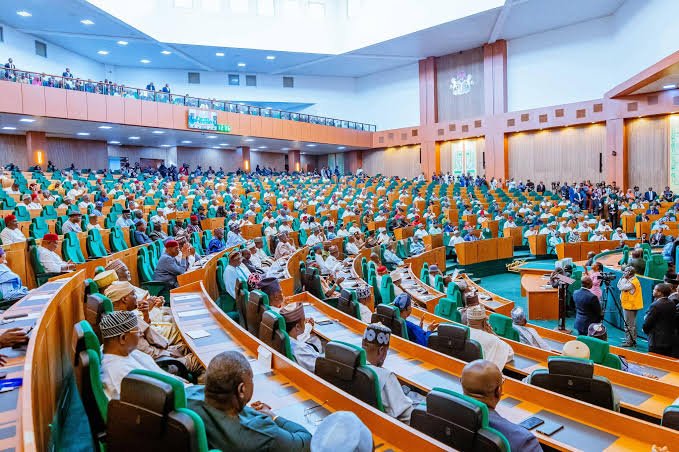
The House of Representatives Special Ad-hoc Committee on Constitution Review is set to meet on Monday to consider President Bola Tinubu’s State Police Bill, a major constitutional amendment aimed at creating state police services across Nigeria.
The committee, chaired by Deputy Speaker Benjamin Kalu, will deliberate on the Executive Bill, which contains 26 clauses and passed its second reading in the House on Tuesday, July 14, 2026.
The proposed legislation seeks to establish a comprehensive legal framework for the creation of state police services while prescribing national minimum policing standards. It also outlines the transition process from the existing centralised policing system to a dual policing structure.
The latest deliberation follows the House’s decision to reverse the earlier passage of the State Police Bill approved on June 11, 2026. The reversal came after lawmakers adopted a motion by the Chairman of the House Committee on Rules and Business, Francis Waive, to allow for harmonisation with the Senate’s position.
During the debate, Waive noted that a 12-member Conference Committee had been constituted on July 9 to reconcile differences between both chambers on the state policing proposal.
Under the bill, the Federal Police Service would continue to handle federal policing responsibilities, while each state would be empowered to establish and operate its own police service through state legislation.
The proposal also provides for the establishment of State Police Service Commissions to oversee appointments, discipline and administration of personnel within each state police service.
The Executive Bill seeks to amend several sections of the 1999 Constitution, including Sections 84, 89, 121, 124, 129, 153, 157, 158, 160, 197, 201, 204 and 318, alongside changes to parts of the Constitution’s schedules relating to policing and public service.
According to the explanatory memorandum, the legislation preserves the Federal Police Service as the default policing authority in any state until a State Police Service is legally established and certified to meet national policing standards.
It also introduces constitutional safeguards covering civilian oversight, human rights, independent police service commissions, firearms regulation, intergovernmental cooperation, criminal information systems and federal intervention where state policing breaks down or poses a national security threat.
While the Constitution would establish the legal foundation, detailed operational procedures, certification requirements, complaints mechanisms and funding arrangements would be addressed through future Acts of the National Assembly and state laws.
The bill also proposes changes to the removal process for the Inspector-General of the Federal Police Service, requiring the President to act on a two-thirds majority resolution of the Senate on grounds of misconduct, incapacity or gross constitutional violations.
Similarly, a State Commissioner of Police could only be removed by a governor following a two-thirds majority resolution of the State House of Assembly on the same grounds, a provision intended to strengthen accountability while safeguarding operational independence.
If passed, the amendment would formally replace the Nigeria Police Force with a Federal Police Service while recognising State Police Services and their commissions as part of the public service at both federal and state levels.
The Constitution Review Committee is expected to submit its report to the House when lawmakers resume plenary for further legislative consideration.