



Nigeria’s local cement price remains among the highest in Africa despite the country’s production capacity far exceeding domestic demand, raising concerns over housing affordability and infrastructure costs.
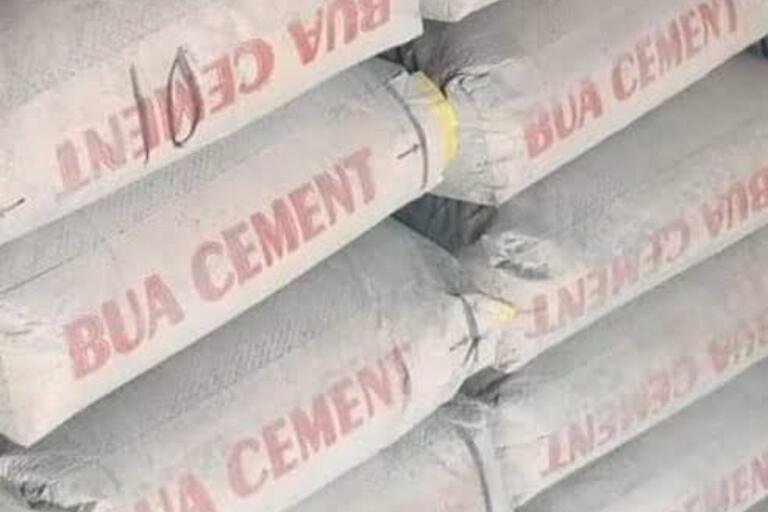
A report by The Guardian revealed that a 50kg bag of cement now sells for between N12,500 and N15,000 in cities including Abuja, Lagos and Abia. By comparison, similar quantities cost about N6,500 in South Africa, N4,500 in Egypt, N7,000 in Kenya and N7,500 in Ghana.
Nigeria currently has an installed cement production capacity of more than 60 million metric tonnes annually, while domestic consumption stands at only 25–30 million tonnes, leaving a significant surplus that is exported to neighbouring countries.
The industry is dominated by Dangote Cement, BUA Cement, and Lafarge Africa (now HBM Nigeria Plc), with combined capacity expected to increase to about 85 million tonnes annually as new plants come on stream.
Despite the production surplus, manufacturers argue that high operating costs continue to drive prices. They cite rising energy expenses following fuel subsidy removal, the depreciation of the naira, costly imported equipment and spare parts, inflation, and logistics challenges. Industry estimates indicate that transportation alone accounts for 30–40 per cent of the retail price of cement.
The three major cement producers generated more than N6.53 trillion in revenue in 2025 and posted a combined after-tax profit of about N1.65 trillion, a 142 per cent increase from the previous year. These figures have fuelled criticism that consumers are paying more than necessary for a product produced locally at scale.
The high cost of cement is also affecting government projects. Minister of Works David Umahi has called on manufacturers to reduce prices, warning that rising cement costs are increasing the cost of infrastructure contracts. He also urged producers to expand capacity to support government construction projects.
Housing stakeholders said expensive cement is worsening Nigeria’s estimated 16 million-unit housing deficit, making it more difficult to deliver affordable homes and infrastructure.
President of the Real Estate Developers Association of Nigeria (REDAN), Oba Akintoye Adeoye, described high cement prices as a major obstacle to affordable housing, while Executive Director of the Housing Development Advocacy Network (HDAN), Festus Adebayo, urged the Federal Government to introduce policies that would reduce production costs through improved energy supply, duty waivers on critical equipment and increased competition.
Estate surveyor Sola Enitan called for stronger oversight by the Federal Competition and Consumer Protection Commission (FCCPC) to prevent anti-competitive practices. He also recommended improving rail links to cement plants, encouraging independent distributors, and publishing benchmark prices to improve transparency.