




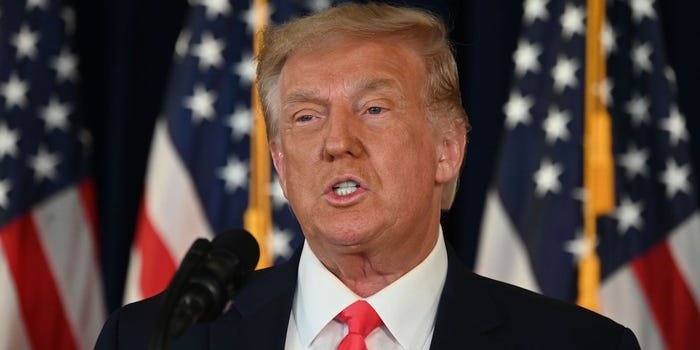
US President Donald Trump stated Friday that he was considering a potential deal with Iran, but Tehran reiterated there was still “no final agreement” to stop the Middle East war.
A report from Iran’s Fars news agency also refuted numerous important aspects of Trump’s portrayal of the deal, quoting informed sources as labeling his remarks a “mixture of truth and lies.”
US sources told AFP that the deal was just waiting for Trump’s approval after weeks of stalled discussions to end a conflict that has enveloped the Middle East and shook the global economy.
Trump held a two-hour discussion in the White House Situation Room on Friday, but no new deal with Iran was reached, according to The New York Times.
Trump announced the meeting on social media, reiterating his demands for Iran to abandon nuclear weapons and open the Strait of Hormuz shipping lane.
However, Iranian Foreign Ministry spokesman Esmaeil Baqaei stated that the Islamic Republic “said goodbye to the language of ‘must’ 47 years ago.”
“Regarding the understanding…exchanges of messages are continuing, but no final agreement has been reached yet,” he added.
In his post, Trump stated that Tehran will remove mines in the Strait of Hormuz and stop its blockade of the waterway with “no tolls,” while the US would relax its parallel blockade on Iranian ports.
He said the two countries would work together to remove and destroy Iran’s enriched uranium, but “no money will be exchanged until further notice.”
Fars, citing Iranian sources, stated that Tehran was demanding “the immediate release of $12 billion in frozen Iranian assets” and that “until this payment is made, Iran will not move to the next phase of negotiations.”
Speaking on the toll-free reopening of Hormuz, the sources said, “No such clause appears in the text of the agreement,” while the comment on destroying Iran’s nuclear material “is fundamentally baseless.”
Baqaei also stated on state TV that there are currently “no negotiations” taking place over Iran’s nuclear program.
Trump’s statement came as Iran’s top ambassador claimed the US was impeding a deal with its approach to the talks.
Foreign Minister Abbas Araghchi, speaking with his Omani colleague, said the US must quit “excessive demands and shifting and contradictory positions,” according to his ministry.
Earlier, Iran’s parliament speaker, Mohammad Bagher Ghalibaf, who headed his country’s delegation to negotiations with the US in Pakistan last month, stated on X that Tehran places “no trust in guarantees or words; only actions matter.”
Sources earlier told Iranian media that any unilateral accord announced by Trump would not be acknowledged.
Ali, a Tonekabon native north of Tehran, predicted that whatever the deal was, there would be more strife.
“Both sides are speaking in a way that keeps their supporters satisfied. It’s not clear who is telling the truth,” the 49-year-old said.
“If a deal is reached, the internal power networks will likely start a fight against each other and against opponents more than before.”
Hopes for an accord grew on Thursday after US officials expressed optimism about diplomatic efforts.
Energy markets have been volatile this week as investors assess the likelihood of an agreement that may allow normal shipping through the critical Strait of Hormuz.
As recently as last week, Washington and Tehran accused each other of violating the truce in and around the strait, with US strikes on the southern Iranian port of Bandar Abbas being met with retaliatory Iranian fire.
Iranian state television reported Friday that 24 ships had transited the strait in the previous 24 hours, in collaboration with the Revolutionary Guards and the foreign ministry.
However, it warned that “ships from hostile countries face a severe response” from Iran’s military.