



Nigeria’s military has clarified that no American troops participated on the ground in the operation that killed Abu Bilal Al-Minuki, a senior Islamic State commander linked to ISIS operations across West Africa and the Sahel.
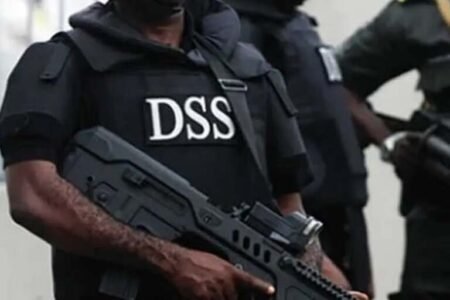
The operation was carried out near Metele in Borno State under Operation Hadin Kai, with support from the United States Africa Command (AFRICOM). According to the military, the US provided intelligence, surveillance, reconnaissance and other operational assistance, while Nigerian forces conducted the ground mission.
Speaking in televised remarks monitored by the News Agency of Nigeria (NAN), Maj.-Gen. Michael Onoja, Director of Defence Media Operations, said the mission followed months of intelligence gathering and close coordination between Nigerian and US authorities.
He explained that earlier reports claiming Al-Minuki had been killed in 2024 were incorrect due to mistaken identity, noting that the ISIS operative used multiple aliases to avoid detection.
United States President Donald Trump had announced on May 16 that “American forces and the Armed Forces of Nigeria” executed what he described as a “meticulously planned” operation to eliminate Al-Minuki, whom he called “the most active terrorist in the world”.
International reports said the operation occurred around Metele in northeastern Borno State, a known stronghold of the Islamic State West Africa Province (ISWAP).
US authorities designated Al-Minuki as a global terrorist in 2023, linking him to ISIS logistics, explosives, financing, propaganda and coordination activities across the region.
Reacting to the development, retired Brigadier-General Sani Usman described the operation as one of the most significant counter-terrorism achievements in Nigeria’s history.
The former army spokesperson said the elimination of Al-Minuki and other insurgents marked an important milestone in the fight against terrorism in Nigeria and the Lake Chad Basin.
“What makes this operation particularly significant is not merely the elimination of a high-profile terrorist leader, but the symbolism and strategic consequences attached to it,” Usman said.
“If indeed Abu Bilal Al-Minuki occupied the operational position attributed to him within the ISIS global network, then his elimination sends a clear message to terrorist organisations everywhere: there will be no sanctuary for those who orchestrate violence against innocent populations and sovereign nations.”
Usman, however, warned against complacency, saying terrorist organisations often rebuild leadership structures after major losses.
“History teaches us that terrorist groups are adaptive, opportunistic and often quick to regenerate leadership structures after suffering battlefield setbacks,” he said.
He added that the latest military success should serve as an opportunity to intensify ongoing operations rather than signal the end of the insurgency.
Meanwhile, US Congressman Riley Moore urged the Trump administration to sustain pressure on terrorist groups responsible for attacks on Christians in Nigeria.
Moore, reacting on social media, praised the operation and said the killing of Al-Minuki sent a strong message to extremist groups targeting civilians.
He also described attacks on Christians in Nigeria’s Middle Belt as one of the world’s most serious humanitarian and religious persecution crises.