


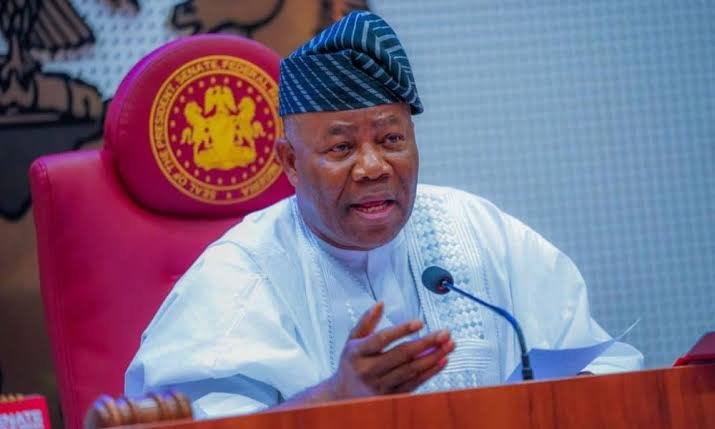
Senate President Godswill Akpabio reminded Nigerian workers on Friday that the National Assembly is aware of their economic issues and remains committed to addressing them through legislative measures.
The former Akwa Ibom State governor made the assurance in a congratulatory message to celebrate 2026 International Workers’ Day, published in Abuja by his Special Adviser on Media and Publicity, Eseme Eyiboh.
Akpabio acknowledged the difficulties encountered by workers and promised that the Senate would continue to intervene through legislation targeted at improving living conditions and working standards.
He said, “The 10th National Assembly recognizes the challenges workers face, from rising costs of living to workplace demands.
“I assure you that the Senate remains unwavering in its commitment to legislating for a living wage, safer workplaces, pension reforms, and policies that expand job creation and protect the dignity of labor.
“The passage of the new National Minimum Wage Act and the implementation of workers’ welfare packages are testaments to this commitment.”
His message comes as Nigerian workers face escalating economic constraints, such as rising inflation, high living costs, and concerns about salary sustainability, which have continued to dominate public conversation.
The Senate President also urged firms across industries to prioritize workers’ well-being, emphasizing the relationship between productivity and better working circumstances.
“Today, we celebrate you—the teachers who mold our future, the farmers who feed our nation, the doctors and nurses who heal our land, and the artisans, traders, civil servants, security personnel, and private sector employees whose daily toil builds Nigeria.
“You are the true heroes of our democracy and the engine of our economy.
“To organized labor, I commend your constructive engagements and patriotism. The Senate will continue to partner with the NLC, TUC, and all affiliates to ensure that the voice of the Nigerian worker is heard and respected in the chambers of policy and law,” he stated.