




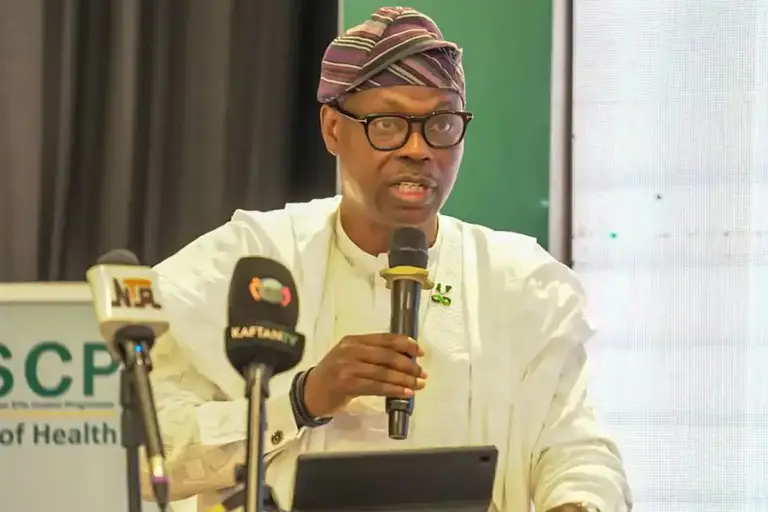
Iziaq Salako, the minister of state for health and social welfare has warned that future pandemics are unavoidable, urging Nigeria and other nations to strengthen readiness and response systems.
Speaking at a public health symposium in Abuja on Monday, the minister of state for health and social welfare said the next global health crisis is inevitable and requires urgent preparation.
“The next pandemic is not a matter of if but when,” Salako said at the event themed Lessons on Pandemic Preparedness and Response: Insights from China and Nigeria.
He noted that COVID-19, which killed more than seven million people worldwide, exposed serious weaknesses in global health systems. However, it also demonstrated the importance of collaboration, resilience, and coordinated action.
Salako highlighted Nigeria’s progress in strengthening its health security framework. Key improvements include the digitalisation of disease surveillance through SORMAS, expanded diagnostic capacity with over 100 public health laboratories, and the establishment of emergency operations centres across all states and the Federal Capital Territory.
According to him, these efforts helped raise Nigeria’s technical evaluation score from 39 percent in 2017 to 54 percent in 2023.
He also pointed to China’s rapid and disciplined COVID-19 response as a model, particularly in the use of technology and community mobilisation.
“Mutual learning between Nigeria and China is critical to building resilient systems capable of safeguarding citizens and optimising global actions,” he said.
Salako added that under Bola Tinubu, health security has been prioritised as a key pillar of national health reforms. Initiatives such as the 7-1-7 target and the SITAware Transition Project are aimed at improving state-level preparedness, while the One Health approach integrates human, animal, and environmental health systems.
He also confirmed Nigeria’s participation in World Health Organization (WHO) pandemic agreement negotiations, signalling commitment to global cooperation.
The minister stressed that effective pandemic preparedness requires a whole-of-society approach involving governments, private sector players, researchers, and communities.
He urged stakeholders to prioritise actionable policies, strong partnerships, and innovation to ensure equitable global readiness.