


The Independent National Electoral Commission (INEC) expressed worry about what it called “unnecessary litigations” and ongoing internal leadership conflicts inside political parties.
It expressed concern that the trend is eroding its commitment to democratic consolidation.
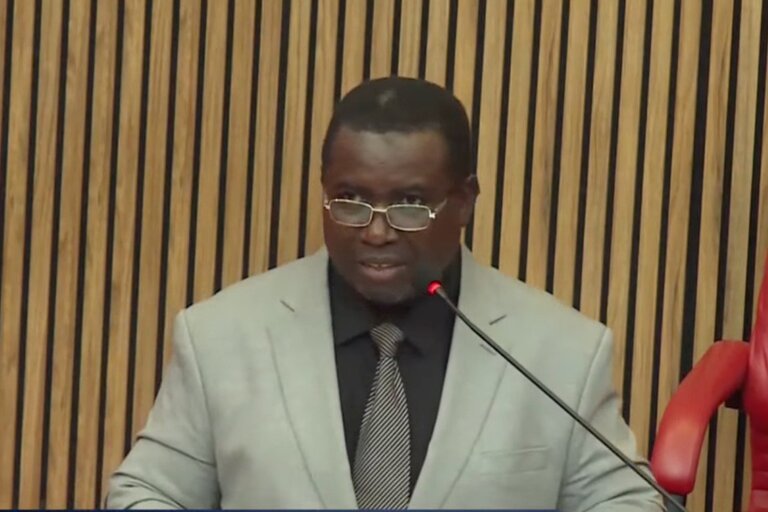
Prof. Joash Amupitan (SAN), Chairman of the Commission, voiced concern on Wednesday at a technical workshop on the modification of INEC regulations and guidelines for political parties, which was organized in collaboration with the Westminster Foundation for Democracy in Ikot Ekpene, Akwa Ibom State.
The technical session was held to match party guidelines with amendments made to the Electoral Act 2026 (as amended).
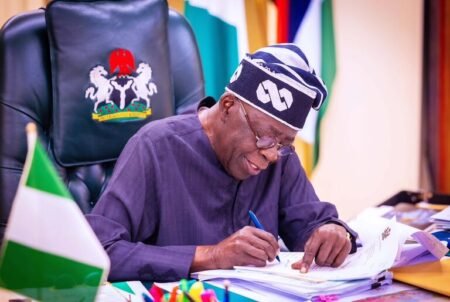
On February 18, 2026, the National Assembly enacted the Electoral Act, which was signed into law by President Bola Tinubu on February 19.
Amupitan, speaking at the occasion, expressed concern that political parties, rather than functioning as vehicles for national reform, were exhibiting a troubling pattern of leadership disputes and internal strife.
“Our collective commitment is being challenged by leadership squabbles and politicized politics.
“In the last cycle alone, INEC was joined in scores of suits that could have been avoided by simple adherence to party constitutions.
“As an independent body, we remain neutral, but we are no longer passive observers,” he said.
Amupitan added, “Political parties in Nigeria face a crisis of internal democracy. Of grave concern is the quality of party primaries.
“We must enforce a level playing field as we move towards the primary window of April 23 to May 30, 2026.”
“The quality of internal party democracy has a direct bearing on the secondary election conducted by INEC.”
The chairman of the commission also lamented the trend of leadership squabbles and infighting in political parties.
“We are currently witnessing a disturbing trend of leadership squabbles and infighting that threaten to turn political parties into theaters of permanent strife rather than vehicles for national development.
“These frequent leadership tussles do more than dilute party ideologies; they spill over into our courtrooms, resulting in a deluge of unnecessary litigations where INEC is routinely joined as a party.
“Each day spent defending these intra-party disputes is a day diverted from our primary mandate of election planning,” he added.
The INEC chairman expressed optimism that the workshop would examine major elements of the new Electoral Act and identify any necessary changes to current norms and guidelines for political parties.
Adebowale Olorunmola, Country Director of the Westminster Foundation for Democracy, stated in his goodwill letter that the rules must be strengthened to reflect the changes made in the new Electoral Act.
“The 2022 edition of the INEC Regulations and Guidelines served us well in the conduct of the 2023 general elections and subsequent elections.
“However, current realities are no longer what they were four years ago. Today, we are tasked with bridging the gap between the letter of the 2026 Act and the practical, day-to-day operations of our political parties,” he said.
Earlier, Obo Efanga (SAN), the Resident Electoral Commissioner in Akwa Ibom State, described the workshop as important and well-timed, saying that the Regulations and Guidelines for Political Parties, 2022, need to be updated to align with the Electoral Act 2026.
Efanga explained that the document governs the registration, legislative compliance, administration, conduct, and monitoring of political parties and their operations; therefore, its reform is critical to improving the electoral process.