




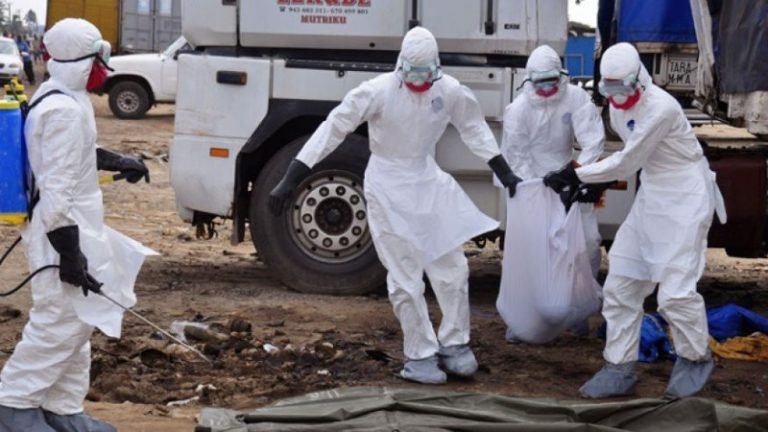
The Nigeria Centre for Disease Control and Prevention (NCDC) has increased surveillance at the country’s entry points, including airports, following the confirmation of an Ebola Virus Disease outbreak in Uganda.
Idris said, “There are no cases of Ebola virus disease in Nigeria. However, the Nigeria Centre for Disease Control and Prevention, in collaboration with relevant ministries, departments, agencies, and partners through the National Emerging Viral Hemorrhagic Diseases Technical Working Group, continues these efforts, including the update of our EVD emergency contingency plan, heightened surveillance especially at the points of entry, and optimising diagnostic capacity for EVD testing in designated laboratories in cities with international airports of entry and the National Reference Laboratory.
“In addition, all Lassa fever testing laboratories can be activated to scale up testing if the need arises.”
Nigeria suffered an Ebola outbreak in 2014 as a result of an infected patient, Sawyer, entering the country from Liberia.
Sawyer’s initial contact, Dr. Ameyo Adadevoh, the lead consultant physician and endocrinologist at the Initial Consultants Medical Centre in Ikoyi, died but averted the spread of the terrible sickness.
On January 30, 2025, Uganda reported an Ebola case caused by the Sudan virus species in Wakiso, Mukono, and Mbale City, all in the district.
So far, only one instance has been reported, with one fatality. 44 contacts have been found, and authorities are monitoring them.
The NCDC emphasised that Uganda has extensive experience responding to Ebola outbreaks and has implemented the essential containment measures.
Ebola virus disease, previously known as Ebola hemorrhagic fever, is a severe and frequently fatal sickness with a fatality rate ranging from 25% to 90%.
The virus is classified into five separate species: Bundibugyo, Zaire, Reston, Tai Forest, and Sudan. The Zaire strain is the deadliest, and it was responsible for the West African pandemic from 2014 to 2016, whereas the Sudan strain is to blame for the current outbreak in Uganda.
“The infection is transmitted from animals to humans, with human-to-human transmission occurring through direct contact with the body fluids (blood, saliva, vomit, urine, faeces, sweat, breast milk, and semen of an infected person), contaminated objects, or infected animals such as fruit bats, chimpanzees, gorillas, monkeys, porcupines, and forest antelope,” the NCDC stated.
“The virus can also be transmitted through contact with wildlife and unsafe burial practices. The incubation period, i.e., from exposure to the development of signs and symptoms, ranges from 2 to 21 days. During an outbreak, those at risk of infection are health workers, family members, and others in close contact with sick people and deceased patients.”
“The initial symptoms of EVD include sudden onset of high fever, accompanied by other nonspecific signs and symptoms such as headache, body aches, muscle pain, weakness, vomiting, and diarrhoea. Jaundice (yellowing of the eye) may also occur. In severe cases, uncontrolled bleeding from orifices, dysfunction and/or failure of several body organs such as the kidneys, liver, and central nervous system may occur, progressing to shock and death.”
“In fatal cases, death often occurs between 8 and 9 days of the onset of symptoms.”
The NCDC has assessed Nigeria’s risk level as moderate, citing current risk assessments and the recent Marburg virus epidemic in Rwanda.
“A moderate risk classification indicates that EVD, without mitigation, is likely to occur in Nigeria, with the potential for significant public health consequences. So, we need to take the necessary precautions,” the NCDC warned.
Although vaccines and therapies exist for some Ebola strains, the licensed vaccination for the Zaire strain is not yet accessible in Nigeria and does not protect against the Sudavirus..
However, early discovery, isolation, supportive treatment, infection prevention measures, contact tracing, and safe burial procedures all help to limit transmission and mortality.
“Nigerians are therefore urged to adhere strictly to preventive measures such as practicing good hand hygiene—washing your hands regularly with soap under running water or using hand sanitisers when soap and water are not readily available,” the NCDC advised.
“Nigerians are also advised to avoid physical contact with anyone who has symptoms of an infection with an unknown diagnosis. Avoid the consumption of bushmeat, particularly bats and nonhuman primates, which are known reservoirs of the Ebola virus. And if you have to, ensure that such is properly prepared and cooked before consumption.”
“Avoid direct contact with the blood, saliva, vomit, urine, and other bodily fluids of suspected or confirmed EVD cases. If you or someone you know (with a travel history to any country with Ebola cases) experiences symptoms of EVD enumerated above, call 6232 or your State Ministry of Health hotline for guidance.”
The NCDC urged healthcare workers to maintain heightened vigilance, ensure strict patient isolation, adhere to infection prevention protocols, and use appropriate protective equipment when managing suspected cases.
“In the management of a suspected or confirmed case of EVD: Ensure strict isolation of the patient. Adhere strictly to infection prevention and control measures, including the use of appropriate personal protective equipment like face masks, hand gloves, and appropriate gowns,” the advisory stated.
The NCDC promised to continue boosting nationwide surveillance, notably at borders and airports, while keeping healthcare personnel on guard for possible instances.
In addition, the organisation is increasing laboratory capacity for rapid testing and maintaining coordination with the World Health Organisation (WHO) and African Regional Health Authorities to monitor changes.
Although the WHO has not suggested travel restrictions to Uganda, the NCDC has maintained its recommendation that Nigerians avoid all but essential travel to Ebola-affected countries.
“For those already in Nigeria but with recent travel history to or transit through countries with Ebola cases in the last 21 days who experience symptoms such as fever, muscle pain, sore throat, diarrhoea, weakness, vomiting, stomach pain, or unexplained bleeding or bruising, they should adhere to the following guidelines: Promptly call 6232 or the State Ministry of Health hotlines for assessment and testing, and shelter in place to avoid further spread through shared transport systems (public or private) until health authorities reach out. Await dedicated responders for assessment and possible transport to a designated treatment centre if required.”