




A magnitude-5.9 earthquake struck parts of Japan, including Tokyo, Ibaraki, Saitama and Chiba, early Sunday, injuring several people and disrupting train services across the region.
The earthquake struck at around 2am, with the Japan Meteorological Agency (JMA) recording its epicentre in southern Ibaraki Prefecture at a depth of 68 kilometres.
The agency warned residents to remain alert for further strong earthquakes over the following week, particularly during the first two to three days. It said tremors could reach lower 5 on Japan’s seismic intensity scale, a level at which people are typically frightened and may need to hold onto something, while dishes and books can fall from shelves.
Several people injured
Local fire departments reported injuries in several areas.
In Saitama, a teenage boy and a woman in her 70s suffered arm and shoulder injuries. In Kawasaki, three people aged between their 30s and 60s were injured in falls, sustaining injuries to their faces and hands.
A woman in her 60s in Sagamihara also fell down stairs at home and suffered a head injury.
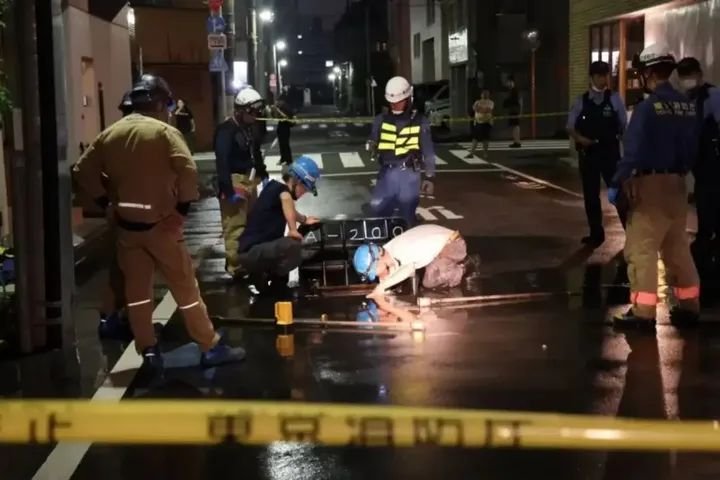
In Tokyo’s Koto Ward, a water pipe burst, prompting the Tokyo Metropolitan Bureau of Waterworks to investigate whether the damage was caused by the earthquake.
Residents shaken by powerful tremors
The overnight quake jolted residents awake across the affected areas, with some describing the shaking as comparable to the 2011 Great East Japan Earthquake.
Naoko Ishizaki, 57, from Kawaguchi in Saitama Prefecture, said an emergency earthquake alert woke her before violent shaking struck.
She and her husband and two sons took shelter in a hallway near the entrance until the shaking stopped. She later discovered that an unsecured dishwasher had moved and some windows had opened.
“It was a major jolt, like the Great East Japan Earthquake. I learned that you can’t react quickly in the moment, so I’m going to check my emergency supplies again,” she said.
Kento Nakamura, 45, of Tokyo’s Adachi Ward, was taking a bath when the earthquake struck. He said water surged in the bathtub while disaster-prevention announcements echoed from outdoor speakers.
Nakamura said items in his room remained in place because he had recently secured them with anti-tip adhesive strips.
“I had already been on heightened alert because there had been a series of earthquakes,” he said.
Fire suppressant released at supermarket
At a supermarket in Adachi Ward, an alarm system malfunctioned following the earthquake, triggering the release of fire suppressant.
Police said the discharge was stopped at around 2:45am, although the supermarket delayed opening by an hour.
A 38-year-old woman who regularly shops at the store said she planned to buy extra water and emergency food because of the possibility of another earthquake.
Train services disrupted
The earthquake also disrupted public transportation, with JR East and other railway operators suspending services on several lines from early Sunday morning.
At Omiya Station in Saitama, one of the region’s busy transport hubs, signs informed passengers that services had been suspended on some sections of the network.
The earthquake and its aftermath disrupted travel plans across the region as authorities urged residents to remain vigilant for further strong shaking.