
Close Menu
Chronicle NG
    Trending Stories
    The Lagos State Internal Revenue Service has declared that it will use third-party agents to collect unpaid taxes from defaulting taxpayers, including banks, employers, debtors, tenants, and business partners.

    Lagos will recover unpaid taxes through banks, employers – LIRS

    January 25, 2026
    Tinubu meets Kano gov Yusuf amid APC defection talks

    Kano commissioner resigns, says gov has derailed

    January 25, 2026
    JAMB: How blind candidate hired visually impaired undergraduate to write 2025 UTME

    JAMB scraps special privileges for albino candidates over malpractices

    January 25, 2026
    Facebook X (Twitter) Instagram
    Trending
    • Lagos will recover unpaid taxes through banks, employers – LIRS
    • Kano commissioner resigns, says gov has derailed
    • JAMB scraps special privileges for albino candidates over malpractices
    • Makinde to Osinbajo: I miss your leadership, things not the same under Tinubu’s govt
    • Tonto Dikeh reconciles with ex-husband Churchill after 10 years of public feud
    • Anambra deducts workers’ salaries over IPOB sit-at-home
    • 11 times Tinubu reversed appointments without explanation
    • ADC splits as Obidients demand presidential ticket
    Facebook X (Twitter) Instagram
    Chronicle NGChronicle NG
    Subscribe
    Sunday, January 25
    • News
      • Nigeria News
      • World News
      • Headlines News
    • Politics
    • Business
    • Sport
    • Entertainment
    • Contact Us
    Chronicle NG

    Why technology-enabled banking Is a multiplier for Nigeria’s 2036 Goal

    Chronicle EditorBy Chronicle EditorJanuary 12, 2026No Comments3 Mins Read
    Facebook Twitter Telegram WhatsApp
    Technology-Enabled Banking
    Facebook Twitter WhatsApp

    Nigeria is at a defining moment in 2026. After several years of bold macroeconomic adjustments, including foreign exchange unification and structural reforms, the country is moving from stabilization into expansion. With the Central Bank of Nigeria restoring confidence in the Naira and foreign reserves reaching a five-year high of over 45 billion dollars, the next phase of growth will be shaped by how effectively Nigerians can participate in the formal financial system.

    Technology-enabled banking is playing a critical role in this transition. Commercial banks remain the backbone of the system, providing balance sheet strength, regulatory depth, and long-term capital essential for national development. Yet in a country of over 220 million people, physical access alone cannot deliver financial inclusion at scale.

    Mobile-first and digitally delivered financial services are bridging this gap. By extending regulated banking beyond physical locations into everyday devices, licensed microfinance banks and other regulated institutions are bringing millions of Nigerians into the formal economy. This approach helped push formal financial inclusion to over 64 percent in 2025, ensuring the last mile is no longer excluded.

    Achieving the Federal Government’s target of a one trillion dollar GDP by 2036 requires efficient capital flow. In the first quarter of 2025 alone, Nigeria recorded over 295 trillion naira in electronic payment transactions. Faster, secure financial infrastructure supports modern commerce, strengthens trade, and improves overall economic productivity.

    Micro, small, and medium-scale enterprises, which contribute nearly 48 percent of GDP, are central to this growth. Technology-driven banking models are helping to close long-standing credit gaps. By responsibly using alternative data to assess risk, small-ticket working capital loans provide the “pocket capital” businesses need to grow. This builds a pipeline of enterprises that can mature into larger corporate clients within the broader banking ecosystem.

    Digitally delivered financial services also strengthen public revenue mobilisation. Increased transaction transparency supports a broader tax net and contributes directly to government revenues through stamp duty, reinforcing fiscal sustainability.

    This evolution is supported by a maturing regulatory environment. The Central Bank of Nigeria’s Open Banking framework, rolling out in phases from early 2026, ensures that all regulated institutions operate under consistent oversight. Secure data sharing standards mean customers’ financial histories can move with them across institutions, strengthening trust and accountability.

    At FairMoney Microfinance Bank, we see this framework as a social contract. Knowing that deposits are protected by NDIC insurance and supported by clear dispute resolution mechanisms gives customers the confidence to participate actively in the economy.

    The future of Nigerian banking is defined by structural harmony. Traditional banks provide depth and stability, while technology-enabled institutions provide reach, speed, and accessibility. Together, they turn financial access into economic resilience.

    By working in alignment, we can ensure every Nigerian, from the Lagos professional to the rural trader, is equipped to contribute meaningfully to our shared one trillion dollar future.

    By Henry Obiekea, Managing Director, FairMoney Microfinance Bank
    Share. Facebook Twitter Telegram WhatsApp

    Keep Reading

    Saliba sees red as Bournemouth defeat 10-nan Arsenal 2-0

    Bournemouth score late to earn 3-2 win against Liverpool

    Osinbajo to chair summit on justice, community restoration in Kaduna

    Osinbajo to lead global effort on sustainable development, others

    Dasuki trial: EFCC traces N2.2bn election security funds to firms

    Dasuki trial: EFCC traces N2.2bn election security funds to firms

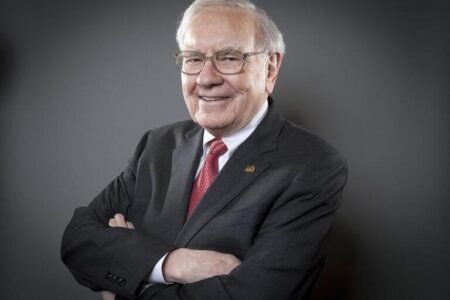
    Warren Buffett resigns after 60 years as CEO Berkshire Hathaway

    Warren Buffett resigns after 60 years as CEO Berkshire Hathaway

    US pauses visa processing for Nigeria, Russia, 73 others

    US Embassy: Visas issued before 2026 valid despite Nigeria travel ban

    Osun 2026: Adeleke joins Accord Party after dumping PDP

    Osun 2026: Adeleke joins Accord Party after dumping PDP

    Subscribe to News

    Be the first to get the latest news updates from ChronicleNG about world, sports, politics etc

    The Lagos State Internal Revenue Service has declared that it will use third-party agents to collect unpaid taxes from defaulting taxpayers, including banks, employers, debtors, tenants, and business partners.

    Lagos will recover unpaid taxes through banks, employers – LIRS

    January 25, 2026
    Tinubu meets Kano gov Yusuf amid APC defection talks

    Kano commissioner resigns, says gov has derailed

    January 25, 2026
    JAMB: How blind candidate hired visually impaired undergraduate to write 2025 UTME

    JAMB scraps special privileges for albino candidates over malpractices

    January 25, 2026
    Makinde to Osinbajo: I miss your leadership, things not the same under Tinubu's govt

    Makinde to Osinbajo: I miss your leadership, things not the same under Tinubu’s govt

    January 25, 2026
    Tonto Dikeh reconciles with ex-husband Churchill after 10 years of public feud

    Tonto Dikeh reconciles with ex-husband Churchill after 10 years of public feud

    January 25, 2026
    Facebook X (Twitter) Instagram
    • Politics
    • News
    • Sports
    • Business
    • About Us
    © 2026 ChronicleNG

    Type above and press Enter to search. Press Esc to cancel.