


The United States (US) has pledged to continue confronting militant groups and what it describes as religiously intolerant violence in Nigeria and other parts of the world.
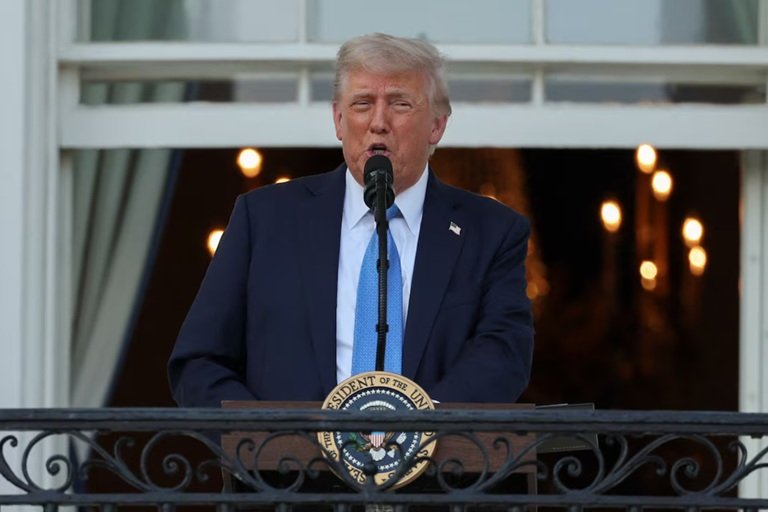
In a statement issued by the US Department of State and shared on X, President Donald Trump said his administration was taking a firm stand against campaigns that threaten religious freedom.
“My administration is confronting head-on the militant and really intolerant campaign that seeks to drive religious believers out of public life and out of society,” Trump said.
The remarks come amid renewed deadly attacks across parts of Nigeria, particularly in the North-Central region, where armed groups have carried out mass killings in recent weeks, deepening concerns over the country’s worsening security situation.
Earlier this month, gunmen attacked several rural communities in Kwara State, killing scores of residents, burning homes and forcing families to flee. Local authorities said the attackers struck in the early hours, firing indiscriminately before setting buildings ablaze and escaping.
In Plateau State, violence has also persisted despite repeated military operations. Recent attacks on farming communities reportedly left dozens dead, according to local officials and community leaders.
The killings are part of a prolonged cycle of violence in Nigeria’s Middle Belt, where armed groups often exploit disputes over land, grazing routes and local governance. While religious identity frequently intensifies tensions, analysts say the drivers are far more complex.
Nigeria continues to face multiple security threats, including the Boko Haram insurgency in the northeast, banditry in the northwest and central regions, and recurring communal clashes in several states.
Although many attacks are framed along religious lines, experts argue that poverty, competition over scarce resources, weak state presence and governance failures play a significant role.
During Trump’s presidency, the US adopted a tougher stance on Nigeria over religious freedom concerns, at one point designating the country a Country of Particular Concern. Nigerian authorities rejected the label, insisting that victims of violence cut across religious lines.
Despite past tensions, Washington has maintained security cooperation with Abuja, including intelligence sharing, training and limited support aimed at weakening militant networks. US officials have stressed that the engagement focuses on counterterrorism and civilian protection rather than direct combat.