


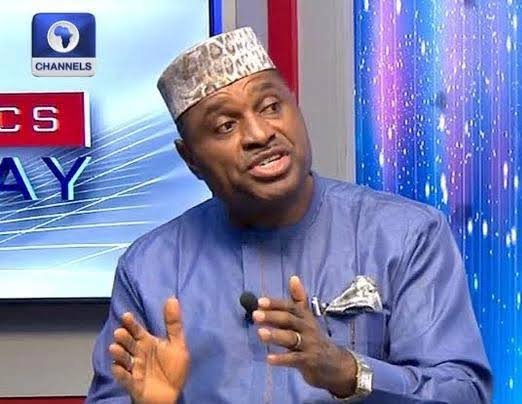
Kenneth Okonkwo, a chieftain of the African Democratic Congress (ADC) and legal practitioner, has criticised the Supreme Court’s ruling, which upheld President Bola Tinubu’s declaration of a state of emergency in Rivers State and the suspension of elected officials.
The apex court, in a six-to-one decision delivered on Monday, affirmed that the President has constitutional authority to declare a state of emergency to prevent a breakdown of law and order. It further ruled that elected officials may be suspended during such periods, provided the suspension is for a limited duration.
The judgment followed a suit filed by states governed by the Peoples Democratic Party (PDP), which challenged the legality of Tinubu’s declaration of emergency rule in Rivers State. Under the directive, Governor Siminalayi Fubara, his deputy Ngozi Odu, and members of the state House of Assembly were suspended for six months.
Speaking on Channels TV’s Sunrise Daily on Tuesday, Okonkwo faulted both the substance and the approach of the ruling. He argued that while the President has the constitutional power to declare a state of emergency, he does not have authority to suspend elected officials.
“What this means is that the President now has the right to suspend 36 governors at the same time. He can declare a state of emergency nationwide and that he will use the military to rule Nigeria for a limited time,” he said.
Okonkwo also criticised the Supreme Court for striking out the suit for want of jurisdiction but still proceeding to make pronouncements on substantive issues. “They said they don’t have jurisdiction, so they just stated an opinion. It means that what they just stated is an opinion, but their opinion still matters in legal issues. If I were in their position, I wouldn’t have done that. As an apex court, they have the right to simply decline jurisdiction and not make any other comments. That is a right given to them, rather than throwing the nation into confusion,” he added.
He warned that the ruling could set a dangerous precedent for Nigeria’s democracy, suggesting that it opens the door for executive overreach. “As a lawyer, I am not confident in the judicial system because their judgments are not reflecting the rule of law,” he said.
Nonetheless, Okonkwo commended the sole dissenting justice in the case, aligning himself with that position. “Thank God there was one dissenting voice among the Supreme Court Justices, and I have the right to align myself with him,” he remarked.
The ruling has sparked debate among legal and political observers, with concerns that it may redefine the balance of power between the executive and elected state officials, while raising questions about the role of the judiciary in safeguarding democratic governance.