



Escalating military tensions between the United States, Israel, and Iran have triggered a global economic ripple effect that could derail Nigeria’s recent progress in taming food inflation.
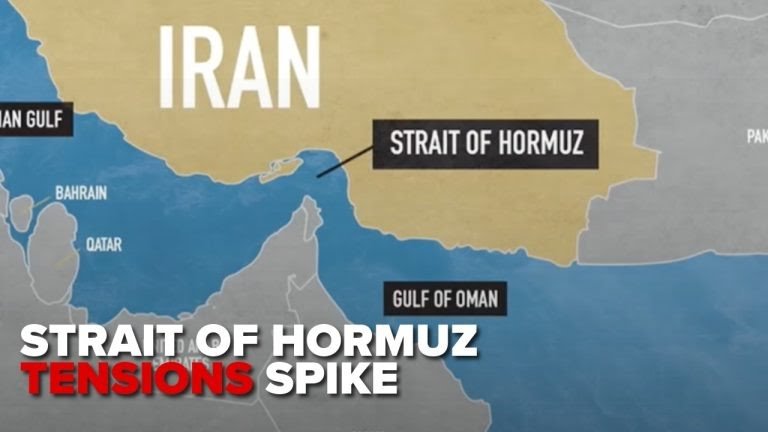
At the centre of the disruption is the Strait of Hormuz, one of the world’s most vital maritime trade routes linking the Persian Gulf to the Arabian Sea. The near standstill in shipping through the narrow waterway has sent oil prices surging and freight costs climbing developments that could push food and fuel prices higher in Nigeria.
The crisis comes just as the National Bureau of Statistics reported early signs of relief for Nigerian households. In January 2026, Nigeria’s Consumer Price Index eased slightly to 15.10 per cent year-on-year, down from 15.15 per cent in December 2025.
More significantly, food inflation slowed sharply to 8.89 per cent, marking the first single-digit reading in more than a decade. Prices of key staples including yam, eggs, maize, beans, cassava, palm oil and groundnut oil declined across markets nationwide.
On a month-on-month basis, food prices fell 6.02 per cent, indicating an actual drop in average food costs compared with December.
However, analysts warn that the unfolding Middle East conflict could quickly reverse those gains.
Oil Windfall for Nigeria
The disruption at the Strait of Hormuz through which about 17 million barrels of crude oil moved daily in 2025 has pushed global crude prices sharply higher.
Benchmark Brent crude oil has surged more than 10 per cent, trading close to $85 per barrel as markets factor in a potential “war premium”. Analysts say prices could reach $100 per barrel if the disruption continues.
For Nigeria, this presents a fiscal upside. The country’s 2026 budget benchmark was revised to $60 per barrel, meaning higher global prices could translate into billions of dollars in additional revenue.
Freight Costs Surge
While government revenues may benefit, businesses and consumers are already feeling the pressure.
Major global shipping lines including Maersk, MSC Mediterranean Shipping Company, Hapag-Lloyd, and CMA CGM have introduced emergency surcharges and rerouted vessels away from the crisis zone.
Shipping delays of 10 to 14 days are now expected for cargo heading to Nigerian ports, while insurance costs for vessels operating in the region have jumped by as much as 400 per cent.
Importers say the cost of bringing goods into the country has surged sharply. A 20-foot container to Lagos now costs about $4,600, while 40-foot containers have climbed to $5,600.
These rising logistics costs are already being passed on to consumers, particularly for imported goods such as electronics, vehicle spare parts and industrial chemicals.
Food Prices Under Threat
According to the Head of Research at the Sea Empowerment and Research Center, Eugene Nweke, the disruption could trigger a new wave of inflation in Nigeria.
Higher freight costs, fertiliser supply disruptions and increased fuel prices could push food prices upward again.
He warned that inflation could rise by three to five per cent, driven largely by logistics costs and imported agricultural inputs.
Petrol Prices Climb
The crisis is already affecting Nigeria’s downstream petroleum sector.
Premium Motor Spirit (petrol) now sells between ₦933 and ₦1,000 per litre, while the Major Energies Marketers Association of Nigeria warned prices could approach ₦1,100 per litre by April 2026 if global crude continues rising toward $90 per barrel.
Fuel marketers are also rationing supply in anticipation of further price swings.
At depots in Apapa, petroleum marketers have adopted what industry insiders describe as “cautionary sales,” releasing limited volumes to avoid losses if replacement costs increase.
Shipping Industry Shockwaves
The Director of International Trade at the Maritime Researchers and Authors Association of Nigeria, Sunday Ademuyiwa, said the crisis is already rattling the global shipping industry.
Shipping companies are reassessing routes while insurers review risk exposure as tensions escalate in the Gulf.
Some tankers in the region have reportedly sustained damage, raising further concerns among maritime operators.
Economic Double-Edged Sword
Despite the economic risks, the surge in oil prices could significantly boost Nigeria’s finances.
Analysts estimate that if crude prices reach $120 per barrel, Nigeria could earn an additional $18 billion to $22 billion annually, while short-term GDP growth could rise by 1 to 1.2 per cent.
However, experts caution that the windfall must be managed carefully.
They advise the government to channel any additional oil revenue into infrastructure, stabilisation funds and economic diversification rather than recurrent spending.
Strengthening maritime security in the Gulf of Guinea and ensuring stable crude supply to domestic refineries were also highlighted as critical steps to shield the economy from global shocks.