




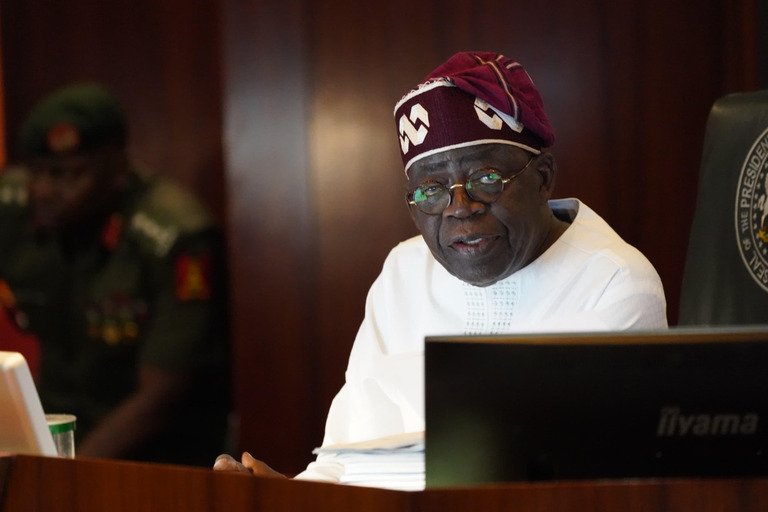
The Socio‑Economic Rights and Accountability Project (SERAP) has filed a lawsuit against the administration of Bola Tinubu over the continued enforcement of Nigeria’s 2019 regulations allowing interception of private communications.
The case was filed at the ECOWAS Community Court of Justice in Abuja, where SERAP is asking the court to declare the rules unlawful and compel the government to withdraw them.
The regulations, known as the Lawful Interception of Communications Regulations, 2019, permit certain security agencies to intercept phone calls and digital communications under specific conditions.
Triggered by El-Rufai allegation
The legal action follows claims by former Kaduna State governor Nasir El‑Rufai that a phone conversation involving Nigeria’s National Security Adviser, Nuhu Ribadu, had been intercepted.
El-Rufai alleged that security authorities routinely monitor private calls and claimed the intercepted conversation allegedly included discussions about arresting him.
SERAP: Regulations violate privacy rights
In suit number ECW/CCJ/APP/11/26, SERAP argues that the regulations establish what it described as a sweeping mass phone-tapping regime that breaches Nigerians’ constitutional and international human rights.
The organisation said the government’s failure to withdraw the regulations effectively endorses unlawful surveillance practices.
According to SERAP, broad surveillance powers exercised in secrecy without independent supervision risk being used arbitrarily against political opponents, journalists and civil society actors.
Concerns ahead of 2027 elections
The rights group warned that the regulations could pose a serious threat to democratic participation as Nigeria approaches the 2027 general elections.
It argued that the perception of widespread monitoring could discourage political organising, investigative reporting and voter mobilisation.
“Free and fair elections depend on confidential communications and protected journalistic sources,” SERAP said in court documents.
Broad powers and legal ambiguities
SERAP also criticised several provisions of the regulations.
The group said Regulation 4 grants wide interception powers to the National Security Adviser and the State Security Services with limited clarity on the scope of those powers.
Another provision, Regulation 23, expands the definition of authorised agencies to include bodies such as the Nigeria Police Force, National Intelligence Agency, Economic and Financial Crimes Commission and the National Drug Law Enforcement Agency.
SERAP argued that this creates legal ambiguity because Nigerians cannot clearly determine which authorities have the power to intercept communications.
Warrantless surveillance concerns
The organisation further raised concerns over provisions allowing interception without a warrant in cases involving consent, threats to life or activities conducted in the “ordinary course of business”.
It said such grounds are overly broad and vulnerable to abuse.
SERAP also criticised emergency surveillance provisions that allow monitoring on national security grounds without prior judicial approval.
Data storage and cybersecurity risks
The lawsuit also challenges rules allowing intercepted communications to be retained during investigations and stored for up to three years.
SERAP said the regulations do not clearly outline safeguards governing the storage, destruction or oversight of retained data.
It also warned that requirements compelling telecommunications operators and individuals to disclose encryption keys could weaken cybersecurity and expose sensitive communications.
SERAP is asking the court to declare the regulations unlawful and inconsistent with Nigeria’s human rights obligations. Order the government to withdraw the rules immediately. Direct authorities to develop interception laws that comply with international human rights standards and provide stronger judicial oversight.
The organisation maintains that while governments must address national security threats, surveillance powers must remain strictly necessary, proportionate and subject to independent oversight.
No date has yet been fixed for the hearing of the case.