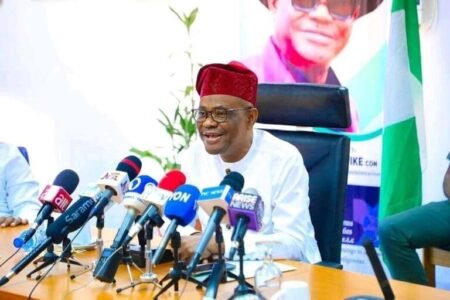



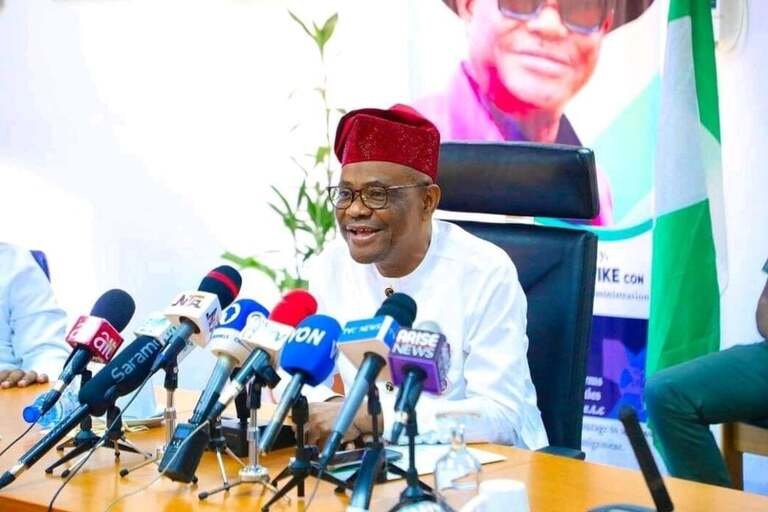
Reactions have continued to trail remarks by the Minister of the Federal Capital Territory (FCT), Nyesom Wike, directed at Seun Okinbaloye during a media chat in Abuja on Friday.
Wike had said he would have “shot” Okinbaloye over comments the journalist made regarding the possibility of Nigeria drifting toward a one-party state.
Okinbaloye, speaking on his programme, had expressed concern that the 2027 elections were shaping up to be dominated by a single political party, citing internal crises within the African Democratic Congress (ADC).
He warned that Nigeria could be “doomed democratically” if the ADC seen as a viable opposition platform is unable to effectively participate in the elections.
Responding, Wike said: “I was surprised yesterday, thoroughly surprised. If there was any way to break the screen, I would have shot him.”
The comment has since sparked criticism from various quarters.
Reacting, financial analyst and social entrepreneur Olufemi Awoyemi described the statement as “disgraceful” and warned against normalising such rhetoric.
“When leaders speak in ways that suggest a journalist could be shot, the implications go beyond words,” he said.
“A leader jokes about silencing a critic, the room laughs, and someone else may take it literally. What starts as rhetoric can become permission. In that moment, the boundary protecting accountability and press freedom is weakened.”
Awoyemi added that the remark reflects “a troubling mindset that shows a lack of respect for dissenting views,” he wrote on his X account on Saturday.
Meanwhile, a coalition of press freedom and civil society organisations, in a statement signed by 14 groups, called on the FCT minister to retract his remarks, apologise to Okinbaloye and the media, and reaffirm his commitment to non-violence and press freedom.
The coalition acknowledged that Wike later clarified he had no intention of harming the journalist, but insisted that such statements remain problematic.
“Even hypothetical expressions of violent intent constitute a conditional threat and cannot be dismissed as harmless,” the statement said.
“Even if intended humorously, such rhetoric can be perceived as intimidation by both the journalist and the public.”
The groups further warned that statements of this nature contribute to a climate of fear and undermine the role of the press in holding power to account.
They stressed that safeguarding press freedom remains essential to the health of Nigeria’s democracy.