


No fewer than 31 people have been killed and 169 injured in an explosion at a mosque during Friday prayers in Islamabad, Pakistan, officials say.
According to authorities, a suicide bomber exploded a weapon as he approached the gates of the Shia mosque in the Tarlai neighborhood of the city.
Eyewitnesses informed the BBC that the explosion was preceded by shooting.
As hospitals began to receive injured people, an emergency was proclaimed, and a blood donation plea was issued.
Pakistan’s Prime Minister Shehbaz Sharif condemned the event, expressing “deep grief” and calling for a swift investigation to identify those responsible.
In separate speeches, Pakistan’s President Asif Ali Zardari claimed “targeting innocent civilians is a crime against humanity,” while Defense Minister Khawaja Asif suggested India and Afghanistan were behind the strike.
Asif added in a social media post that it had been “proven” the attacker had travelled to and from Afghanistan, and “collusion between India and Afghanistan is being revealed.”
Afghanistan’s Taliban administration condemned Khawaja Asif’s remarks, claiming the Pakistani minister “hurriedly attempted to attribute the incident to Afghanistan without presenting any credible evidence.”
The Islamic State group later claimed responsibility for the incident in a statement that featured the attacker’s name and photo. The BBC could not independently verify the claim.
Afghan foreign ministry spokesman Abdul Qahar Balkhi earlier condemned the incident and expressed condolences, describing it as a “contradiction to Islamic and humanitarian values.”
The Indian foreign ministry also condemned the incident and expressed sorrow for the loss of life, calling the claims against it “baseless.”
According to local media, Pakistan’s Minister of State for the Interior, Talal Chaudhry, stated that the suspect was not an Afghan citizen.
A spokesperson for UN Secretary-General Antonio Guterres said he denounced the attack in the “strongest terms” and demanded that those responsible be “identified and brought to justice.”
According to Pakistan’s defense minister, the attacker opened fire and detonated the bomb after being challenged by security guards.
Syed Ashfaq, the mosque’s custodian who lives next door, heard the gunfire and began running towards the mosque to help.
“By the time I reached it, there had already been an explosion,” he told the BBC. “Bodies were lying everywhere; some were missing arms, some missing legs. We took the most injured in our own vehicle [to the hospital].”
Irfan Memon, Islamabad’s deputy commissioner, claimed on X that the death toll was 31, with 169 injured.
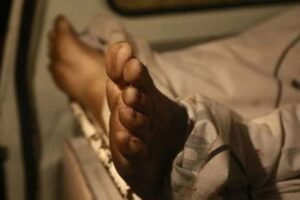
Pictures from local hospitals show the injured being transported by private vehicles and ambulances, with one AFP photographer witnessing scores of people arrive at the hospital.
Attacks are uncommon in the capital; however, one in November killed 12. Another 27 people were hurt in the blast outside a courthouse.
The Friday blast follows a week of terror in which 58 civilians were killed in coordinated strikes in Balochistan.
The Balochistan Liberation Army (BLA) insurgent organization claimed responsibility for the attacks. The military, which has been fighting an insurgency in the region for decades, claimed to have killed over 200 militants in response.
According to a recent analysis produced by an independent think tank, last year was Pakistan’s worst in almost a decade, with combat-related deaths up 74% and extremists accounting for more than half of the death toll.
The Pakistan Institute for Conflict and Security Studies (PICSS) reported that violence in Pakistan killed 3,413 people, up from 1,950 in 2024, with 2,138 militants killed.
On Friday, IS claimed responsibility for the incident through its Telegram channels, citing its “Pakistan Province” branch. IS’s Amaq “news agency” issued a statement providing additional information.
Amaq claimed that the IS attacker went to the “central temple [mosque]” in Tarlai district, Shahzad. Guards at the scene attempted to stop the attacker at the external gate, but he shot his weapon at them, injuring two before walking inside.
According to IS, the alleged attacker’s name was “Sayf Allah al-Ansari.” The name Ansari is frequently used to refer to someone who is a local. Amaq’s story included a photo of the claimed masked attacker.