




- Says justice must also focus on social and economic rights of people
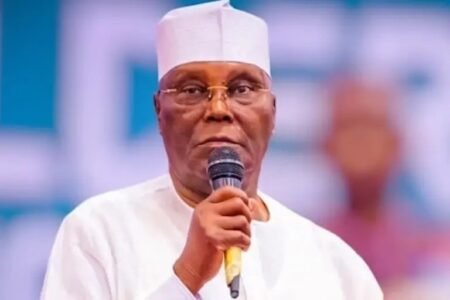
Vice President Yemi Osinbajo says an effective synergy among the three arms of government including representatives of the legal profession would be a useful approach to confront the urgently required reform of Nigeria’s administration of justice system, and such collaboration is in the works.
Prof. Osinbajo, SAN, dropped this hint on Saturday at the virtual edition of the Wole Olanipekun & Co (WOC) Justice Summit.
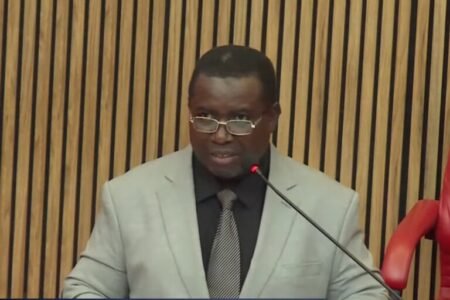
The summit themed “Developing an Institutional Concept of Justice in Nigeria” featured prominent speakers including, the convener, Chief Wole Olanipekun, SAN; Prof. Fidelis Oditah, QC, SAN; Mr Yemi Candide-Johnson, SAN; notable economist, Prof. Pat Utomi; and a prominent lawyer from the UK, Brie Stevens-Hoare, QC, among others.
According to the Vice President, “I think it is important for us to sit together – the leadership of the profession, the executive, the judiciary and the legislature, to take a second look at some of these issues.”
Prof. Osinbajo said the collaboration to get the reform going should also include states, saying, “working together, the sub-nationals and the federal government and their judiciaries, we can make a fundamental change. This is obviously a matter that we must take seriously and address, not just as professionals but we must involve all the arms of government.”
Continuing, the Vice President said “because of the kind of system that we run, the reform of the Justice System is many-sided. It can’t be done by one segment. It cannot be done by the executive alone, it cannot be done by the judiciary alone, and it certainly cannot be done by the legislature alone.
“There is a need for us to appreciate that it is a many-sided thing, complicated and we have to simply look for ways to work together. I am seeing that critical mass of individuals in the legal profession, in the executive and also in the judiciary who are willing to reform. We are working quite hard to see how we can all come together to make a real change.”
The Vice President noted that “the big question is also the relevance of our paradigms of justice to the major socio-economic circumstances that confront us. The law is a social construct and makes sense only within a social context. To treat the law as something apart from society, or as a body of technical abstractions is to strip it of meaning and to alienate the legal order from the very people it is meant to serve.
“Consequently, a definition of justice that focuses on the social and economic rights of the people is not only more meaningful, it is more just. These rights include the right to food, shelter, employment, education and a reasonable national standard of living, care for the elderly, pensions, unemployment benefits and welfare for the physically challenged.”
Continuing, Prof. Osinbajo said “our progress in the observance of socio-economic rights must also be prosecuted in terms of the struggle to reduce the basic problems of ill-health, malnutrition, illiteracy, and famine which daily afflict our people.”
He added that “where social and economic rights are unsecured, people are unable to fully maximize their civil and political rights. For instance, access to qualitative education enhances and enriches the freedoms of expression, thought and conscience.
“Conversely, pervasive illiteracy can nullify the entire idea of the freedom of the expression. In the progressive vision, political rights and socio-economic rights are mutually reinforcing.”
Still on the concept of justice that addresses the socio-economic needs of the people, Prof. Osinbajo said “socio-economic rights even where wholly justiciable mean nothing unless there is a fiscal commitment to enforcement. This is the crucial intersection of politics, ideology and notions of justice.”
“This may explain why the opposition in Nigeria was prepared to abolish our social investment program if they won, while our party’s understanding of the imperative of delivering social justice was the provision of a massive social safety net.
“This was a fundamental feature of our manifesto. So, our Social Investment Programme which is the most ambitious welfare programme on the continent and our effort to expand universal health insurance all aim at ensuring that our most vulnerable citizens are not abandoned to the vicissitudes of fate,” the Vice President explained.
The summit also addressed such issues including judicial appointments, delays in the courts, the issue of technicalities, among other critical elements of the justice sector reform agenda.
Speaking specifically on the appointment of judges as an important area of reform in the system, the Vice President said, “judicial appointments should follow a merit based system and this is absolutely necessary, we need to insist on mandatory tests and interviews for all applicants.
He added that “clearly, we need to look more carefully at how our judges are selected. There has to be an objective process of selecting judges. We cannot insist that the only way to become a judge is to be a (judicial) career person or move from the high court to the Court of Appeal, to the Supreme Court. We must be able to bring in practicing lawyers, academics to be justices of the Court of Appeal and Supreme Court. If it requires rewriting the rules, then let us rewrite the rules.”
Referring to other areas in the system that have been identified as areas requiring urgent reform, Prof. Osinbajo said, “a lot of those things that have been said today can be achieved.”
According to him, “for example, we can ensure that the process of criminal trial is short and we get justice within a reasonable time.
“Issues like rape, there are all sorts of sociological issues and barriers that need to be encountered. The way the system responds to rape cases is also a problem. So, we need a change of mindset as well as the legal system responding adequately and promptly to situations where rape is reported.”
Still on aspects of justice administration requiring new approaches and models, the Vice President said the model of adjudication in criminal cases which largely dispenses retributive justice is not entirely adequate to meet the demands of justice especially in complex scenarios and situations that are peculiar to Nigeria.
“Given the tensions and frictions generated by contending passions and grievances, and the social reality of inequality and inequity, there is the recognition that some of the most serious situations which threatens to even, sometimes, break the fabric of society, require much more than just retributive sanctions by our judicial system, they require restorative justice to bring about healing and the reconstitution of the communities.
“This is one of the approaches that we are looking at as part of our efforts to resolve protracted ethnic and religious conflicts. In many of the cases, it is not enough to arrest, detain, prosecute and jail terrorists. There is a need somehow to find a process by which restorative justice can be brought to bear, by which the communities’ feelings of violations can be assuaged,” the Vice President stated.
Prof. Osinbajo said although the National Policy on Justice embodies some of the prescriptions and offers pathways of innovation for more holistic approaches to justice delivery, there is still much work to be done to meet the needs of persons in search for justice.
In his contribution, the keynote speaker, Prof. Fidelis Oditah said pertinent issues that require urgent reform in the administration of justice system include, the reform of dispute resolution mechanisms and an overhaul of the current system that focuses more on technicalities rather than the substance of cases brought before the courts, amongst others.
Oditah referring to instances where appellate courts overturned decisions merely based on technicalities without addressing the public interest implications, noted that such judicial behavior is not desirable, should be avoided and possibly prevented as much as possible through the reforms.
The WOC Justice Summit was moderated by Mr Bode Olanipekun, SAN, the Managing Partner of Wole Olanipekun Chambers.