



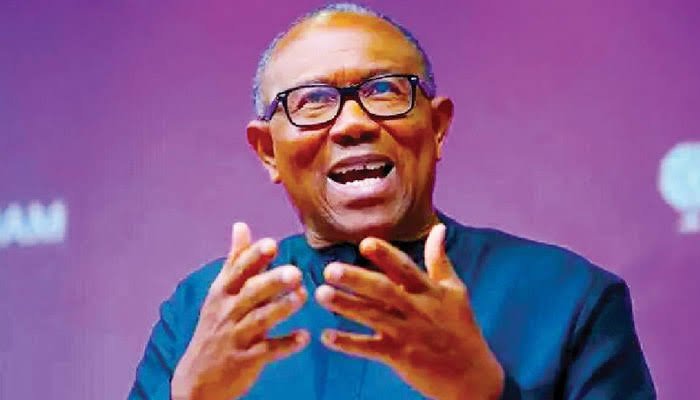
Peter Obi stands at a political crossroads. The path to his 2027 presidential ambition is narrowing, and while much of his predicament stems from his own choices, Nigeria’s complex opposition politics has also played a decisive role.
Many observers trace Obi’s troubles to his defection to the Action Democratic Congress (ADC). Yet, the unraveling arguably began after the 2023 election. The former Anambra governor’s rise as Labour Party presidential candidate was almost effortless. Other aspirants stepped aside, granting him the ticket unopposed. Fresh from leaving the Peoples Democratic Party (PDP) after failing to secure its nomination, Obi presented himself as an outsider challenging Nigeria’s entrenched political elite.
But Labour’s post-election unity quickly crumbled. Internal disputes escalated into full-blown factional battles, with rival leaders accusing each other of power grabs. Court cases followed, defections multiplied, and the Labour Party’s promise as a credible opposition platform faded.
This raises the question: should Obi have stayed? Critics argue he should have. As Labour’s 2023 presidential candidate and its most influential figure, Obi could have wielded authority to mediate conflicts and enforce party discipline. By leaving, he relinquished the leverage the party could have offered for 2027.
Obi remains passionate about leading Nigeria and prides himself on perceived integrity. Yet critics point out that he is still very much part of the political elite he often denounces. His move to the ADC has intensified these questions. While Labour offered him dominance and a national platform, the ADC is seen as a coalition of disgruntled politicians from the old order, with ambitions largely tied to figures like Atiku Abubakar.
Supporters worry that joining the ADC compromises Obi’s outsider image. Speculation about him serving as Atiku’s running mate—despite his denials—adds to the uncertainty. If Obi fails to secure the ADC presidential ticket and cannot return to Labour, his 2027 dream could be in jeopardy. Even a potential return to the PDP would be politically costly.
At one point, Obi had the momentum to create a new party, which might have offered control and avoided Nigeria’s heavily monetised primaries. His principled refusal to spend large sums in party primaries, while admirable, may also limit his options in a “dollarised” political system.
For now, Obi’s challenge is not a lack of supporters but a scarcity of viable political paths. Unless he builds a new party or makes strategic compromises, his name may not appear on the 2027 presidential ballot.