



The Nigeria Labour Congress (NLC) has called on the Federal Government to urgently address workers’ wages and review regressive tax policies, warning that continued delays and uneven compliance could deepen economic hardship for millions of Nigerians.
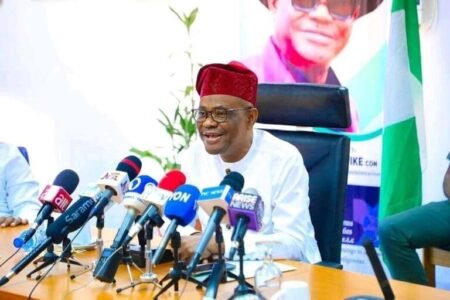
The NLC’s president, Joe Ajaero, made the request on Wednesday during the 85th birthday celebration and book launch of the union’s founding president, Hassan Summonu, OON, at the Shehu Musa Yar’Adua Auditorium in Abuja.
Ajaero, speaking to a crowd of family members, government officials, and members of the press, referred to Summonu as a working-class hero whose life and efforts had inspired generations of Nigerian workers.
He used Summonu’s book, Organize, Don’t Agonize, as a guiding philosophy for the labor movement.
“This is not just a title; it is the militant creed that has defined Comrade Summonu’s journey and the very soul of our movement,” Ajaero said. “From the shop floors and factories to the corridors of pan-African power, he taught us that the power of the people, when organized, is the ultimate answer to agony imposed by exploitation and poor governance.”
He recalled last year’s opening of the Hassan Summonu Centre for Leadership and Governance in Lagos, which he said confirmed the union’s commitment to honoring the founding president’s legacy. “Honoring Comrade Summonu is honoring the collective struggle of the Nigerian working class,” he explained.
Ajaero also discussed the implementation of Nigeria’s new National Minimum Wage, which was signed into law by President Bola Tinubu on July 29, 2024, and increased the monthly wage from N30,000 to N70,000. He added that implementation is still uneven, with many state governments, private sector companies, and parastatals hesitant to comply due to financial limitations and high inflation.
“The law is clear, yet many workers still earn less than they are entitled to,” Ajaero said. “It is on this note that we once again call on the federal government to urgently address the wages of Nigerian workers before next year’s statutory negotiation of the National Minimum Wage.”
He noted that the NLC is monitoring infractions and would take additional enforcement and legal action, warning that continuing delays endanger workers’ well-being as living costs rise. Federal authorities have imposed regulations for private sector compliance, including penalties such as jail time, although unions allege that many workers continue to receive less than the N70,000 minimum.
Ajaero has criticized recent tax measures, calling them regressive and unfairly burdening workers and the poor.
“The tax laws went through a process that clearly excluded Nigerian workers and the masses, who are the major taxpayers in Nigeria. Our warnings were ignored, and the result is laws that make workers and the poor poorer,” he said.
He also called for the immediate constitution of the PENCOM Board, warning that delays and public grandstanding undermine governance and democracy. “Continuing along this path seriously undermines tax administration and the rule of law,” he said.
Ajaero urged the government to engage sincerely with organized labor on policymaking, stressing, “Policies from fuel pricing to taxation, from wages to social services, must be crafted with the active and respected input of those who represent workers and the broader masses. Sideline the organized voice of labor, and you design policies on shaky, exclusionary foundations, destined to generate crisis and agony.”
The ceremony also honored Summonu’s 85th birthday and long-standing contributions to labor action, emphasizing the influence of his thought on today’s union leaders.
“As we launch his book today, we pledge to keep its central message alive,” Ajaero said. “We will continue to organize. We will continue to challenge power. We will continue to fight for a Nigeria where no worker has to agonize over poverty, insecurity, heavy taxation, or a stolen future riddled with national debt.”
He finished by imploring both the government and public to commemorate Summonu’s legacy via collective action and participation.
“Let this celebration of a life spent organizing inspire a new chapter. Let the government move from agonizing the people to organizing with them. Let us build a democracy that delivers not just political freedom but economic liberation, where the wealth of the nation serves the welfare of its people.”